
About Thomas Tyrwhitt
Lived 1730 – 1786 (aged 56). Thomas Tyrwhitt was a literary critic, writer, philologist and classical philologist.
Thomas Tyrwhitt (; 27 March 173015 August 1786) was an English writer, classical scholar, and critic. He was best known for his edition of The Canterbury Tales in which he modernized the language and provided extensive notes as well as a glossary.
Early life and education He was born in London, where he also died. He was educated at Eton College and Queen's College, Oxford. He was elected a fellow of Merton College, Oxford in 1755. In 1756, he was appointed under-secretary at war, in 1762 clerk of the House of Commons. In 1768, he resigned his post, and spent the remainder of his life in learned retirement. In February 1771, he was elected a Fellow of the Royal Society. In 1784, he was elected a trustee of the British Museum, to which he bequeathed a portion of his valuable library.
Works His principal classical works are: Fragmenta Plutarchi II. inedita (1773), from a Harleian manuscript Dissertatio de Babrio (1776), containing some fables of Aesop, hitherto unedited, from a Bodleian manuscript the pseudo-Orphic De lapidibus (1781), which he assigned to the age of Constantius Conjecturae in Strabonem (1783) Isaeus De Meneclis hereditate (1785) Aristotle's Poetica, his most important work, published after his death under the superintendence of Thomas Burgess, bishop of Salisbury, in 1794.
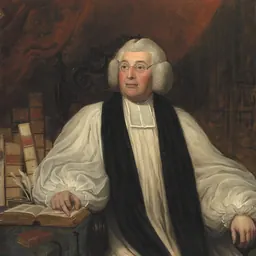
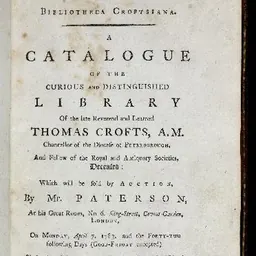
Special mention is due of his editions of Chaucer's Canterbury Tales (1775–1778); and of Poems, supposed to have been written at Bristol by "Thomas Rowley" and others in the 15th century (1777–1778), with an appendix to prove that the poems were all the work of Thomas Chatterton. Tyrwhitt's bibliophile friend Thomas Crofts is credited with introducing Tyrwhitt in 1776 to George Catcott, the owner of the "manuscripts" of the poems. Initially Tyrwhitt was convinced that they were authentic, and pressed for publication in 1777. It was only when the third edition was published that Tyrwhitt changed his mind and pronounced the poems forgeries.
In 1782, he published a Vindication of the Appendix in reply to the arguments that they were authentic. While clerk of the House of Commons he edited Proceedings and Debates of the House of Commons, 1620–1621 from the original manuscript in the library of Queen's College, Oxford, and Henry Elsynge's The Manner of Holding Parliaments in England (1768).
Don’t just read it —
keep it.
Full-length biographies made to live with: read them, listen on the way to work, watch them tonight.
- E-book
- Audio
- Video
Instant download · yours to keep · every purchase keeps this site free
Important facts
People in Thomas Tyrwhitt's life
Named in this biography and alive at the same time
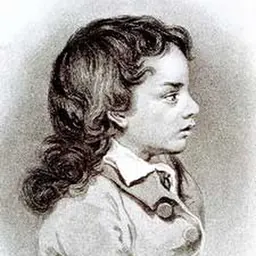

Related people
Same field, nearest in time

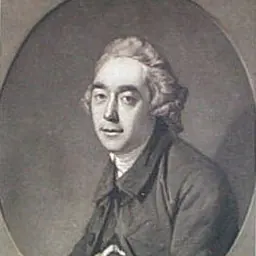



Contemporaries
People whose lives overlapped Thomas Tyrwhitt's




Frequently asked questions
Who was Thomas Tyrwhitt?
English classical scholar (1730-1786)
When was Thomas Tyrwhitt born?
Thomas Tyrwhitt was born on 27 March 1730 in London.
When did Thomas Tyrwhitt die?
Thomas Tyrwhitt died on 15 August 1786.
What was Thomas Tyrwhitt's occupation?
Thomas Tyrwhitt was a literary critic, writer, philologist and classical philologist.
Sources & further reading
Cite this page
APA: Biography.guide. (2026). Thomas Tyrwhitt. https://biography.guide/thomas-tyrwhitt/
MLA: "Thomas Tyrwhitt." Biography.guide, https://biography.guide/thomas-tyrwhitt/.
Chicago: "Thomas Tyrwhitt." Biography.guide. https://biography.guide/thomas-tyrwhitt/.
Data last updated: 2026-09-20 · Spot an error? Report a correction.
Page generated 2026-09-27 05:21 UTC