
About Thomas Sebeok
Lived 1920 – 2001 (aged 81). Thomas Sebeok was an American and Hungarian philosopher, writer and linguist.
Thomas Albert Sebeok (, ; November 9, 1920 – December 21, 2001) was a Hungarian-born American polymath, semiotician, and linguist. As one of the founders of the biosemiotics field, he studied non-human and cross-species signaling and communication. He is also known for his work in the development of long-term nuclear waste warning messages, in which he worked with the Human Interference Task Force (established 1981) to create methods for keeping the inhabitants of Earth away from buried nuclear waste that will still be hazardous 10,000 or more years in the future.
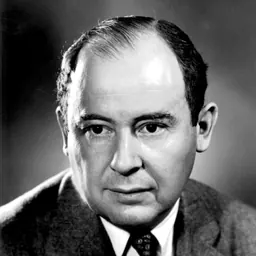
Early life and education Thomas Sebeok was born on November 9, 1920, in Budapest, Hungary. He attended secondary school at the famous Fasori Gimnázium, which educated notables such as John von Neumann and Eugene Wigner. After a brief stint at Cambridge University (Magdalene College) in England, he moved to the United States at the age of 17 and became a naturalized citizen in 1944. Sebeok earned a bachelor's degree in 1941 at the University of Chicago. He earned a master's degree in anthropological linguistics, under the external guidance of Roman Jakobson, at Princeton University in 1943 and, in 1945, a doctorate at Princeton University; his dissertation was titled Finnish and Hungarian case systems: their form and function. He was among the founders of biosemiotics, and coined the term "zoosemiotics" in 1963 to describe the development of signals and signs by non-human animal species. He also continued his work as a linguist, publishing several articles and books analyzing aspects of the Mari language (referring to it by the name "Cheremis"). His transdisciplinary work and professional collaborations spanned the fields of anthropology, biology, folklore studies, linguistics, psychology, and semiotics. He was also the editor of several book series and encyclopedias, including Approaches to Semiotics (over 100 volumes), Current Trends in Linguistics, and the Encyclopedic Dictionary of Semiotics. In particular, the conference suggests that the apes could have been cued or their communication had been misinterpretated. discussing solutions to the problem of nuclear semiotics, a system of signs aimed at warning future civilizations from entering geographic areas contaminated by nuclear waste. The report proposed a "folkloric relay system" and the establishment of an "atomic priesthood" of physicists, anthropologists, and semioticians to create and preserve a common cultural narrative of the hazardous nature of nuclear waste sites.
In addition to his academic work, Sebeok organized hundreds of international conferences and institutes, held leadership roles in organizations such as the Linguistic Society of America, International Association for Semiotic Studies, Committee for Skeptical Inquiry, and the Semiotic Society of America, and supported the creation of linguistic and semiotics teaching programs and scholarly associations throughout the world. His correspondence and research files are held by the Indiana University Archives.
Personal life Sebeok married Mary Eleanor Lawton (1912–2005) in 1947. They had one child, Veronica C. Wald, and later divorced. Sebeok married Donna Jean Umiker (born 1946, now D. Jean Umiker-Sebeok), a fellow semiotic scholar and his frequent collaborator and co-author, in 1973, and they had two children, Jessica A. Sebeok and Erica L. Sebeok. Sebeok retired from Indiana University in 1991, but he contributed to the field of semiotics until his death in 2001.
Selected English publications
Sebeok, Thomas A., ed. Style in Language. New York and London: The Technology Press of Massachusetts Institute of Technology and John Wiley & Sons, 1960.
Sebeok, Thomas A, Donna J. Umiker-Sebeok, and Adam Kendon. Nonverbal Communication, Interaction, and Gesture: Selections from Semiotica. The Hague: Mouton Publishers, 1981. , 236 pages. Ten essays on methods of abductive inference in Poe's Dupin, Doyle's Holmes, Peirce and many others. Sebeok, Thomas A, Marcia E. Erickson, Umberto Eco, V V. Ivanov, and Mônica Rector. Carnival! Berlin: Mouton Publishers, 1984. Sebeok, Thomas A, Donna J. Umiker-Sebeok, and Evan P. Young. The Semiotic Web, 1989. Berlin: Mouton de Gruyter, 1990. Sebeok, Thomas A, and Marcel Danesi. The Forms of Meaning: Modeling Systems Theory and Semiotic Analysis, 2000. Sebeok, Thomas A. Signs: An Introduction to Semiotics. Toronto, Ont: University of Toronto Press, 2001.
Don’t just read it —
keep it.
Full-length biographies made to live with: read them, listen on the way to work, watch them tonight.
- E-book
- Audio
- Video
Instant download · yours to keep · every purchase keeps this site free
Important facts
People in Thomas Sebeok's life
Named in this biography and alive at the same time






Related people
Same field, nearest in time
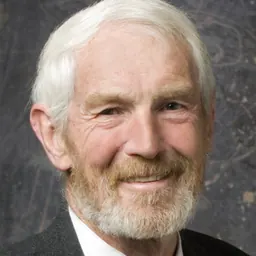
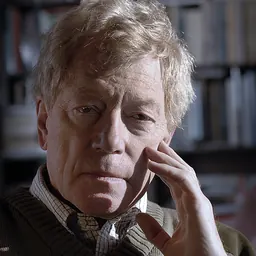
Contemporaries
People whose lives overlapped Thomas Sebeok's


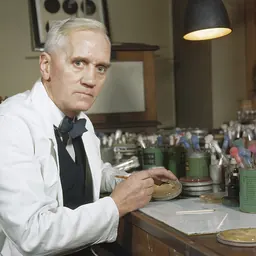
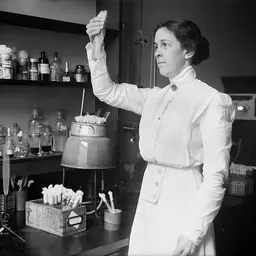
Frequently asked questions
Who was Thomas Sebeok?
American semiotician (1920-2001)
When was Thomas Sebeok born?
Thomas Sebeok was born on 9 November 1920 in Budapest.
When did Thomas Sebeok die?
Thomas Sebeok died on 21 December 2001 in Bloomington.
What was Thomas Sebeok's occupation?
Thomas Sebeok was a philosopher, writer and linguist.
What nationality was Thomas Sebeok?
Thomas Sebeok was American and Hungarian.
Sources & further reading
Cite this page
APA: Biography.guide. (2026). Thomas Sebeok. https://biography.guide/thomas-sebeok/
MLA: "Thomas Sebeok." Biography.guide, https://biography.guide/thomas-sebeok/.
Chicago: "Thomas Sebeok." Biography.guide. https://biography.guide/thomas-sebeok/.
Data last updated: 2026-09-20 · Spot an error? Report a correction.
Page generated 2026-09-27 05:26 UTC