
About Roman Jakobson
Lived 1896 – 1982 (aged 85). Roman Jakobson was a Russian linguist, literary scholar, pedagogue, historian, writer and critic.
Roman Osipovich Jakobson (born Roman Iosel-Berovich Yakobson; 18 July 1982) was a Russian linguist and literary theorist. A pioneer of structural linguistics, Jakobson was one of the most celebrated and influential linguists of the twentieth century. With Nikolai Trubetzkoy, he developed revolutionary new techniques for the analysis of linguistic sound systems, in effect founding the modern discipline of phonology. Jakobson went on to extend similar principles and techniques to the study of other aspects of language such as syntax, morphology and semantics. He made numerous contributions to Slavic linguistics, most notably two studies of Russian case and an analysis of the categories of the Russian verb. Drawing on insights from C. S. Peirce's semiotics, as well as from communication theory and cybernetics, he proposed methods for the investigation of poetry, music, and the visual arts including cinema.
Through his decisive influence on Claude Lévi-Strauss and Roland Barthes, among others, Jakobson became a pivotal figure in the adaptation of structural analysis to disciplines beyond linguistics, including philosophy, anthropology and literary theory; his development of the approach pioneered by Ferdinand de Saussure, known as "structuralism", became a major post-war intellectual movement in Europe and the United States. Meanwhile, though the influence of structuralism declined during the 1970s, Jakobson's work has continued to receive attention in linguistic anthropology, especially through the ethnography of communication developed by Dell Hymes and the semiotics of culture developed by Jakobson's former student Michael Silverstein. Jakobson's concept of underlying linguistic universals, particularly his celebrated theory of distinctive features, decisively influenced the early thinking of Noam Chomsky, who became the dominant figure in theoretical linguistics during the second half of the twentieth century.
Life and work Roman Iosel-Berovich Yakobson was born in Moscow on to well-to-do parents of Jewish descent, the industrialist Osip Jakobson and chemist Anna Volpert Jakobson, As a student he was a leading figure of the Moscow linguistic circle and took part in Moscow's active world of avant-garde art and poetry; he was especially interested in Russian Futurism, the Russian incarnation of Italian Futurism. Under the pseudonym 'Aliagrov', he published books of zaum poetry and befriended the Futurists Vladimir Mayakovsky, Kazimir Malevich, Aleksei Kruchyonykh and others. It was the poetry of his contemporaries that partly inspired him to become a linguist.
The linguistics of the time was overwhelmingly neogrammarian and insisted that the only scientific study of language was to study the history and development of words across time (the diachronic approach, in Saussure's terms). Jakobson, on the other hand, had come into contact with the work of Ferdinand de Saussure, and developed an approach focused on the way in which language's structure served its basic function (synchronic approach) – to communicate information between speakers. Jakobson was also well known for his critique of the emergence of sound in film. Jakobson received a master's degree from Moscow University in 1918. He left Moscow for Prague in 1920, where he worked as a member of the Soviet diplomatic mission while continuing with his doctoral studies. Living in Czechoslovakia meant that Jakobson was physically close to the linguist who would be his most important collaborator during the 1920s and 1930s, Prince Nikolai Trubetzkoy, who fled Russia at the time of the Revolution and took up a chair at Vienna in 1922. In 1926 the Prague school of linguistic theory was established by the professor of English at Charles University, Vilém Mathesius, with Jakobson as a founding member and a prime intellectual force (other members included Trubetzkoy, René Wellek and Jan Mukařovský). Jakobson immersed himself in both the academic and cultural life of pre-World War II Czechoslovakia and established close relationships with a number of Czech poets and literary figures. Jakobson received his Ph.D. from Charles University in 1930.
Escapes before the war Jakobson escaped from Prague in early March 1939 In the same year, Jakobson's theory of 'distinctive features' made a profound impression on the thinking of young Noam Chomsky, in this way also influencing generative linguistics. He was elected a foreign member of the Royal Netherlands Academy of Arts and Sciences in 1960.
In his last decade, Jakobson maintained an office at the Massachusetts Institute of Technology, where he was an honorary professor emeritus. In the early 1960s, Jakobson shifted his emphasis to a more comprehensive view of language and began writing about communication sciences as a whole. He converted to Eastern Orthodox Christianity in 1975.
Jakobson died in Cambridge, Massachusetts, on 18 July 1982. His widow died in 1986. His first wife, who was born in 1908, died in 2000.
Intellectual contributions According to Jakobson's own personal reminiscences, the most decisive stage in the development of his thinking was the period of revolutionary anticipation and upheaval in Russia between 1912 and 1920, when, as a young student, he fell under the spell of the celebrated Russian futurist wordsmith and linguistic thinker Velimir Khlebnikov.
Offering a slightly different picture, the preface to the second edition of The Sound Shape of Language argues that this book represents the fourth stage in "Jakobson's quest to uncover the function and structure of sound in language." The first stage was roughly the 1920s to 1930s where he collaborated with Trubetzkoy, in which they developed the concept of the phoneme, and elucidated the structure of phonological systems. The second stage, from roughly the late 1930s to the 1940s, during which he developed the notion that "binary distinctive features" were the foundational element in language, and that such distinctiveness is "mere otherness" or differentiation.
One of the six functions is always the dominant function in a text and usually related to the type of text. In poetry, the dominant function is the poetic function: the focus is on the message itself. The true hallmark of poetry is according to Jakobson "the projection of the principle of equivalence from the axis of selection to the axis of combination". Very broadly speaking, it implies that poetry successfully combines and integrates form and function, that poetry turns the poetry of grammar into the grammar of poetry, so to speak. Jakobson's theory of communicative functions was first published in "Closing Statements: Linguistics and Poetics" (in Thomas A. Sebeok, Style in Language, Cambridge Massachusetts, MIT Press, 1960, pp. 350–377). Despite its wide adoption, the six-functions model has been criticized for lacking specific interest in the "play function" of language that, according to an early review by Georges Mounin, is "not enough studied in general by linguistics researchers".
Legacy Jakobson's three principal ideas in linguistics play a major role in the field to this day: linguistic typology, markedness, and linguistic universals. The three concepts are tightly intertwined: typology is the classification of languages in terms of shared grammatical features (as opposed to shared origin), markedness is (very roughly) a study of how certain forms of grammatical organization are more "optimized" than others, and linguistic universals is the study of the general features of languages in the world. He also influenced Nicolas Ruwet's paradigmatic analysis.
Don’t just read it —
keep it.
Full-length biographies made to live with: read them, listen on the way to work, watch them tonight.
- E-book
- Audio
- Video
Instant download · yours to keep · every purchase keeps this site free
Important facts
People in Roman Jakobson's life
Named in this biography and alive at the same time


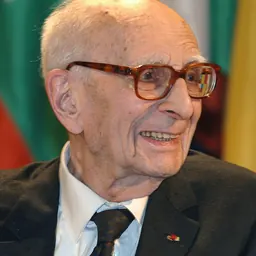
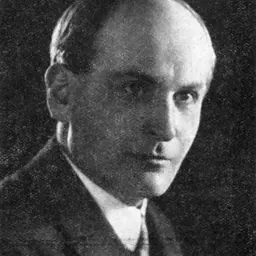



Related people
Same field, nearest in time
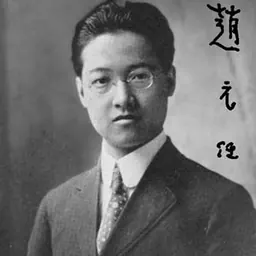
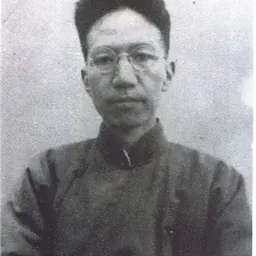

Contemporaries
People whose lives overlapped Roman Jakobson's



Frequently asked questions
Who was Roman Jakobson?
Russian linguist (1896–1982)
When was Roman Jakobson born?
Roman Jakobson was born on 28 September 1896 in Moscow.
When did Roman Jakobson die?
Roman Jakobson died on 18 July 1982 in Cambridge, Boston.
What was Roman Jakobson's occupation?
Roman Jakobson was a linguist, literary scholar, pedagogue, historian, writer and critic.
What nationality was Roman Jakobson?
Roman Jakobson was Russian.
Sources & further reading
Cite this page
APA: Biography.guide. (2026). Roman Jakobson. https://biography.guide/roman-jakobson/
MLA: "Roman Jakobson." Biography.guide, https://biography.guide/roman-jakobson/.
Chicago: "Roman Jakobson." Biography.guide. https://biography.guide/roman-jakobson/.
Data last updated: 2026-09-20 · Spot an error? Report a correction.
Page generated 2026-09-27 05:26 UTC