
About Thomas S. Hinde
Lived 1785 – 1846 (aged 60). Thomas S. Hinde was an American explorer, historian, theologian, diarist, publisher and author.
Thomas Spottswood Hinde (April 19, 1785 – February 9, 1846) was an American newspaper editor, opponent of slavery, writer, historian, real estate investor, Methodist minister and a founder of the city of Mount Carmel, Illinois. Members of the Hinde family were prominent in Virginia, Kentucky, Ohio, and Illinois. His sons Charles T. Hinde became a shipping magnate and Edmund C. Hinde an adventurer. He was the father-in-law of judge Charles H. Constable.
Hinde was an active businessman, pursuing real estate, construction, and publishing opportunities in Kentucky, Ohio and Illinois. In his early years, Hinde publicly opposed slavery. He also used his newspaper, The Fredonian, in Chillicothe, Ohio between 1806 and 1808, to highlight issues about Indian treaties and the conspiracy of Aaron Burr. He served in the U.S. Army during the War of 1812. In later years he was a pioneer in the settlement of Indiana and Illinois, and the expansion of the Methodist Episcopal Church in these areas. He contributed to the Madoc Tradition and was a noted historian and biographer. Hinde cofounded the Wabash Navigation Company, which engaged in real estate speculation and dam construction. The company dammed the Wabash River next to Hinde's property, creating the Grand Rapids Dam. The dam was abandoned by the Federal government in 1931.
Hinde was an ordained Methodist minister and traveled extensively to advance the interests of the church. He was a pioneering circuit rider in the early 1800s in Kentucky, Indiana, Illinois, and Missouri. Hinde wrote and published religious articles in many leading publications. Francis Asbury, one of the first two bishops of the Methodist Episcopal Church, considered Hinde important to the church. He frequently met with him and mentioned him in his journals. Historian Lyman Draper spent more than twenty years collecting documents by and about the Hinde family, along with papers of other important figures of the Trans-Allegheny West. The Draper Manuscript Collection at the Wisconsin Historical Society holds 47 volumes of Hinde's personal papers, donated by his family after his death.
Early years Thomas S. Hinde was born April 19, 1785, in Hanover County, Virginia, to Thomas Hinde (1737–1828) and Mary Todd Hubbard (1734–1830), as the seventh of eight children. Little is known about Hinde's early years except that the family moved from Virginia to Newport, Kentucky, in 1797 when his father was awarded a land grant of for his services in the American Revolutionary War. In a letter to President James Madison many years later, Hinde related that while walking to school in the wilderness of Kentucky, he once successfully fought off a wolf and a panther. Daniel Boone and Simon Kenton were neighbors of the Hinde family while they lived in Kentucky, and the three men grew up as colleagues. One of Hinde's sisters married Richard Southgate; his nephews William Wright Southgate and William Taylor became prominent lawyers and politicians.
After a conversion by his mother Mary and older sister Susannah in 1798, all of Hinde's family, including his father, converted to Christianity as Methodists. Thomas delayed a while. Shortly afterward the younger Hinde became close friends with Francis Asbury, who became a prominent bishop in the church. Hinde later described the conversion of his youngest sister, Martha Harrison Hinde, in an 1827 article published in the Methodist Review under his pen name, Theophilus Arminius. Hinde recounted Bishop Asbury visiting his father's home in 1803 and telling Martha that she had better find God, because before he could meet her again she would be dead. The bishop's prophecy came true when Martha died in 1811 without having seen Asbury again. Hinde said she had converted before her death and tried to convert the nonbelievers in the room while on her deathbed. He shared a letter in which his sister had tried to convert her close friends. Hinde did not immediately convert but attended Methodist camp meetings of the period. During his life, he frequently wrote about the importance of the camp meeting in bringing Christianity and democracy to the west. During this time, Hinde became acquainted with many of the state's leading men, and acquired a knowledge of the law. He also developed a reputation as one of Kentucky's most efficient businessmen. Hinde wrote to Henry Clay that he was the first lawyer whom Hinde heard address a court. Hinde resided in a boarding house, shared with many of the leading judges and politicians of the day, where he strengthened his personal and political contacts.
Newspaper publisher From an early age, Hinde opposed slavery. Although their parents owned slaves, he and his siblings repudiated slavery on religious grounds. Hinde's opposition increased and eventually he and other friends became outspoken critics of the institution in Kentucky, where slavery was commonplace in the middle and western parts of the state. In the Great Awakening, Methodists were prominent among those who opposed slavery, although they also converted slaves and welcomed them into congregations. In Kentucky Hinde joined other Methodist ministers in the abolitionist movement.
In a letter to President Madison, Hinde attributed his opposition to slavery to the influence of his mother. He wrote: In 1805, Messrs. Wood and Street, from Richmond, Va., found their way to Kentucky. Friendly considerations led me to patronize them. This was done through the solicitations of a young friend from Virginia. They commenced a paper, published in 1806, called the 'Western World.' Imbibing strong prejudices against slavery, perhaps from my mother's repeating, in my infancy, the nurse's songs composed by Cowper, designed to make such impressions. In June 1806, to the great astonishment of my friends, I left Kentucky, with all the flattering prospects a youth could have, and hastened to Ohio. Connecting circumstances, and from hints that fell from Wood and others, a deep impression had been made on my mind, that an eventful period was fast approaching.
After moving to Ohio, Hinde was unanimously elected by the Ohio House of Representatives to the position of clerk pro tempore. He held the position for three years before shifting to focus on his successful speculation in military lands.
Marriages and family On October 19, 1809, with minister William Lynes officiating, Hinde at the age of 24 married Belinda Bradford, the daughter of the late James Bradford, in Hamilton County, Ohio. His father-in-law was a descendant of William Bradford of Plymouth Colony. He had been killed in 1791 in St. Clair's Defeat, and buried in Fort Recovery. Belinda died in 1827.
In 1828, Hinde married Sarah Neal (Daugherty) Cavileer. They had three children: Edmund C., Charles T. and Belinda. Edmund was a pioneer who participated in the California Gold Rush; after his death, his journals were published. Charles became a business tycoon in Southern California, playing a pivotal role in its development through his shipping expertise. Belinda married Jacob Zimmerman, a successful newspaper editor and owner who in later years held a number of political offices in Illinois.
Conversion to Methodism An engraving of a Methodist camp meeting in 1819 (Library of Congress). Hinde was involved with the newspaper for less than two years. He converted from Deism to Methodism and decided that operating a political journal conflicted with his new religious views. After retiring from the newspaper business, he engaged in locating military lands and in land speculation. For the rest of his life, Hinde published editorials in newspapers and religious publications. He organized several camp meetings with other preachers, saying that the camp meeting could unite the different Protestant denominations.
At times, Francis Asbury ventured into the wilderness to visit Hinde. An 1856 account states, In 1810 Bishop Asbury visited an obscure part of the western country (Kanawha) which was then a wilderness, and pleasantly told the Rev. Thomas S. Hinde that he had visited the region so that the people might see and know their superintendent; remarking, "The shepherd ought to know the flock, and the flock the shepherd: they ought to know what man it is that governs them, and I have come nearly one hundred miles out of my way to see them." The writer exclaims, "O Asbury, the inhabitants of these hills and mountains will long make mention of thee!"
Hinde is thought to have received his license to preach sometime around 1810. His first sermon was in Chillicothe in either 1807 or 1808, and people were so eager to hear him that they filled the church. The sermon was described as having "...no coherence in his discourse." During the sermon, Hinde repeatedly stated, "My bowels, my bowels!"
Hinde became a circuit rider in the early 1800s. While his circuit varied over the years, he served large portions of Kentucky, Indiana, Illinois, and Missouri. Rev. Thomas S. Hinde was said to be, "...exceedingly earnest, and very zealous in promoting the interests of the Church and of religion and morality. His zeal, however, was rather of the ascetic kind; and he usually took prominent part in the arraignment and trial of brethren accused of offenses." He was quoted as saying that he was,"...doing God service."
Hinde met the Shawnee chief Tecumseh in Chillicothe and in Vincennes, Indiana, during either the 1810 or the 1811 meeting between Tecumseh and William Henry Harrison at Grouseland. Hinde also met prominent Shawnee Blue Jacket and reported on him for the local newspapers. One source says that Hinde played a crucial role in negotiating early Indian treaties signed with the United States government, without defining his actions.
War of 1812
Hinde served in the U.S. Army in the War of 1812 under William Henry Harrison, then governor of the Indiana Territory. Both from Virginia families, the two men were close in age. Hinde was made responsible for prisoners of war starting in 1813, when he was about 27 or 28 years old.
Hinde served under Captain Oliver Hazard Perry, who was the commander at the Battle of Lake Erie. Captain Perry's decisive victory ensured American control of the lake, improved American morale after a series of defeats, and compelled the British to fall back from Detroit. In 1813, Hinde was placed in charge of prisoners captured at this battle.
Founding Mount Carmel
In the early 1800s, Hinde purchased large land holdings in what would become Wabash County, Illinois. In 1817, he, William McDowell and William Beauchamp collectively founded the city of Mount Carmel, Illinois. All three men were ministers. They chose the Biblical name "Mount Carmel", because it meant "the garden of the Lord" and was a historic city in Palestine. According to one source:
The site chosen for the town was a point on the west bank of the Wabash opposite the mouth of the White River, and twenty-four miles southwest of Vincennes. This point was selected because of the available water power and of the likelihood that main roads from east to west would pass here. The town became a railroad and manufacturing center and justified the wisdom of its founders. An elaborate circular, called the "Articles of Association for the City of Mount Carmel," was issued at Chillicothe in 1817. The purpose of the association was announced to be "to build a city on liberal and advantageous principles, and to constitute funds for the establishment of seminaries of learning and for religious purposes." The proprietors reserved for themselves one-fourth of the lots, these being called "proprietors' lots;" one-fourth were called "private donation lots." The plan of survey and sale was described as follows: "The in-lots are six poles in front, and eleven and a half in back; containing each sixty-eight perches, nearly half an acre. The most of the out-lots contain four acres and eight square poles; some of them more, (five and six acres on the back range); and a few of them less. There are 748 in-lots, and 331 out-lots --1079 in the whole. He wrote a poem about Mount Carmel and had it published in Ohio.
Originally, Mount Carmel was located in Edwards County. After a drought in 1820 killed a majority of the settlers, the county seat was moved from Palmyra, Illinois to Albion. At that time Albion was settled primarily by English immigrants. The Americans from Mount Carmel and surrounding settlements were resentful and tried to return the county seat to Mount Carmel by force. During the bickering for the county seat location, Hinde ran for county commissioner in 1821 against John Buckles, receiving only two votes against Buckles' 151. In 1822 Hinde ran for the office of Illinois House of Representatives and narrowly lost to Gilbert T. Pell. On December 24, 1824, the Illinois Legislature resolved the county seat issue by creating Wabash County from the eastern half of Edwards County.
Based on newspaper accounts, the lots held by Hinde did not sell quickly. More than 27 years after having developed the plans for Mount Carmel, Hinde was still advertising lots for sale there in national newspapers. In one advertisement Hinde said, "The place I offer is midway between St. Louis and Louisville and the next improvement will be the completion of the railroad connecting the two places, and a dam across the Great Wabash, at the Grand Rapids, at the junction of the White, Patoka, and Wabash, giving the greatest water power in the great West."
Another source notes that Hinde and other founders "...may have been over zealous and puritanical in the construction of their laws... no theater or play-house shall ever be built within the boundary of the city; no person shall be guilty of drunkenness, profanity, sabbath-breaking, and many other offenses of greater magnitude, etc., he shall be subject to trial by the court of Mayor and on conviction, was disqualified from holding any office in the city, or the bank; was disqualified to vote; ostracism was to continue for three years after the commission of the so-called crimes."
Around 1825, Hinde settled in Mount Carmel, leaving the Methodist circuit to focus on religious and historical writing, and business. He founded one of the first churches in the town and occasionally held Methodist gatherings at his home. On September 20, 1827, more than 27 Methodist ministers met in the upper room of his house. It was one of the largest gatherings of the time.
Real estate disputes After his father died in 1828, Hinde inherited real estate in Kentucky. Shortly thereafter, he began investing in real estate in Ohio. and Mallow v. Hinde.
Johnson v. McIntosh William M'Intosh was a former Revolutionary War veteran who had become a fur trader and investor in military lands along the Wabash River. Hinde and M'Intosh lived on adjoining tracts of land near what would become the site of the Grand Rapids Dam.
M'Intosh became associated with the Supreme Court Case of Johnson v. McIntosh. used the case to establish the "Discovery Doctrine," which ruled that the discovering people gain title over the indigenous peoples in respect to land title. Hinde also knew Associate Justice Thomas Todd, a justice of the Kentucky Court of Appeals when Hinde served as the court's clerk. In 1807 Vattier was convicted of burglary and larceny for stealing large sums of money from James Findlay, Receiver of Public Monies for the District of Cincinnati. Hinde knew Findlay since they were both involved in exposing the Burr conspiracy and both were prominent in Ohio.
Allegedly, Vattier had tried to take title to a piece of property in Cincinnati already owned by the Hinde family. Hinde challenged Vattier in court. Henry Clay represented Hinde in the Ohio State Court proceedings. Hinde claimed that Vattier tried to use the lot to pay Findlay by claiming to have a bill of sale and title that was superior to the Hinde family. After more than fifteen years, the case reached the United States Supreme Court in 1833. The Court ruled that Vattier took title to the property illegally and that the property belonged to Hinde and his children. Originally owned by Hinde's father-in-law, James Bradford, after his death the property passed to Hinde's wife, Belinda (Bradford) Hinde.
A letter written by Jacob Lescher in 1841 and submitted to Congress in support of the Grand Rapids Dam project and the building of a U.S. Armory, stated that he and Hinde owned more than acres of land around the proposed dam site. Additional information submitted to Congress stated that the town of Powhatan was owned by Hinde and Lescher and was a "river addition" to Mount Carmel. The location of the town of Selima was not clearly stated, but was near the dam.
The wooden timber dam deteriorated and needed to be replaced in the late nineteenth century. On September 19, 1890, Congress appropriated money for the construction of a new dam, to be built by the Army Corps of Engineers. The report stated that the old dam had partially washed away and that the new dam would raise the water level by 11.5 feet. According to an annual report to the Secretary of War in 1908, the mid-19th century lock and dam were "...not of a substantial character....," and "...rapidly deteriorated and became useless." The same report said that by March 31, 1881, expenditures for the dam were $317,845.44 and the government was forced to pay the Wabash Navigation Company an additional $7,000 to extinguish their franchise and purchase their property.
Later years and legacy
Hinde settled in Mount Carmel toward the end of his life. During Hinde's final years, he was an active letter writer and watched over his many business and real estate interests.
In his later writings, Hinde espoused some questionable theories such as the Hollow Earth theory and the Madoc tradition. Hinde was published in the Methodist Magazine, the "Short Sketches of Revivals of Religion in the Western Country" (incomplete), the Advocate and Journal (New York) and the Western Christian Advocate (Cincinnati). His writings have been described as, "...abound[ing] in vague philosophical and religious reflections-- this is especially true of his diaries-- thus making them of slight value...." Throughout his life Hinde maintained correspondence with many of the prominent men of the day. His correspondents included James Madison, George Madison, Thomas Jefferson, Henry Clay, Simon Kenton, Daniel Boone, and John Marshall. Since he died at a relatively early age and his wife died shortly after him, his orphaned children were forced to live with other relatives or fend for themselves. Martha married Judge Charles H. Constable; together they looked after many of her younger siblings until they married or found work. Her brother Charles Hinde became a successful businessman and riverboat captain. One of Captain Hinde's accomplishments was investing in the Hotel del Coronado in San Diego, California. Hinde's grandson, Frederick Zimmerman, built the Grand Rapids Hotel on the Hinde family farm in Mount Carmel near the Grand Rapids Dam and Hanging Rock.
Don’t just read it —
keep it.
Full-length biographies made to live with: read them, listen on the way to work, watch them tonight.
- E-book
- Audio
- Video
Instant download · yours to keep · every purchase keeps this site free
Important facts
Family & relationships
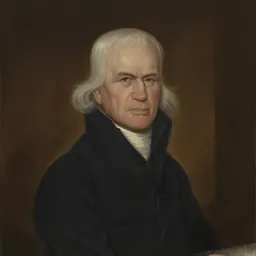
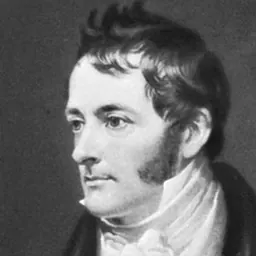
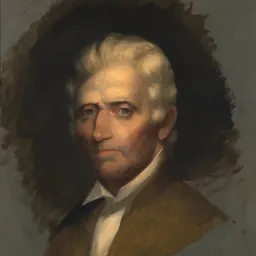
People in Thomas S. Hinde's life
Named in this biography and alive at the same time





Related people
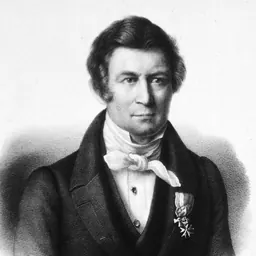
Same field, nearest in time


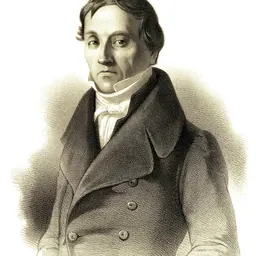

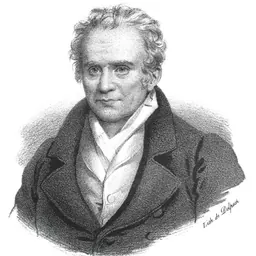
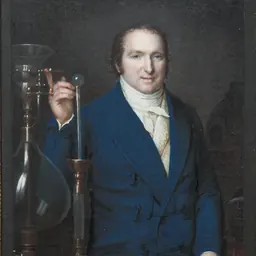
Contemporaries
People whose lives overlapped Thomas S. Hinde's

Frequently asked questions
Who was Thomas S. Hinde?
American minister and businessman
When was Thomas S. Hinde born?
Thomas S. Hinde was born on 19 April 1785 in Hanover County.
When did Thomas S. Hinde die?
Thomas S. Hinde died on 9 February 1846 in Mount Carmel.
What was Thomas S. Hinde's occupation?
Thomas S. Hinde was an explorer, historian, theologian, diarist, publisher and author.
What nationality was Thomas S. Hinde?
Thomas S. Hinde was American.
Sources & further reading
Cite this page
APA: Biography.guide. (2026). Thomas S. Hinde. https://biography.guide/thomas-s-hinde/
MLA: "Thomas S. Hinde." Biography.guide, https://biography.guide/thomas-s-hinde/.
Chicago: "Thomas S. Hinde." Biography.guide. https://biography.guide/thomas-s-hinde/.
Data last updated: 2026-09-20 · Spot an error? Report a correction.
Page generated 2026-09-27 05:33 UTC