
About Thomas Rymer
Lived 1641 – 1713 (aged 71–72). Thomas Rymer was a British historian, translator and writer.
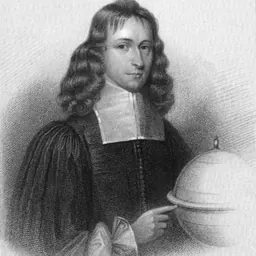
Thomas Rymer and his King Charles Spaniel, Pompey, portrayed in 1819.
Thomas Rymer (c. 1643 – 14 December 1713) was an English poet, literary critic, antiquary and historiographer.
His lasting contribution was to compile and publish under royal warrant the 17 volumes (the last two posthumously) of the first edition of Foedera, a work conveying English government documents and treaties between The Crown of England and foreign powers from 1101 to 1625.
Rymer held the office of English Historiographer Royal from 1692 until his death in 1713, which allowed him access to the historical documents published in Foedera and held in the Tower of London and elsewhere.
He is credited with coining the phrase "poetic justice" in The Tragedies of the Last Age Consider'd (1678).
Life Early life and education
Thomas Rymer was born at Appleton Wiske, near Northallerton in the North Riding of Yorkshire in 1643, or possibly at Yafforth. He was the younger son of Ralph Rymer, lord of the manor of Brafferton in Yorkshire, said by Clarendon to possess a good estate. The son studied at Northallerton Grammar School, where he was a classmate of George Hickes. There he studied for eight years under Thomas Smelt, a noted Royalist. Aged 16, he went to study at Sidney Sussex College, Cambridge, matriculating on 29 April 1659. Edgar was printed in 1678, with a second edition in 1693. The plot is mostly drawn from William of Malmesbury, and abounds in strong royalist sentiment. The play was written in rhyming heroic couplets, much like John Dryden's works. Rymer writes in the advertisement in the beginning, "I doubted, indeed, whether Rhyme was proper for Tragedy. Not that I thought it unnaturall; for, questionless, 'tis more naturall to speak in Rhyme then to speak English." Ultimately, Rymer concluded that since the tragedy ends happily, rhyme was the appropriate medium.
Rymer's views on drama, especially verse drama and heroic couplets, were again given to the world in a printed letter to Fleetwood Shepheard, a friend of Matthew Prior, entitled The Tragedies of the Last Age Consider'd (1678). Here, in discussing Rollo Duke of Normandy by John Fletcher, Philip Massinger, Ben Jonson, and George Chapman, Rymer coined the term "poetical justice".
To Ovid's Epistles Translated by Several Hands (1680), prefaced by Dryden, Rymer contributed Penelope to Ulysses. He was also one of those who Englished the so-called Dryden's Plutarch of 1683–1686 (5 vols.): the life of Nicias fell to his share. Rymer wrote a preface to Whitelocke's Memorials of English Affairs (1682), and in 1681 A General Draught and Prospect of the Government of Europe, reprinted in 1689 and 1714 as Of the Antiquity, Power, and Decay of Parliaments, where ignorant of a future dignity that would be his, he had the misfortune to observe, "You are not to expect truth from an historiographer royal."
Rymer contributed three pieces to the collection of Poems to the Memory of Edmund Waller (1688) (afterwards reprinted in Dryden's Miscellany Poems), and wrote the Latin inscription on all four sides of Edmund Waller's monument in Beaconsfield churchyard.
The preface ("Lectori salutem") to the posthumous Historia Ecclesiastica (1688) of Thomas Hobbes seems to have been written by Rymer. An English translation appeared in 1722. The Life of Hobbes (1681), sometimes ascribed to him, was written by Richard Blackburne. He produced a congratulatory poem on the arrival of Queen Mary in Westminster with William III on 12 February 1689.
Rymer's next piece of authorship was to translate the sixth elegy of the third book of Ovid's Tristia for Dryden's Poetical Miscellanies. The only version to contain Rymer's rendering seems to be the second edition of the second part of the Miscellanies, subtitled Silvae (1692).
Shortly after Rymer's appointment as Historiographer Royal in 1692, there appeared his much-discussed A Short View of Tragedy (1693), criticising Shakespeare and Ben Jonson, which gave rise to The Impartial Critick (1693) of John Dennis, the epigram of Dryden.
Foedera First edition Rymer's lasting contribution to scholarship was the (abbr. ), a collection of "all the leagues, treaties, alliances, capitulations, and confederacies, which have at any time been made between the Crown of England and any other kingdoms, princes and states", and a mass of other state documents then held in the Tower of London. Begun under a royal warrant in 1693, it was "an immense labour of research and transcription on which he spent the last twenty years of his life". Documents were presented in their original Latin. Sir Thomas Duffus Hardy's later Syllabus (1869-1885) provided summaries in English, despite the multiple incorrect assertions of certain websites . Volumes 8 to 12 (of 20, covering 1397 to 1502) are available at British History Online, collated with the English summaries from Hardy's Syllabus, but not implementing his considerable list of errata, and without attribution. Foedera was thus seemingly revised up to the year 1383,
All the editions thus suffer from various defects, and no complete and correct revision has been published as of 2024. Hardy had intended in his Syllabus to correct not only all the errors in Clarke, but in the whole of the first three editions as well: but this proved to be beyond him, faced with a vast array of material. Hardy's work is probably the most reliable guide to the Foedera, but even confirming a single fact can involve checking multiple sources of the various editions of the Foedera and their indexes, along with Holmes's 'Emendations' and his own copy of the 1st edition, against Hardy's Syllabus and its own index, and also his list of errata.
Don’t just read it —
keep it.
Full-length biographies made to live with: read them, listen on the way to work, watch them tonight.
- E-book
- Audio
- Video
Instant download · yours to keep · every purchase keeps this site free
Important facts
People in Thomas Rymer's life
Named in this biography and alive at the same time


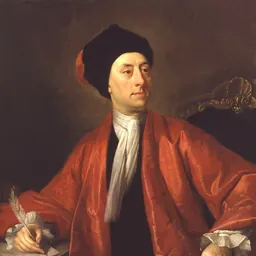

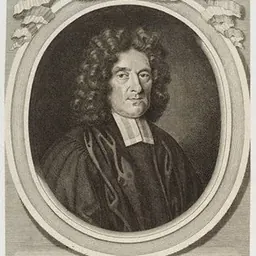

Related people
Same field, nearest in time
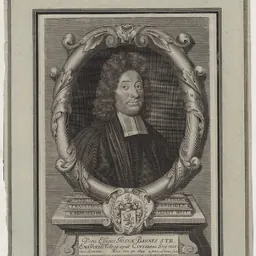
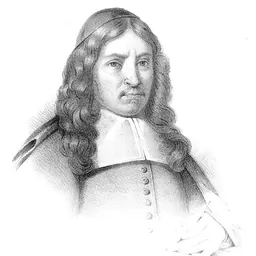

Contemporaries
People whose lives overlapped Thomas Rymer's




Frequently asked questions
Who was Thomas Rymer?
English Historiographer Royal; (1641-1713)
When was Thomas Rymer born?
Thomas Rymer was born in 1641 in Yorkshire.
When did Thomas Rymer die?
Thomas Rymer died on 14 December 1713.
What was Thomas Rymer's occupation?
Thomas Rymer was a historian, translator and writer.
What nationality was Thomas Rymer?
Thomas Rymer was British.
Sources & further reading
Cite this page
APA: Biography.guide. (2026). Thomas Rymer. https://biography.guide/thomas-rymer/
MLA: "Thomas Rymer." Biography.guide, https://biography.guide/thomas-rymer/.
Chicago: "Thomas Rymer." Biography.guide. https://biography.guide/thomas-rymer/.
Data last updated: 2026-09-25 · Spot an error? Report a correction.
Page generated 2026-09-27 05:10 UTC