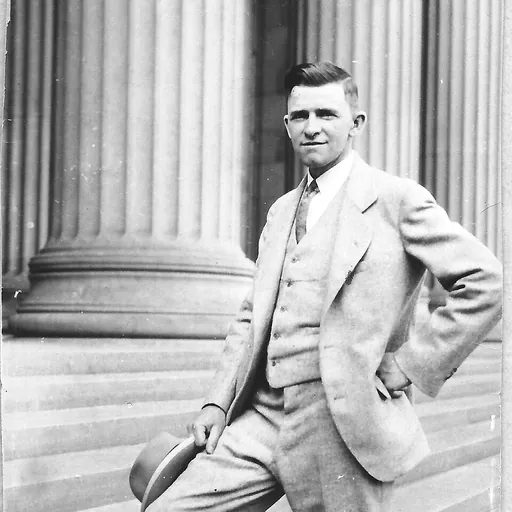
Thomas Ringgold Camp
About Thomas Ringgold Camp
Lived 1895 – 1971 (aged 76). Thomas Ringgold Camp was an American.
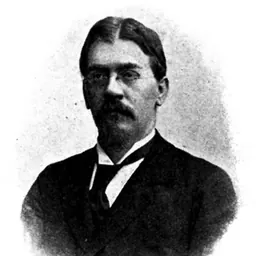
Thomas Ringgold Camp (1895–1971) was an American engineer noted for his pioneering work in sanitary engineering. He was a professor of sanitary engineering at the Massachusetts Institute of Technology (MIT) from 1929 to 1944 before forming the consulting engineering firm of Camp, Dresser & McKee.
Early years
Thomas was a son of Harmon Clark Camp and Mildred Stella (Dashiell) Camp. He was born 5 November 1895 in San Antonio, Texas. He received a Bachelor of Science degree in architectural engineering from Texas A&M University in 1916. Following graduation he was a lieutenant in the United States Army from 1917 to 1919 serving with heavy artillery in France during World War I. He found civilian employment with the engineering firm of Hawley & Sands serving as city engineer for the Breckenridge, Texas, waterworks and sewage treatment plant. He later oversaw a major expansion of the Fort Worth, Texas, water and sewer systems until returning to school in 1923 to earn a Master of Science degree in civil engineering from MIT in 1925. Following graduation he worked with the Greensboro, North Carolina waterworks and sewerage engineering firm of Spooner, Lewis & Camp. He also served on the National Institutes of Health Research Grants Division Sanitation Study Section from 1946 to 1949, on the United States Public Health Service Advisory Committee for the Revision of the Drinking Water Standards from 1959 to 1962, as chairman of the American Sanitary Engineering Intersociety Board from 1956 to 1962, and as chairman of the Joint Committee for the Advancement of Sanitary Engineering from 1957 to 1958.
Environmental perspectives Camp's departure from the MIT faculty reflected his frustration with reluctance of that school's administration to offer a collaborative degree program integrating the fields of chemistry, biology, public health, and civil engineering for training sanitary engineers. While remembered for his advances in the treatment of water and wastewater, Camp was early to emphasize the importance of source control in engineering environmental solutions. A year after Rachel Carson published Silent Spring in 1962, Camp stated this perspective in his benchmark book, Water and Its Impurities: "Neither water treatment nor wastewater treatment can be a satisfactory remedy for pollution of our watercourses by pesticide sprays or by salt used for melting snow and ice on our highways. These materials must be controlled at their points of use, because they are damaging to land, plants, and animals, as well as to water. Similarly excess soil erosion cannot be abated by water or waste treatment. Better land use is needed. In water quality problems, the whole environment must be examined."
Professional recognition The Water Pollution Control Federation established the Thomas R. Camp Medal in 1964, to be awarded annually to a Federation member who best exemplifies "the unique application of basic research or fundamental principles." The Boston Society of Civil Engineers established the Thomas R. Camp Fund in 1971, the income from which is to be used annually for one or more lectures on "outstanding recent developments in the field of sanitary engineering." Other awards include: 1941 – Sanitary Section Prize, Boston Society of Civil Engineers for a paper entitled: The Filtration System of the New M.I.T. Swimming Pool – Design and Operation 1941 – The Karl Emil Hilgard Hydraulic Prize, American Society of Civil Engineers, for a paper entitled: Lateral Spillway Channels 1943 – Dexter Brackett Memorial Medal, New England Waterworks Association for a paper entitled: Hydraulics of Distribution Systems – Some Recent Developments in Methods of Analysis 1944 – Hydraulic Section Prize, Boston Society of Civil Engineers 1945 – The J.C. Stevens Award, American Society of Civil Engineers for discussion of a paper by William E. Dobbins entitled: Effects of Turbulence on Sedimentation 1947 – The J. James R. Cores Medal, American Society of Civil Engineers, for a paper entitled: Sedimentation and Design of Settling Tanks 1949 – Desmond FitzGerald Medal, Boston Society of Civil Engineers, for a paper with P.C. Stein entitled: Velocity Gradient and Internal Work in Fluid Motion 1955 – Fuller Award, American Water Works Association for a paper entitled: Determination of Charges for Public Fire Protection 1956 – Dexter Brackett Memorial Medal, New England Waterworks Association 1956 – The Rudolph Hering Medal, American Society of Civil Engineers, for a paper entitled: Flocculation and Flocculation Basins 1963 – New England Award, Engineering Society of New England 1964 – Edmund Friedman Professional Recognition Award, American Society of Civil Engineers 1966 – Distinguished Service Award, National Clay Pipe Institute 1969 – Samuel Arnold Greeley Award, American Society of Civil Engineers, for a paper with S. David Graber entitled: Dispersion Conduits 1970 – Honorary Doctor of Science Degree, Clarkson College 1970 – Clemens Herschel Award, Boston Society of Civil Engineers 1972 – The J.C. Stevens Award (posthumous), American Society of Civil Engineers
Private life
Camp lived at the Evans' boarding house in Cambridge while a student at MIT. Upon graduation in 1925, he married the owners' daughter, Margaret Evans. All three of their children raised in Newton, Massachusetts, completed Master's degree programs. The family summer vacations were spent angling on New Hampshire lakes. Camp devoted his final years to caring for his wife after she suffered a series of strokes, and he died a year after she did.
Don’t just read it —
keep it.
Full-length biographies made to live with: read them, listen on the way to work, watch them tonight.
- E-book
- Audio
- Video
Instant download · yours to keep · every purchase keeps this site free
Important facts
People in Thomas Ringgold Camp's life
Named in this biography and alive at the same time




Contemporaries
People whose lives overlapped Thomas Ringgold Camp's


Frequently asked questions
Who was Thomas Ringgold Camp?
(1895-1971)
When was Thomas Ringgold Camp born?
Thomas Ringgold Camp was born on 5 November 1895 in San Antonio.
When did Thomas Ringgold Camp die?
Thomas Ringgold Camp died on 15 November 1971 in Boston, Massachusetts.
What nationality was Thomas Ringgold Camp?
Thomas Ringgold Camp was American.
Sources & further reading
· Wikipedia: Thomas Ringgold Camp
· DBpedia: Thomas Ringgold Camp
Cite this page
APA: Biography.guide. (2026). Thomas Ringgold Camp. https://biography.guide/thomas-ringgold-camp/
MLA: "Thomas Ringgold Camp." Biography.guide, https://biography.guide/thomas-ringgold-camp/.
Chicago: "Thomas Ringgold Camp." Biography.guide. https://biography.guide/thomas-ringgold-camp/.
Data last updated: 2026-09-23 · Spot an error? Report a correction.
Portrait: Wikimedia Commons · author & licence
Page generated 2026-09-27 05:07 UTC