
About Thomas Reid
Lived 1710 – 1796 (aged 86). Thomas Reid was a British philosopher, librarian, mathematician, writer, university teacher and ethicist.
Life Reid was born in the manse at Strachan, Aberdeenshire, on 26 April 1710,
He went to the Marischal College (which later became part of the University of Aberdeen) in 1723 and graduated with an M.A. in 1726. He was licensed to preach by the Church of Scotland in 1731 when he came of age. He began his career as a minister of the Church of Scotland but ceased to be a minister when he was given a professorship at King's College, Aberdeen, in 1752.
In 1758, he and his colleagues founded the Aberdeen Philosophical Society, popularly known as the 'Wise Club' (a literary-philosophical association).
In 1762, he received the honorary degree of D.D. from Marischal College. In 1764, he published An Inquiry Into the Human Mind on the Principles of Common Sense. Shortly after the publication of his first book, he was given the prestigious Professorship of Moral Philosophy at the University of Glasgow when he was called to replace Adam Smith. He resigned from this position in 1781, after which he prepared his university lectures for publication in two books: Essays on the Intellectual Powers of Man (1785) and Essays on the Active Powers of the Human Mind (1788). However, in 1787 he is still listed as "Professor of Moral Philosophy" at the university, but his classes were being taught by Archibald Arthur.
In 1740, Thomas Reid married his cousin Elizabeth, daughter of the London physician George Reid. His wife and "numerous" children predeceased him, except for a daughter who married Patrick Carmichael.
Reid died of palsy, in Glasgow. He was buried at Blackfriars Church in the grounds of Glasgow College and when the university moved to Gilmorehill in the west of Glasgow, his tombstone was inserted in the main building.
Philosophical work Overview Reid believed that common sense (in a special philosophical sense of sensus communis) is, or at least should be, at the foundation of all philosophical inquiry. He disagreed with Hume, who asserted that we can never know what an external world consists of as our knowledge is limited to the ideas in the mind, and George Berkeley, who asserted that the external world is instead ideas in the mind. By contrast, Reid claimed that the foundations upon which our sensus communis are built justify our belief that there is an external world.
In his day and for some years into the 19th century, he was regarded as more important than Hume. He advocated direct realism, or common sense realism, and argued strongly against the Theory of Ideas advocated by John Locke, René Descartes, and (in varying forms) nearly all Early Modern philosophers who came after them. He had a great admiration for Hume and had a mutual friend send Hume an early manuscript of Reid's Inquiry. Hume responded that the work "is wrote in a lively entertaining manner," although he found "there seems to be some Defect in Method", and he criticized Reid's doctrine for implying the presence of innate ideas.
Thomas Reid's theory of common sense Reid's theory of knowledge had a strong influence on his theory of morals. He thought epistemology was an introductory part to practical ethics: When we are confirmed in our common beliefs by philosophy, all we have to do is to act according to them, because we know what is right. His moral philosophy is reminiscent of Roman stoicism in its emphasis on the agency of the subject and self-control. He often quotes Cicero, from whom he adopted the term "sensus communis". Reid's answer to Hume's sceptical and naturalist arguments was to enumerate a set of principles of common sense (sensus communis) which constitute the foundations of rational thought. Anyone who undertakes a philosophical argument, for example, must implicitly presuppose certain beliefs like, "I am talking to a real person," and "There is an external world whose laws do not change," among many other positive, substantive claims. For Reid, the belief in the truth of these principles is not rational; rather, reason itself demands these principles as prerequisites, as does the innate "constitution" of the human mind. It is for this reason (and possibly a mocking attitude toward Hume and Berkeley) that Reid sees belief in the principles of common sense as a litmus test for sanity. For example, in The Intellectual Powers of Man he states, "For, before men can reason together, they must agree in first principles; and it is impossible to reason with a man who has no principles in common with you." One of the first principles he goes on to list is that "qualities must necessarily be in something that is figured, coloured, hard or soft, that moves or resists. It is not to these qualities, but to that which is the subject of them, that we give the name body. If any man should think fit to deny that these things are qualities, or that they require any subject, I leave him to enjoy his opinion as a man who denies first principles, and is not fit to be reasoned with."
Reid also made positive arguments based in phenomenological insight to put forth a novel mixture of direct realism and ordinary language philosophy. In a typical passage in The Intellectual Powers of Man he asserts that when he has a conception of a centaur, the thing he conceives is an animal, and no idea is an animal; therefore, the thing he conceives is not an idea, but a centaur. This point relies both on an account of the subjective experience of conceiving an object and also on an account of what we mean when we use words. Because Reid saw his philosophy as publicly accessible knowledge, available both through introspection and through the proper understanding of how language is used, he saw it as the philosophy of common sense.
Exploring sense and language Reid started out with a 'common sense' based on a direct experience of an external reality but then proceeded to explore in two directions—external to the senses, and internal to human language—to account more effectively for the role of rationality.
Reid saw language as based on an innate capacity pre-dating human consciousness, and acting as an instrument for that consciousness. (In Reid's terms: it is an 'artificial' instrument based on a 'natural' capacity.) On this view, language becomes a means of examining the original form of human cognition. Reid notes that current human language contains two distinct elements: first, the acoustic element, the sounds; and secondly the meanings—which seem to have nothing to do with the sounds as such. This state of the language, which he calls 'artificial', cannot be the primeval one, which he terms 'natural', wherein sound was not an abstract sign, but a concrete gesture or natural sign. Reid looks to the way a child learns language, by imitating sounds, becoming aware of them long before it understands the meaning accorded to the various groups of sounds in the artificial state of contemporary adult speech. If, says Reid, the child needed to understand immediately the conceptual content of the words it hears, it would never learn to speak at all. Here Reid distinguishes between natural and artificial signs:
"It is by natural signs chiefly that we give force and energy to language; and the less language has of them, it is the less expressive and persuasive. ... Artificial signs signify, but they do not express; they speak to the intellect, as algebraic characters may do, but the passions and the affections and the will hear them not: these continue dormant and inactive, till we speak to them in the language of nature, to which they are all attention and obedience." (p. 52) Common sense is socially evolved, open to verification much like scientific method, and constantly evolving, as evidence, perception, and practice warrant, albeit with a slowness that Peirce came only in later years to see, at which point he owned his "adhesion, under inevitable modification, to the opinion of...Thomas Reid, in the matter of Common Sense" (Peirce called his version "critical common-sensism"). By contrast, on Reid's concept, the sensus communis is not a social evolutionary product but rather a precondition of the possibility that humans could reason with each other. The work of Thomas Reid influenced the work of Noah Porter and James McCosh in the 19th century United States and is based upon the claim of universal principles of objective truth. Pragmatism is not the development of the work of the Scottish "Common Sense" School—it is the negation of it. There are clear links between the work of the Scottish Common Sense School and the work of the Oxford Realist philosophers Harold Prichard and Sir William David Ross in the 20th century.
Reid's reputation has revived in the wake of the advocacy of common sense as a philosophical method or criterion by G. E. Moore early in the 20th century, and more recently because of the attention given to Reid by contemporary philosophers, in particular philosophers of religion in the school of Reformed epistemology such as William Alston, Alvin Plantinga, and Nicholas Wolterstorff, seeking to rebut charges that theistic belief is irrational where it has no doxastic foundations (that is, where that belief is not inferred from other adequately grounded beliefs).
He wrote a number of important philosophical works, including Inquiry into the Human Mind on the Principles of Common Sense (1764, Glasgow & London), Essays on the Intellectual Powers of Man (1785) and Essays on the Active Powers of Man (1788). In 1844, Schopenhauer praised Reid for explaining that the perception of external objects does not result from the raw data that is received through the five senses:
Other philosophical positions Though known mainly for his epistemology, Reid is also noted for his views in the theory of action and the metaphysics of personal identity. Reid held an incompatibilist or libertarian notion of freedom, holding that we are capable of free actions of which we are the cause, and for which we are morally appraisable. Regarding personal identity, he rejected Locke's account that self-consciousness in the form of memory of one's experiences was the basis of a person's being identical with their self over time. Reid held that continuity of memory was neither necessary nor sufficient to make one numerically the same person at different times. Reid also argued that the operation of our mind connecting sensations with belief in an external world is accounted for only by an intentional Creator. In his natural religion lectures, Reid provides five arguments for the existence of God, focusing on two mainly, the cosmological and design. Reid loved and frequently used Samuel Clarke's cosmological argument, which says, in short that the universe either has always been, or began to exist, so there must be a cause (or first principle) for both (Cuneo and Woudenberg 242). As everything is either necessary or contingent, an Independent being is required for contingency (Cuneo and Woudenberg 242). Reid spends even more time on his design argument, but is unclear exactly what he wanted his argument to be, as his lectures only went as far as his students needed. Though there is no perfect interpretation, Reid states that "there are in fact the clearest marks of design and wisdom in the works of nature" (Cuneo and Woudenberg 291) If something carries marks of design (regularity or variety of structure), there must be an intelligent being behind it (Reid EIP 66). This can't be known by experience, fitting with the casual excellence principle, but the cause can be seen in works of nature (Cuneo and Woudenberg 241).
Works 1764. An Inquiry into the Human Mind on the Principles of Common Sense (translated to modern English) (facsimile of the 1823 edition) 1785. Essays on the Intellectual Powers of Man (facsimile) 1788. Essays on the Active Powers of the Human Mind (facsimile)
Until recently the standard edition of the Inquiry and the Essays has been the sixth edition of Sir William Hamilton (ed.), Edinburgh: Maclachlan and Stewart, 1863. A new critical edition of these titles, plus correspondence and other important material, is being brought out by Edinburgh University Press as The Edinburgh Edition of Thomas Reid. An accessible selection from Hamilton's 6th ed. is Thomas Reid's Inquiry and Essays, ed. Ronald Beanblossom and Keith Lehrer, Indianapolis: Bobbs-Merrill, 1975.
Don’t just read it —
keep it.
Full-length biographies made to live with: read them, listen on the way to work, watch them tonight.
- E-book
- Audio
- Video
Instant download · yours to keep · every purchase keeps this site free
Important facts
People in Thomas Reid's life
Named in this biography and alive at the same time
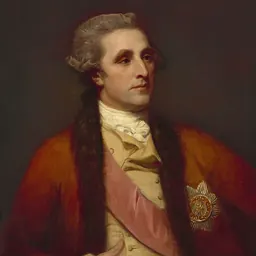


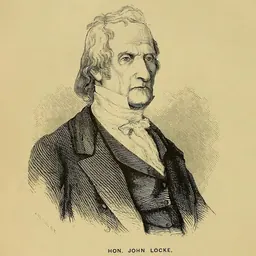



Related people
Same field, nearest in time



Contemporaries
People whose lives overlapped Thomas Reid's

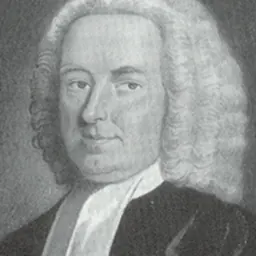


Frequently asked questions
Who was Thomas Reid?
Scottish philosopher (1710–1796)
When was Thomas Reid born?
Thomas Reid was born on 26 April 1710 in Strachan.
When did Thomas Reid die?
Thomas Reid died on 7 October 1796 in Glasgow.
What was Thomas Reid's occupation?
Thomas Reid was a philosopher, librarian, mathematician, writer, university teacher and ethicist.
What nationality was Thomas Reid?
Thomas Reid was British.
Sources & further reading
Cite this page
APA: Biography.guide. (2026). Thomas Reid. https://biography.guide/thomas-reid-philosopher/
MLA: "Thomas Reid." Biography.guide, https://biography.guide/thomas-reid-philosopher/.
Chicago: "Thomas Reid." Biography.guide. https://biography.guide/thomas-reid-philosopher/.
Data last updated: 2026-09-20 · Spot an error? Report a correction.
Page generated 2026-09-27 05:26 UTC