
About Thomas Peters
Lived 1738 – 1792 (aged 53–54). Thomas Peters was a politician and millwright.
Thomas Peters (born Thomas Potters; 1738 – 25 June 1792) and joined British forces during the American Revolutionary War. He served as a Black Loyalist in the Black Company of Pioneers in New York and was evacuated with British forces and many other former slaves at the end of the war. Thomas Peters has been called the "first African-American hero". Like Elijah Johnson and Joseph Jenkins Roberts of Liberia, Peters is considered the African-American founding father of a nation, in this case, Sierra Leone.
Early life Thomas Peters was born in West Africa, to the Yoruba tribe, of the Egba clan.
According to the Dictionary of Canadian Biography: Legend has given Thomas Peters a noble birth in West Africa, whence he was supposedly kidnapped as a young man and brought as a slave to the American colonies. The earliest documentary evidence places him in 1776 as the 38-year-old slave of William Campbell in Wilmington, North Carolina. In that year, encouraged by the proclamation issued by Governor Lord Dunmore of Virginia in 1775 promising freedom to rebel-owned slaves who joined the loyalist forces, Peters fled Campbell’s plantation and enlisted in the Black Pioneers in New York. In 1779, in response to a new invitation to rebel-owned slaves to place themselves under British protection whether they wished to bear arms for the crown or not, a 26-year-old woman named Sally from Charleston, South Carolina, appeared in a British camp, and she too joined the Black Pioneers. In that service she met Peters, who by 1779 had been promoted sergeant, and they were married.
Enslavement In 1760, the twenty-two-year-old African, later called Thomas Peters, was captured by slave traders and brought as a slave to French Louisiana on a French ship, the Henri Quatre. Upon arrival in North America, probably at New Orleans, he was sold to a French planter. Peters tried to escape three times before being sold to an Englishman or Scotsman in one of the Southern Colonies. This was probably Campbell, an immigrant Scotsman, who had settled on the Cape Fear River in Wilmington, North Carolina. at the start of the American Revolutionary War and migrated to New York, where he joined the Black Pioneers, a Black Loyalist unit made up of refugee African-American slaves. The British had previously promised freedom to slaves of rebels in exchange for supporting the war effort against the colonies that formed the new United States. Many former slaves joined the British in the years of the war after the United States had been established as a nation; under American law they were still considered slaves and the US demanded that the British return their "property."
Migrating to New York, Peters rose to the rank of sergeant in the Black Pioneers regiment and he was twice wounded in battle. During this time, Thomas married Sally Peters, a refugee slave from South Carolina. They had a daughter called Clairy (born 1771) and a son John (born 1781). Sally and Peters may have once been slaves together in South Carolina and became reunited during the war. Peters served at the British siege of Charleston, South Carolina, in summer 1776, and was with them when they moved north to take Philadelphia, the seat of the Continental Congress, in autumn 1777.
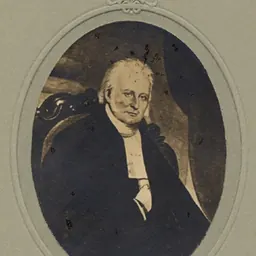
Resettled in Nova Scotia Lawrence Hartshorne, d. 1822, a Quaker who was the chief assistant of John Clarkson (abolitionist) in helping the Black Nova Scotian Settlers emigrate to Sierra Leone (1792), Old Burying Ground (Halifax, Nova Scotia)
After the war Peters and some three thousand of other former African-American slaves were evacuated by the British, who had promised their freedom, and resettled in Nova Scotia, along with white Loyalists. The Crown allotted land to the pioneers and supplies to help with the first year. The Peters family resided here from 1783 to 1791. Initially after being evacuated from New York, the ship carrying Peters had been blown off course, and the crew temporarily settled in Bermuda. Eventually Thomas Peters and his family settled in Annapolis Royal, Nova Scotia. Peters and his fellow Black Pioneer, Murphy Steele, petitioned the government for land together. Steele and Peters had developed a friendship during their service to the Black Pioneers.
Petition to settle in Sierra Leone Colony, West Africa Peters became disheartened with what he saw as broken promises of land and aid by the British government. He and fellow Black Loyalists also suffered from discrimination by whites in Nova Scotia. He decided to travel to England to demand the land promised to him and others.
Recruiting migrants for Sierra Leone Peters returned to Nova Scotia triumphant in his quest. Together with leaders David George, Moses Wilkinson, Joseph Leonard, Cato Perkins, William Ash, John Ball, and Isiah Limerick promoted migration to Sierra Leone among the black pioneers in the communities of Birchtown, Halifax, Shelbourne, and Annapolis Royal. Peters and David Edmons (Edmonds) from Annapolis Royal petitioned John Clarkson for beef to celebrate their last Christmas in North America in 1791. David Edmonds eventually became a successful settler in Sierra Leone and a friend of Paul Cuffee, a Boston, Massachusetts businessman who also promoted resettlement of African Americans in Sierra Leone.
Sierra Leone More than 1,100 of the 3,500 American blacks decided to migrate to West Africa. Most were from families with generations of birth in the British Thirteen Colonies; a few, like Peters, were returning to the Africa of their birth.
In 1792, they arrived at St. George Bay Harbor. According to legend, Thomas Peters led the Nova Scotians ashore singing an old Christian hymn (though most likely it was other more influential religious leaders). After John Clarkson was appointed as governor of the settlement, Peters became at odds with him; Peters called himself the "Speaker General" of the Annapolis Royal Nova Scotia settlers. Although he received support from influential figures amongst settlers such as Abraham Elliot Griffiths and Henry Beverhout, eventually the overwhelming majority of Nova Scotians affirmed John Clarkson as their leader. Peters became disheartened. He was among the many early settlers to die of disease in the early years of the colony.
Peters was portrayed by Leo Wringer in the BBC television series Rough Crossings (2007), based on a history of the British and American slaves during and after the Revolution, written by historian Simon Schama.
In 2011, a statue of Thomas Peters was erected in Freetown, commissioned by the Krio Descendants Union.
Peters was named a National Historic Person in 2022 by the government of Canada, on the advice of the national Historic Sites and Monuments Board.
Don’t just read it —
keep it.
Full-length biographies made to live with: read them, listen on the way to work, watch them tonight.
- E-book
- Audio
- Video
Instant download · yours to keep · every purchase keeps this site free
Important facts
People in Thomas Peters's life
Named in this biography and alive at the same time




Related people
Same field, nearest in time



Contemporaries
People whose lives overlapped Thomas Peters's





Frequently asked questions
Who was Thomas Peters?
Black Loyalist founding father of Sierra Leone
When was Thomas Peters born?
Thomas Peters was born on 25 June 1738 in Yorubaland.
When did Thomas Peters die?
Thomas Peters died in 1792 in Freetown.
What was Thomas Peters's occupation?
Thomas Peters was a politician and millwright.
Sources & further reading
Cite this page
APA: Biography.guide. (2026). Thomas Peters. https://biography.guide/thomas-peters/
MLA: "Thomas Peters." Biography.guide, https://biography.guide/thomas-peters/.
Chicago: "Thomas Peters." Biography.guide. https://biography.guide/thomas-peters/.
Data last updated: 2026-09-20 · Spot an error? Report a correction.
Page generated 2026-09-27 05:31 UTC