About Thomas Oliphant
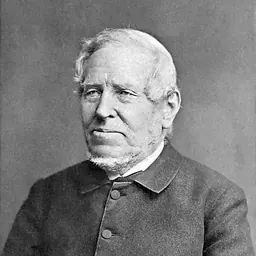
Lived 1799 – 1873 (aged 73–74). Thomas Oliphant was a British lyricist, songwriter and musician.
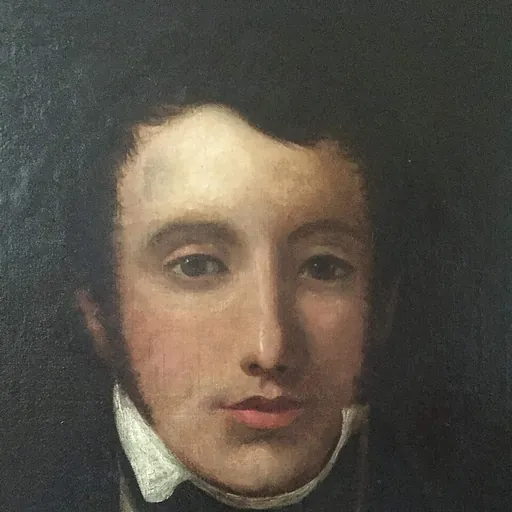
Thomas Oliphant as a young man. Date and artist unknown. The original is in his family's collection. Thomas Oliphant (1799 – 1873) was a Scottish musician, artist and author. He wrote the chorale for the wedding of the future King Edward VII and Queen Alexandra, as well as the words to "Deck the Hall(s) with Boughs of Holly".
One of a series of thirty five drawings by Thomas Oliphant of the Crystal Palace at Sydenham drawn between 1855 and 1860. The original is in his family's collection.
Family background Thomas was the fifth son of Ebenezer Oliphant, 7th of Condie and Mary, 3rd daughter of Sir William Stirling, Bt. of Ardoch, Perth and Kinross. Thomas was baptised at Forgandenny on Christmas Day in 1799.
Drawing of Newton of Condie by Thomas Oliphant (circa 1853), his birthplace and ancestral home.
Oliphant was closely related to Carolina Oliphant, Lady Nairne.
Early life Oliphant was educated at Winchester College but left early. He became a member of the London Stock Exchange but after a short time left to pursue his interest in music and literature. Oliphant was described as the "Poet of the Court", as he wrote lyrics for Royal events and other important occasions.
In Victorian Britain the vogue for translating foreign lyrics into English was popular. It was a pastime at which Oliphant was prodigious. Oliphant's position in the music world has diminished to the point where he is largely unknown but in his lifetime his standing was significant. An illustration of this is a letter in The Musical World dated October 1869, concerning someone else's transgression: "We shall next have the musical knowledge of Hogarth called into question or the profundity of Parry; or the orchestral skill of Hullah; or the madrigalian researches of Oliphant; or the genius of Louis Emmanuel; or the modesty of Eliason....".
In spite of his extensive interpretations of German songs, it would appear that, at one time at least, Oliphant did not speak German. As one of his friends and contemporaries put it: "Many a popular drawing-room song of those days bore on its title-page the intimation, ' Words by Thomas Oliphant, Esq.' Tom knew no German, and when he was told of a song in that noble tongue which was likely to suit him commercially, he asked me to give him a bare English prose translation of it, which he then turned into metre..... 'The Standard-Bearer' was one of the most successful of the many prose-skeleton songs of which I thus furnished him." Given the quantity of "translations" which Oliphant produced, it is hard to see how he could not have gained some knowledge of German in the process. Oliphant also drew from Welsh, French, Italian and other languages, it is possible that he was not fully conversant in these languages either (nevertheless it is known from his collection of Italian sketches, that he did at some stage travel in Italy), which is probably partly why his English verses are not translations but his own interpretations. "Nos Gallen" is a notable example, since it is a New Year's Eve song, which Oliphant turned into the Christmas carol "Deck the Hall" (although he published it as "Nos Gallen" in 1862 and it has since become known by its first line).
Oliphant commissioned eighteen works by John Liptrot Hatton who worked under the pseudonym of 'P.B. Czapek' (alluding to the Hungarian word for a Hat, for 'Hatton'). These compositions were based on the style of German classics.
Following Oliphant's death in 1873, his valuable music collection was sold by Messrs. Puttick and Simpson.
Some musical works by Oliphant
English version of Beethoven's works "Fidelio", "The Mount of Olives"
"Ave Maria" English version by Thomas Oliphant; music by Schubert.
Other works by Schubert with the English by Thomas Oliphant:
"Let me weep again"
"I came when Spring was smiling"
"Fast Homeward there rode (the erl king)"
"Thine is my Heart"
"Forlorn I track the mountains steep (the Wanderer)".
"Maiden Fair, O Deign to Tell" by Thomas Oliphant/Joseph Haydn.
"O have you seen a bonny lass" words by Thos Oliphant Esqr. music by Maurice Cobham, 1840.
Works with music by Friedrich Curschmann, English words by Thomas Oliphant:-
"Rest Love The Twilight Is Closing" – A Serenade and "She is Mine",
"Thine is my heart" (Dein ist mein Herz),
"Arise Bright Golden Star Of Day" – A Song
Oliphant wrote the English words for the opera "The Regicide", the music by Pietro Metastasio and authored/set by Charles Lucas
"Down in a Flow'ry Vale", a Madrigal for Four Voices – The Words imitated from the Italian by Thomas Oliphant, original by Constantius Festa,
"The daughter's gift" (ballad), the poetry written by Thomas Oliphant, the music composed by Jules Benedict.
"Heart Fond Heart, Why Dost Thou Languish" (Herz. mein herz. warum so Traurig) English Version by T. Oliphant Esq. Music by Carl Maria von Weber
"The Mist is rising from hill & dale" ("Thale dampfen" from the opera "Euranthe") English Version by T. Oliphant Esq. Music by Carl Maria von Weber
"Could I Thro' Aether Fly" (Konnt Ich Durch Raume Flieh'n), music by Bernhard Molique, English words by Thomas Oliphant
"The Jewish Maiden" (Das Madchen von Jud) and "All is Still in Slumber Deep" (Schlummerlied), music by Kucken and English words by Oliphant.
"The Post Horn", German song adapted to English words, music by Conradin Kreutzer, lyrics by Oliphant
"Stay One Moment Gentle Sires" words and music by Thomas Oliphant.
"The Ash Grove" published in Volume I of the 1862 collection Welsh Melodies, With Welsh And English Poetry, by John Jones (Talhaiarn) & Thomas Oliphant. published in Volume 2 of the 1862 collection Welsh Melodies, With Welsh And English Poetry, by John Jones (Talhaiarn) & Thomas Oliphant. By 1842 he had completed the first catalogue of the manuscript music. He began the cataloguing of the printed music which he completed by 1849. Oliphant resigned from the British Museum in 1850 as a result of a "run-in" with Panizzi. In 1852 he became librarian to the Musical Institute of London. In the 1860s he was arranging musical productions at Crystal Palace. He was also an Auditor of the Royal Society of Female Musicians and of the National Opera Company. Oliphant was also Literary Illustrator of the London Glee and Madrigal Union in 1860 and 1861.
Art On leaving the British Museum, Oliphant returned to his childhood home in Scotland. Between 1850 and 1860 Oliphant completed three (known) volumes of sketches. The first is a visual record of pencil sketches of landscapes and buildings as he journeyed through Orkney, Shetland, Caithness, Sutherland, Ross-shire, Inverness-shire and Perthshire, 1852. The second volume actually starts in 1850 with drawings of his ancestral home and is a series of sketches of landscapes mainly around Strathearn but also charts his journey to the West Coast of Scotland in 1853, the Isle of Man and his journey back to the South of England and the last is a collection of sketches of Crystal Palace between 1855 and 1860.
Publications 1834 "Comments of a Chorus Singer at the Royal Musical Festival at Westminster Abbey" under the pseudonym Saloman Sackbut.
1840 "Catches and Rounds by Old Composers" adapted to Modern Words by Thomas Oliphant.
1862 "Welsh Melodies, With Welsh And English Poetry", vols. 1 & 2, by John Jones (Talhaiarn) & Thomas Oliphant. Author: John Thomas.
1870 "Welsh Melodies, With Welsh And English Poetry", vol. 3, by John Jones (Talhaiarn) & Thomas Oliphant. Author: John Thomas.
1874 "Welsh Melodies, With Welsh And English Poetry", vol. 4, by John Jones (Talhaiarn) & Thomas Oliphant. Author: John Thomas.
Don’t just read it —
keep it.
Full-length biographies made to live with: read them, listen on the way to work, watch them tonight.
- E-book
- Audio
- Video
Instant download · yours to keep · every purchase keeps this site free
Important facts
People in Thomas Oliphant's life
Named in this biography and alive at the same time





Related people
Same field, nearest in time




Contemporaries
People whose lives overlapped Thomas Oliphant's





Frequently asked questions
Who was Thomas Oliphant?
Scottish musician, artist and author
When was Thomas Oliphant born?
Thomas Oliphant was born in 1799 in Scotland.
When did Thomas Oliphant die?
Thomas Oliphant died in 1873 in London.
What was Thomas Oliphant's occupation?
Thomas Oliphant was a lyricist, songwriter and musician.
What nationality was Thomas Oliphant?
Thomas Oliphant was British.
Sources & further reading
· DBpedia: Thomas Oliphant (lyricist)
Cite this page
APA: Biography.guide. (2026). Thomas Oliphant. https://biography.guide/thomas-oliphant/
MLA: "Thomas Oliphant." Biography.guide, https://biography.guide/thomas-oliphant/.
Chicago: "Thomas Oliphant." Biography.guide. https://biography.guide/thomas-oliphant/.
Data last updated: 2026-09-20 · Spot an error? Report a correction.
Page generated 2026-09-27 05:09 UTC