
About Adrian Ross
Lived 1859 – 1933 (aged 73). Adrian Ross was a British lyricist, librettist, writer, playwright and songwriter.
Arthur Reed Ropes (23 December 1859 – 11 September 1933), better known under the pseudonym Adrian Ross, was a prolific English writer of lyrics, contributing songs to more than sixty British musical comedies in the late 19th and early 20th centuries. He was the most important lyricist of the British stage during a career that spanned five decades. At a time when few shows had long runs, nineteen of his West End shows ran for over 400 performances.
Starting out in the late 1880s, Ross wrote the lyrics for the earliest British musical theatre hits, including In Town (1892), The Shop Girl (1894) and The Circus Girl (1896). Ross next wrote the lyrics for a string of hit musicals, beginning with A Greek Slave (1898), San Toy (1899), The Messenger Boy (1900) and The Toreador (1901) and continuing without a break through World War I. He also wrote the English lyrics for a series of hit adaptations of European operettas beginning with The Merry Widow in 1907.
During World War I, Ross was one of the founders of the Performing Rights Society. He continued writing until 1930, producing several more successes after the war. He also wrote the popular novel The Hole of the Pit and a number of short stories.
Life and career Ross was born in Lewisham, London. He was the youngest son and fourth child of Ellen Harriet Ropes née Hall, of Scarborough, and William Hooper Ropes, a Russian merchant. Ross's parents lived in Normandy, France, but sent him to school in London at Priory House School in Clapton, Mill Hill School, and the City of London School. He later attended King's College, Cambridge, where, in 1881, he won the Chancellor's Medal for English verse for his poem "Temple Bar", and also won the Members' Prize for the English essay. In 1883 he graduated with a first-class degree, winning the Lightfoot scholarship for history and a Whewell scholarship for international law. He was elected a fellow of the College.
He was a Cambridge University graduate and don, teaching history and poetry from 1884 to 1890 and writing serious and comic verse of his own, the first volume of which was published in 1884. In 1889, he published "A Sketch of the History of Europe". He was also a translator of French and German literature under his own name.
Early career
During a brief illness in 1883 after catching cold at the University Boat Race, Ross used the lonely time in bed to write the libretto of an entertainment entitled A Double Event. This was produced at St. George's Hall, London in 1884 with music by Arthur Law, and Ross used the name "Arthur Reed". His next work for the stage, also as Arthur Reed, was the book and lyrics for a musical burlesque, Faddimir (1889 at the Opera Comique), with music by fellow Cambridge graduate, F. Osmond Carr. The position of "lyricist" was relatively new, as previously the writers of libretti would invariably write the lyrics themselves. As the new Edwardes-produced "musical comedies" took the place of burlesque, comic opera and operetta on the stage, Ross and Harry Greenbank established the usefulness of a separate lyricist.
Gaiety and Daly Theatre musicals Ross contributed lyrics to almost all of the Gaiety Theatre's shows, beginning with The Shop Girl (1894, with his song "Brown of Colorado") and Go-Bang in 1895. He wrote over two thousand lyrics and produced lyrics for over sixty musicals thereafter, including most of the hit musicals through World War I. In 1896, he contributed to the Gaiety Theatre hit, The Circus Girl. He also wrote lyrics for the one-act comic opera, Weather or No (1896), which played as a companion piece to The Mikado at the Savoy Theatre, as well as several other Savoy operas, such as Mirette (1894), His Majesty, or The Court of Vignolia (1897), The Grand Duchess of Gerolstein (1897) and The Lucky Star (1899).
When Edwardes found success, beginning in 1907, in mounting English-language versions of the new generation of continental European operettas to the London stage, Ross wrote the English lyrics for the adaptations, often with libretti by Basil Hood. His words to the songs in The Merry Widow (1907) became the standard English version of that piece, performed throughout the world for many decades. Other Continental musicals that Ross anglicised included A Waltz Dream (1908), The Dollar Princess (1909), The Girl in the Train (1910), The Count of Luxembourg (1911), The Girl on the Film (1913) and The Marriage Market (1913), most of which had enduring success throughout the English-speaking world. and a musical based on The Toymaker of Nuremberg by Austin Strong, which was produced as a Kingsway Theatre Christmas entertainment. Ross also wrote Short History of Europe, edited Lady Mary Wortley-Montagu's Letters (Selection and Life), and was a contributor to Punch magazine.
List of stage works Ross contributed lyrics to the following musicals and comic operas, often in collaboration with other lyricists:
Faddimir, or The Triumph of Orthodoxy (1889) Joan of Arc (1891) (400+ performances in total) Don Juan (1892, starring Roberts) The Young Recruit (1892) In Town (1892) (292 performances) Morocco Bound (1893) (295 performances) Go-Bang (1894) (129 performances) The Shop Girl (1894) (546 performances) Mirette revised English version (1894) (total of 102 performances in both versions) Bobbo (1895) Biarritz (1896) (71 performances) My Girl (1896) (183 performances) Weather or No (1896) (209 performances) The Circus Girl (1896) (497 performances) His Majesty, or The Court of Vignolia (1897) (61 performances) The Ballet Girl (1897) The Grand Duchess (1897) (104 performances) The Transit of Venus (1898) Billy (1898) A Greek Slave (1898) (349 performances) Milord Sir Smith (1898) (82 performances) The Lucky Star (1899) (143 performances) San Toy (1899) (768 performances) The Messenger Boy (1900) (429 performances) The Toreador (1901) (675 performances) Kitty Grey (1901) (220 performances) A Country Girl (1902) (729 performances) The Girl from Kays (1903) (432 performances; 236 performances on Broadway) The Orchid (1903) (559 performances) The Cingalee (1904) (365 performances) The Spring Chicken (1905) (401 performances) The Little Cherub (1906) (114 performances) Naughty Nero (1906) The New Aladdin (1906) (203 performances) See-See (1906) (152 performances). Les Merveilleuses (1906) (196 performances) The Girls of Gottenberg (1907) (303 performances) The Merry Widow (1907) (778 performances; 416 performances on Broadway, and many revivals) A Waltz Dream (1908) (146 performances) Havana (1908) (221 performances; 231 performances on Broadway) King of Cadonia (1908) (333 performances) The Dollar Princess (1909) (428 performances) The Antelope (1909) Our Miss Gibbs (1909) (636 performances) The Dashing Little Duke (1909) (101 performances) The Arcadians (1910, 809 performances; Broadway production: 201 performances) Captain Kidd (1910) The Girl in the Train (1910) (340 performances) The Quaker Girl (1911) (536 performances; 248 performances on Broadway) Madame Sherry (1911: 231 performances on Broadway) Castles in the Air (Frau Luna) (1911) The Count of Luxembourg (1911) (240 performances) Gipsy Love (1912) (299 performances) The Wedding Morning (1912) Tantalising Tommy (1912) The Dancing Mistress (1912) (241 performances) The Girl on the Film (Filmzauber) (1913) (232 performances) The Marriage Market (Lednyedsdr) (1913) The Girl from Utah (1913) (195 performances) The Belle of Bond Street revised version of The Girl from Kays (1914) Betty (1915) (391 performances) The Light Blues (1915) The Happy Day (1916) (241 performances) Theodore & Co (1916) (503 performances) Oh! Caesar (1916) (toured only) The Happy Family (1916) Arlette (1917) The Boy (1917) (801 performances) Three Cheers (1917) (revue) Monsieur Beaucaire (1919) (400 performances) The Kiss Call (1919) Maggie (1919) The Eclipse (1919) Medorah (1920) A Southern Maid (1920) (306 performances) The Love Flower (1920) The Naughty Princess (1920) (280 performances – at the Adelphi Theatre) Faust on Toast (1921) Love's Awakening (1921) Lilac Time (1922) (626 performances) The Cousin from Nowhere (1922; Der Vetter aus Dingsda, 1921, composed by Eduard Künneke) (105 performances) Head Over Heels (1923) The Beloved Vagabond (1927) (107 performances) Frederica (Friederike) (1930) (music by Franz Lehár) The Toymaker of Nuremberg (1930) (32 performances)
Don’t just read it —
keep it.
Full-length biographies made to live with: read them, listen on the way to work, watch them tonight.
- E-book
- Audio
- Video
Instant download · yours to keep · every purchase keeps this site free
Important facts
People in Adrian Ross's life
Named in this biography and alive at the same time

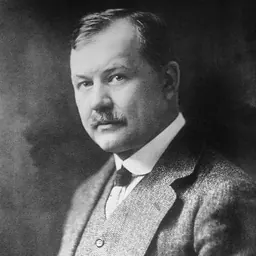

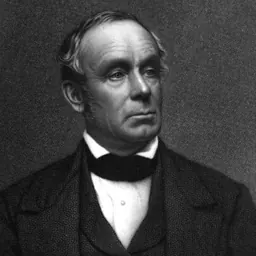



Related people
Same field, nearest in time
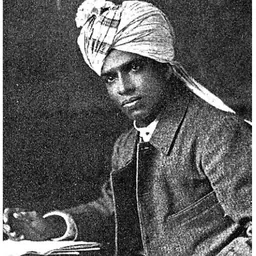
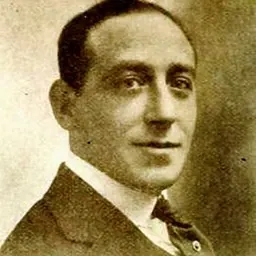

Contemporaries
People whose lives overlapped Adrian Ross's

Frequently asked questions
Who was Adrian Ross?
British lyricist, playwright, and fiction writer (1859–1933)
When was Adrian Ross born?
Adrian Ross was born on 23 December 1859 in Lewisham, London Borough of Lewisham.
When did Adrian Ross die?
Adrian Ross died on 11 September 1933 in London, Kensington.
What was Adrian Ross's occupation?
Adrian Ross was a lyricist, librettist, writer, playwright and songwriter.
What nationality was Adrian Ross?
Adrian Ross was British.
Sources & further reading
Cite this page
APA: Biography.guide. (2026). Adrian Ross. https://biography.guide/adrian-ross/
MLA: "Adrian Ross." Biography.guide, https://biography.guide/adrian-ross/.
Chicago: "Adrian Ross." Biography.guide. https://biography.guide/adrian-ross/.
Data last updated: 2026-09-20 · Spot an error? Report a correction.
Page generated 2026-09-27 05:24 UTC