
About Basil Hood
Lived 1864 – 1917 (aged 53). Basil Hood was a British librettist and poet.
Basil Willett Charles Hood (5 April 1864 – 7 August 1917) was a British dramatist and lyricist known for writing the libretti of half a dozen Savoy Operas and for English adaptations of operettas, including The Merry Widow.
He embarked on a career in the British Army, rising to the rank of captain, while writing theatrical pieces in his spare time. After some modest success, Hood and his collaborator, the composer Walter Slaughter, had a major hit with their long-running show, Gentleman Joe, in 1895. Another long-running success was The French Maid (1896). Hood then resigned from the army to pursue his career as a librettist full-time. With Arthur Sullivan and then Edward German, he wrote several well-received pieces for the Savoy Theatre, including The Rose of Persia (1899), The Emerald Isle (1901), Merrie England (1902) and A Princess of Kensington (1903).
After comic opera went out of fashion, Hood turned to Edwardian musical comedy, writing lyrics for The Belle of Mayfair (1906) and The Girls of Gottenberg (1907), among others. He then found his greatest success with adaptations of continental operettas for the impresario George Edwardes, writing English versions of such works as (1907), The Dollar Princess (1908), A Waltz Dream (1908) and The Count of Luxembourg (1911), among others, sometimes drastically rewriting the book and lyrics. At the outbreak of World War I, he took up a demanding post in the British War Office, which is believed to have contributed to his early death.
Life and works
Early life and military career Hood was born in Croydon, Surrey, the youngest of nine children of the psychiatrist Sir William Charles Hood (1824–1870), M.D., who was superintendent, physician and treasurer to Bethlem Royal Hospital and later a Commissioner in Lunacy. His mother was Jane née Willett (1826–1866). After both parents died in his early childhood, Hood was raised in London, and later Croydon, by his older siblings Wellington College (1877–1880) and the Royal Military College, Sandhurst. He was commissioned a lieutenant in the Green Howards in 1883. In November 1887, he married Frances Ada née English (1863–1922) in London, but two months later she was institutionalised at Bethlem Royal Hospital, and she remained in asylums until her death.
Early stage works Hood began writing for the theatre in his mid-twenties. His first one-act piece, The Gypsies, with music by Wilfred Bendall, was mounted as a curtain-raiser at the Prince of Wales Theatre in 1890. The Times praised the piece and remarked on "a certain flavour of Gilbertian paradox". Hood provided the lyrics to Lionel Monckton's song, "What Will You Have to Drink?", interpolated into the Gaiety Theatre burlesque Cinder Ellen up too Late in 1892. Hood then wrote two short operettas with music by Walter Slaughter. The first was Donna Luiza, which The Times again compared to W. S. Gilbert's work, this time less favourably. The second piece by Hood and Slaughter was The Crossing Sweeper, presented at the Gaiety Theatre, with Kate Cutler and Florence Lloyd.
In 1895, Hood and Slaughter wrote a full-length musical comedy, Gentleman Joe, the Hansom Cabbie, a vehicle for the comedian Arthur Roberts. It ran for 391 performances in London, with a second company also presenting it in the provinces. Its success prompted Hood to resign his army commission to concentrate on his writing, though he rejoined for three more years while continuing to write. Another provincial piece with Slaughter, in 1897, was The Duchess of Dijon, in Portsmouth. and from the London critics when it opened at Terry's Theatre in April 1897. During the run, Hood wrote a short curtain raiser, Apron Strings, a farcical comedy about marital misunderstandings, which was added to the bill in October. The French Maid transferred to the Vaudeville Theatre with revised music and lyrics, running for 480 performances in all. The collaborators followed it with five more shows in succession, including Her Royal Highness; Orlando Dando, the Volunteer (a vehicle for Dan Leno); Also beginning in 1897, Hood and Slaughter wrote a series of short musicals for children, based on fairy tales, which received warm reviews, including Little Hans Andersen. Hood developed a reputation for clever lyrics but convoluted plots. Sullivan's several operas written in the 1890s without Gilbert had not been successful, but his new opera with Hood, The Rose of Persia (1899), ran for 213 performances. Hood also wrote the libretti for two short companion pieces at the Savoy. The first was Pretty Polly, which ran with The Rose of Persia in 1900 and with Patience in 1900–01, and the second was Ib and Little Christina (1900), which played in several theatres including the Savoy (in 1901, as a companion piece to Hood's The Willow Pattern). Hood also wrote such plays, during this period, as The Great Silence, with Louie Pounds (Coronet Theatre, London; 1900), which was presented together with Cox and Box (starring Courtice Pounds as Box) and Ib and Little Christina, with Louie Pounds as adult Christina (otherwise, the original cast reprised their roles).
After the success for Hood and Sullivan of The Rose of Persia, the pair were soon writing a second opera, The Emerald Isle (1901). Sullivan died while writing this new work, however, and the task of completing it fell to Edward German. The production was another reasonable success, with 205 performances. Of Merrie England, The Observer wrote, "It is not too much to say that Capt. Basil Hood and Mr. Edward German have, by means of the latest Savoy success, increased their reputations to an extent that will lead the musical public to look to them in future for work as epoch-making in its peculiar genre as that of Gilbert and Sullivan. Capt. Hood is the only writer of "words for music" whose lyrics can compare with those of Mr. Gilbert for finish, rhythmic piquancy, and verbal quaintness." Another piece in 1902, My Pretty Maid, starring Edward Terry, lasted less than two months. By contrast, in the view of the Encyclopedia of Popular Music, "adapting German and Viennese operettas … is where he found his métier. Often discarding the original premise, he helped create lively and very popular operettas."
Last years With the outbreak of World War I, German-language operetta lost its popularity. After that, Hood supplied lyrics for individual numbers for some musicals, and a revue, Bric-a-Brac with Lionel Monckton and Arthur Wimperis, and some non-musical plays. In the early days of the war, he took up a post with the Cryptography Division of the War Office. Despite the heavy demands of his wartime work, he wrote a patriotic light opera, Young England, with music by G. H. Clutsam and Hubert Bath, starring Walter Passmore, which ran at Daly's Theatre and then the Theatre Royal, Drury Lane in 1916–17 before going on tour. In his final years, Hood developed an obsession with Shakespeare's Hamlet, which he believed contained a cryptogram that he worked to decipher. His companion of later years was Doris Armine Ashworth; she died about 1958. After his death, his children's book, Saint George of England, was published in 1919 by George G. Harrap & Co., London.
Don’t just read it —
keep it.
Full-length biographies made to live with: read them, listen on the way to work, watch them tonight.
- E-book
- Audio
- Video
Instant download · yours to keep · every purchase keeps this site free
Important facts
People in Basil Hood's life
Named in this biography and alive at the same time


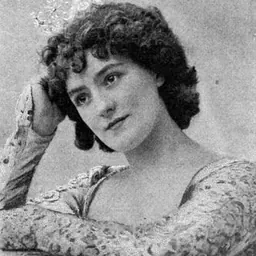
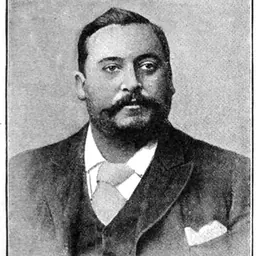



Related people
Same field, nearest in time

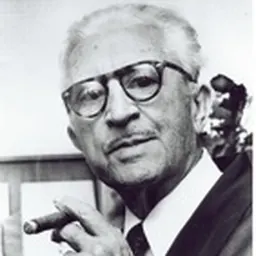
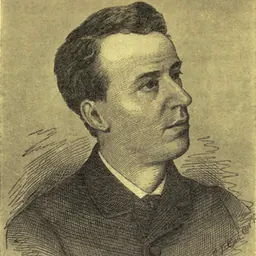
Contemporaries
People whose lives overlapped Basil Hood's


Frequently asked questions
Who was Basil Hood?
British dramatist and army officer (1864–1917)
When was Basil Hood born?
Basil Hood was born on 5 April 1864 in Croydon.
When did Basil Hood die?
Basil Hood died on 7 August 1917 in London.
What was Basil Hood's occupation?
Basil Hood was a librettist and poet.
What nationality was Basil Hood?
Basil Hood was British.
Sources & further reading
Cite this page
APA: Biography.guide. (2026). Basil Hood. https://biography.guide/basil-hood/
MLA: "Basil Hood." Biography.guide, https://biography.guide/basil-hood/.
Chicago: "Basil Hood." Biography.guide. https://biography.guide/basil-hood/.
Data last updated: 2026-09-20 · Spot an error? Report a correction.
Page generated 2026-09-27 05:21 UTC