
About Thomas Matthew Charles Symonds
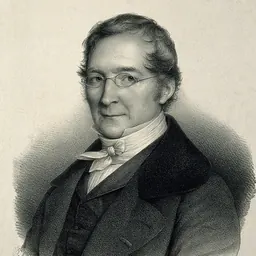
Lived 1813 – 1894 (aged 81). Thomas Matthew Charles Symonds was a naval officer and cartographer.
Admiral of the Fleet Sir Thomas Matthew Charles Symonds, GCB (31 October 1811 – 14 November 1894) was a Royal Navy officer. He was commanding officer of that participated in the bombardment of Sevastopol during the Crimean War.
Symonds became Admiral Superintendent at Devonport Dockyard and then Commander-in-Chief, Channel Squadron. In that capacity he invented the scalene triangle naval formation, replacing the older isosceles triangle naval formation, and earned himself a reputation as a tactician. He also carried out an investigation into the design of the turret ships HMS Monarch and HMS Captain and concluded that the turret ships were "formidable" and would, by superior armament, destroy any opposing broadside ships. He went on to be Commander-in-Chief, Plymouth.
Symonds led an active retirement, writing letters and pamphlets to The Times arguing in favour of changes to ship design and a stronger navy. He also wrote an open letter to the British press regarding the naval armour tests by the United States Navy at Annapolis arguing that the compound-armour used in the design of the British Trafalgar-class battleships was defective. He then issued a nine-column, eleven-point statement as a Christmas supplement to all the service papers entitled "The Truly Perilous State of Great Britain Should War Occur between France and Ourselves".
Early life
Symonds was born in 1811 in Milford-on-Sea, Hampshire, the second son of Rear Admiral Sir William Symonds and Elizabeth Saunders Symonds (née Luscombe). He was baptised along with his younger brothers Julian and Jermyn on 11 September 1816 in Fawley, Hampshire.
Early career Symonds joined the Royal Navy on 25 April 1825. After passing his examinations, he was promoted to lieutenant on 5 November 1832. He was appointed to the sixth-rate at Portsmouth in April 1833 and then transferred to the fourth-rate in the Mediterranean Fleet in September 1833.
Symonds was deployed to the Black Sea in HMS Arethusa in 1854, early of the Crimean War, and participated in the bombardment of Sevastopol in October 1854. and was awarded the Order of the Medjidie, third class on 3 April 1858. He went on to be commanding officer of the first-rate HMS Conqueror, in the Channel Squadron, in November 1855.
Senior command
Promoted to rear-admiral on 1 November 1860, Symonds became Admiral Superintendent at Devonport Dockyard, with his flag in the second-rate HMS Indus, in December 1862. he went on to be Commander-in-Chief, Channel Squadron, with his flag in the armoured frigate HMS Minotaur, in December 1868.
In 1870 Symonds carried out an investigation into the design of the turret ships HMS Monarch and HMS Captain and concluded that the turret ships were "formidable" and would, by superior armament, destroy any opposing broadside ships. HMS Captain capsized in September 1870 with the loss of nearly 500 lives because of design and construction errors that led to inadequate stability.
Promoted to full admiral on 14 July 1871, Symonds became Commander-in-Chief, Plymouth, with his flag in the first-rate HMS Royal Adelaide, in November 1875 and was then promoted to Admiral of the Fleet on 15 June 1879 and advanced to Knight Grand Cross of the Order of the Bath on 23 April 1880.
Symonds criticised the design of the battleship HMS Trafalgar, which he said sat far too low in the water. Symonds retired in July 1883: he led an active retirement, writing letters and pamphlets to The Times arguing in favour of changes to ship design and a stronger navy. On 20 October 1890, he wrote an open letter to the British press regarding the naval armour tests by the United States Navy at Annapolis. His point was that the tests showed that the compound-armour used in the design of the British Trafalgar-class battleships, HMS Trafalgar and HMS Nile was defective. He also argued that these battleships had "untrustworthy monster guns" fitted on "enormously heavy turrets" and consequently sat far too low in the water. He died at his home, Sunny Hill at Higher Warberry in Torquay, on 14 November 1894. RN, in February 1856.
Don’t just read it —
keep it.
Full-length biographies made to live with: read them, listen on the way to work, watch them tonight.
- E-book
- Audio
- Video
Instant download · yours to keep · every purchase keeps this site free
Important facts
People in Thomas Matthew Charles Symonds's life
Named in this biography and alive at the same time


Related people
Same field, nearest in time


Contemporaries
People whose lives overlapped Thomas Matthew Charles Symonds's




Frequently asked questions
Who was Thomas Matthew Charles Symonds?
British admiral (1813-1894)
When was Thomas Matthew Charles Symonds born?
Thomas Matthew Charles Symonds was born on 15 July 1813 in Milford on Sea.
When did Thomas Matthew Charles Symonds die?
Thomas Matthew Charles Symonds died on 14 November 1894 in Torquay.
What was Thomas Matthew Charles Symonds's occupation?
Thomas Matthew Charles Symonds was a naval officer and cartographer.
Sources & further reading
· Wikipedia: Thomas Matthew Charles Symonds
· DBpedia: Thomas Symonds (Royal Navy officer, died 1894)
Cite this page
APA: Biography.guide. (2026). Thomas Matthew Charles Symonds. https://biography.guide/thomas-matthew-charles-symonds/
MLA: "Thomas Matthew Charles Symonds." Biography.guide, https://biography.guide/thomas-matthew-charles-symonds/.
Chicago: "Thomas Matthew Charles Symonds." Biography.guide. https://biography.guide/thomas-matthew-charles-symonds/.
Data last updated: 2026-09-20 · Spot an error? Report a correction.
Page generated 2026-09-27 05:24 UTC