
About Thomas Latta
Lived 1796 – 1833 (aged 36–37). Thomas Latta was an inventor.
Thomas Aitchison Latta (c. 1796 – 19 October 1833) was a medical pioneer who was responsible for the introduction of the saline solution ("saline drip") methodology into the treatment of patients.
Life Thomas Latta was born at Jessfield House, near the fishing village of Newhaven near Edinburgh. His father Alexander Latta acquired the property in 1796. No birth records have been found probably because the Latta family were members of a dissenting congregation The Associate Congregation of Leith, and as such would not feature in the baptism records of established Church. His maternal grandfather is thought to be Rev Thomas Aitchison of Leith.
He attended the University of Edinburgh, graduating MD in 1819 with a thesis about scurvy. Latta set up in medical practice in the port of Leith in 1822.
Intravenous infusion of saline Latta introduced the technique of intravenous infusion in 1832 during a cholera epidemic which had reached Britain in the previous year and was responsible for the deaths of large numbers of people. Latta was the leader of a group of three Leith doctors, the other two being Dr Thomas Craigie and Dr Robert Lewins. Whilst all three were based in Leith, Latta's pioneering intravenous treatment was carried out on five patients in the Edinburgh Cholera Hospital on Drummond Street, a building which was the original Old Surgeons' Hall and which had been bought by the Royal Infirmary of Edinburgh. The value of isolating such patients in specialist hospitals had been learned early in the epidemic. Although his technique proved effective in saving human lives, the research appears be have forgotten for 70 years before re-emerging and becoming widely adopted.
Intravenous theory had existed prior to 1832 but had never been successfully put into practice. The critical aspect of Latta's theory was the nature of the liquid, as he correctly speculated that a salt solution could substitute for blood in restoring the circulating blood volume. Basing his experiments on the theories of Dr William Brooke O'Shaughnessy, Latta had observed that cholera victims lost a huge proportion of water content from their blood. Replenishment of this in combination with "oxygenating salts" were seen as key to patient recovery. The theory was then put into practice. Latta had at first administeedr the salt solution rectally, 'I attempted', he wrote 'to restore the blood to its natural state, by injecting copiously into the larger intestines warm water... trusting that the power of absorption might not be altogether lost, but by these means I produced, in no case, any permanent benefit.' Shortly after Latta left her the vomiting and diarrhoea returned and she died some 5 hours later.
Results were inconsistent, almost certainly because the correct proportions of salt for physiological saline were then unknown, leaving Latta unable to gauge the proportions of potassium, sodium, bicarbonate, and chloride in the blood so as to prevent hemolysis and the destruction of red blood cells. Though a few of Latta's patients appear to have survived, most died after a temporary period of excitation like that described in his letter to the Lancet. The standard use of saline solutions (largely for recovery procedures) did not begin until 1902, when electrolyte balance and the mechanisms of hypovolemic shock were better understood.
Personal In November, 1825 Latta married Mary Millar, the daughter of a Canongate builder. His wife Mary died in 1873 and was buried near her son Walter. In her will she expressed a wish to be buried next to her husband and children, so it is likely Dr Thomas Latta is also buried there.
Thomas Latta also contributed publications on the subject of Arctic science, after having sailed as "surgeon and companion" with Captain William Scoresby on a whaling expedition, while still a medical student.
Memorials
In 2014, a new street, on the site of the Eastern General Hospital, was named Latta Place in his memory.
Don’t just read it —
keep it.
Full-length biographies made to live with: read them, listen on the way to work, watch them tonight.
- E-book
- Audio
- Video
Instant download · yours to keep · every purchase keeps this site free
Important facts
People in Thomas Latta's life
Named in this biography and alive at the same time
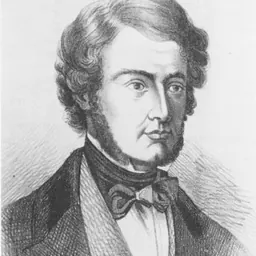


Related people
Same field, nearest in time
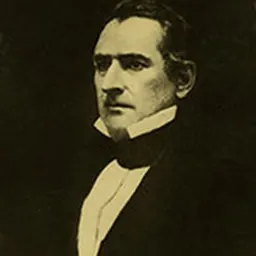

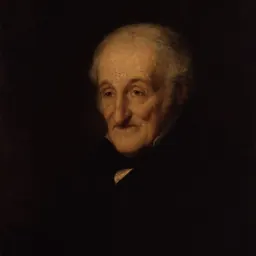
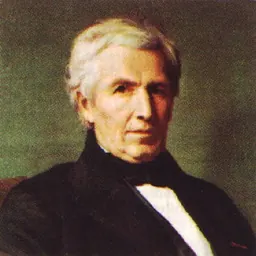
Contemporaries
People whose lives overlapped Thomas Latta's






Frequently asked questions
Who was Thomas Latta?
British medical innovator
When was Thomas Latta born?
Thomas Latta was born in 1796.
When did Thomas Latta die?
Thomas Latta died on 19 October 1833.
What was Thomas Latta's occupation?
Thomas Latta was an inventor.
Sources & further reading
Cite this page
APA: Biography.guide. (2026). Thomas Latta. https://biography.guide/thomas-latta/
MLA: "Thomas Latta." Biography.guide, https://biography.guide/thomas-latta/.
Chicago: "Thomas Latta." Biography.guide. https://biography.guide/thomas-latta/.
Data last updated: 2026-09-20 · Spot an error? Report a correction.
Page generated 2026-09-27 05:20 UTC