About Thomas Kelly-Kenny
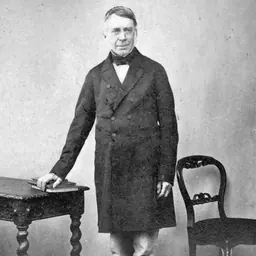
Lived 1840 – 1914 (aged 74). Thomas Kelly-Kenny was a British military personnel.
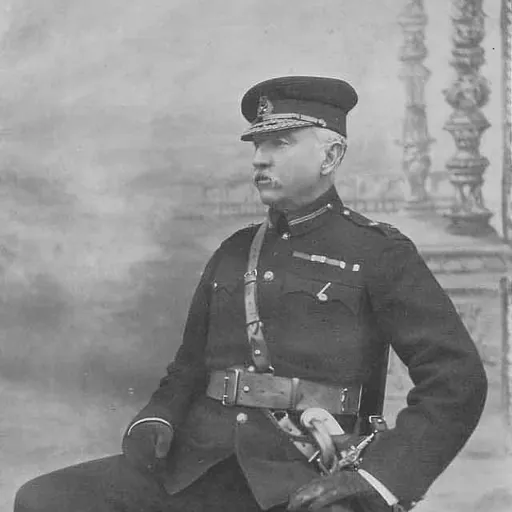
"6th Division". Caricature by "Spy" published in Vanity Fair in 1901. General Sir Thomas Kelly-Kenny (27 February 1840 – 26 December 1914) was a British Army general who served in the Second Boer War.
Military and political career Thomas Kelly was born on 27 February 1840 in Kilrush, County Clare, Ireland, the fifth son of Matthew Kelly and Mary Kenny. He was educated as a lay student at St. Patrick's College, Carlow (University of London). He assumed in 1874 the additional name of Kenny, under the will of his maternal uncle, Dr. Mathias Kenny, a survivor of the Peninsular War and the Battle of Waterloo.
Kelly-Kenny was appointed ensign without purchase in the 1st Battalion, 2nd (The Queen's Royal) Regiment of Foot on 2 February 1858 and was appointed to command the escort of General Sir James Jackson, General Officer Commanding Cape of Good Hope. When this officer was succeeded by General Wynward, Kelly-Kenny was appointed aide-de-camp (ADC). He resigned this post on the outbreak of war with China in 1860 and accompanied his regiment to the Far East where he was appointed ADC to the commander of the 3rd Brigade, Sir Alfred Jephson, holding this post for the duration of the war. He was promoted lieutenant by purchase on 12 October 1860, the day Pekin surrendered to the allies, and engaged in the China war at Sinho and at the taking of Tanku and Taku forts. He was mentioned in despatches. He was appointed captain by purchase on 20 July 1866. He was (acting) Deputy Assistant Quartermaster General (QMG) in Bombay from 25 May 1869 to April 1870 when he was sent to Abyssinia on the outbreak of war. He was in charge of the transport train and was mentioned by Lord Napier in despatches for "zeal, energy and ability". In 1875 he graduated at the staff college, and was promoted major in 1877.
Kelly-Kenny took a keen interest in affairs in his native County Clare and in 1876 he was appointed Justice of the Peace for Clare (after he inherited his estates), as were his father Matthew Kelly, his uncle Mathias Kenny and his brother Matthew Butler Kelly. In 1876 the then Captain Thomas Kelly Kenny held 5,736 acres in Clare. He was patron of the school at Scropul near Treanmanagh founded by his uncle Dr Mathias Kenny. His family had a strong history of involvement in politics and local government. His mother's first cousin Richard Kenny was Vice Provost for Ennis in 1827 and also served as a grand juror. Another of their first cousins, Dean John Kenny of Kilrush and Ennis, was an active figure in political and social reform in those towns. His second cousin Fr Matthew J Kenny was one of the first two presidents of the Clare Farmers' Association and a founder member of the Land League. His uncle Fr Timothy Kelly was an active campaigner for famine relief as parish priest of Kilrush in the famine years. In the late 1840s his father Matthew Kelly and other Gallery and Kenny relatives were poor law guardians. The clergy later supported the O'Gorman Mahon as a home rule candidate. He was narrowly elected. Some of the curates' sentiments are possibly expressed by Father Matthew J Kenny in his post-election address. He expressed a wish for the downfall of the Liberal and Tory parties in Ireland and the end of Landlord Tyrannies. and colonel in July 1885. He was Assistant Adjutant General (AAG) and QMG North-Eastern District from 1 July 1889 to 21 September 1892, where he commanded the training camp at Strensall Camp, Yorkshire. He became AAG Aldershot Garrison on 28 December 1893 on the staff of the Duke of Connaught and then commanded the 3rd Brigade at Aldershot from 18 March 1896, with the rank of major-general, taking over from Major General Francis Clery.
Second Boer War In the Second Boer War of 1899–1902 Kelly-Kenny was, as a lieutenant general, General Officer Commanding the 6th Division of the South African field force. He was twice mentioned in despatches and received the Queen's South Africa Medal with four clasps. He was involved in the relief of Kimberley, the battles of Paardeberg, Poplar Grove and Driefontein.
At the battle of Paardeberg, Kelly-Kenny had a conservative plan to besiege General Cronje and bombard his Boer force from a safe distance with superior artillery. When Lord Roberts became ill, he appointed Lieutenant-General Herbert Kitchener as commander. He overruled Kelly-Kenny and ordered an assault on the Boer trenches. The result was 'Bloody Sunday' — an unnecessary sacrifice of hundreds of lives on the British side.
War Office appointment Kelly-Kenny in conversation with a German officer during the manoeuvres of 1902. Kelly-Kenny was a close friend of King Edward VII who treated him as confidential military advisor. In October 1901 he was appointed Adjutant-General to the Forces, which post he held until 1904. This was at the insistence of the King, who liked him for his industry and administrative capacity and dislike of jobbery. However, Lord Roberts (the commander in chief) did not share this opinion and viewed Kelly-Kenny as conservative about reform, and the War Office was opposed to his appointment. Kelly-Kenny did not work well with his colleagues, who tried to get his powers reduced (which the King opposed). They then tried to move him back to command in 1902, offering him the 4th Army Corps. This he declined. The King was happy about the General's decision. He was appointed a Knight Commander of the Order of the Bath (KCB) in the 1902 Coronation Honours list published on 26 June 1902, and received the knighthood in a private audience on 2 August, during the King′s convalescence on board HMY Victoria and Albert. In September 1902, Kelly-Kenny accompanied Lord Roberts and St John Brodrick, Secretary of State for War, on a visit to Germany to attend the German army manoeuvrers as guest of the Emperor Wilhelm. In October that year, when again it was suggested that he be transferred to an army corps, the King wrote to Mr Broderick saying that the Adjutant General was a most able officer with a thorough knowledge of his profession who would be a loss to the War Office and that he was most surprised that Lord Hornby described him as reactionary when it came to reform. The War Office bowed to the King's wishes and left Kelly-Kenny in his post until the reforms in 1904. Kelly-Kenny accepted the appointment as Colonel of his regiment, The Queen's (Royal West Surrey Regiment) on 16 April 1902, and served as such until his death.
Later life On 21 June 1904 Kelly-Kenny was made a Knight Grand Cross of the Order of the Bath (GCB). In 1905 he attended the wedding of the Crown Prince of Germany with Prince Arthur of Connaught on which occasion the Kaiser decorated him with the Grand Cross of the Order of the Red Eagle. (He had previously received the Order of the Red Eagle 1st class from the Kaiser). In 1906, he accompanied Prince Arthur of Connaught to Japan as part of a mission to present the Order of the Garter to the Emperor. While on this trip and speaking with the Mikado, the Mikado remarked on how he had to improve the horses in Japan, the breed being small. According to Redesdale (p. 26), Kelly-Kenny replied that "It is not always the big horses and the big men that do the best work" which compliment made the Mikado smile. Shooting cards from the Sandringham shoots are in the possession of descendants of the General's heir Thomas O'Gorman, as is a chair made from Elm on the royal estate given to Kelly-Kenny. He was a regular at court and was on friendly terms with Queen Alexandra, who carved a tea table for him herself. He accompanied the French ex-Empress Eugenie on a yachting tour around Ireland in 1909.
Kelly-Kenny lived largely in Britain, where his clubs were Army and Navy and Arthur's, and he let his house at Doolough Lodge in County Clare to his brother Matthew Butler Kelly JP, who is recorded as living at that address in Thom's Directories. There are unsubstantiated reports that royalty stayed at Doolough Lodge with Kelly-Kenny, for example that King George V visited Doolough Lodge, as Prince of Wales in 1906 and that George V stayed at Doolough Lodge during his visit to Ireland in July 1911.
Kelly-Kenny retired from the Army in 1907. He sold his lands to the tenants under the 1909 Land Purchase Act in 1909.
In his Bureau of Military History Witness Statement, Seán Fitzgibbon reports that at a meeting in Dublin on 3 August 1914, the day on which Britain declared war on Germany, Sir Thomas Myles, who the previous weekend had landed a consignment of guns for the Irish Volunteers at Kilcoole, said he had a leader for the Irish Volunteers (who should take over the defence of Ireland and re-create Grattan's Parliament) in the person of Kelly-Kenny.
Cecil Stacpoole Kenny records that one of the last things he did was to visit his cousin Lieutenant Bertram Maurice Kenny in hospital, where he was seriously wounded. Kelly-Kenny was proud of the family connection with Lieutenant Kenny's father William Kenny (judge, privy councillor and Unionist MP) to whom he left £1000 in his will. He is buried in Hove Cemetery having left strict instructions in his will that he did not want a military funeral.
The executors of his will included his nephews Matthew Devitt, a Jesuit priest, and Thomas O'Gorman, of Cahircalla, to whom he left the bulk of his large estate, with some small bequests to other family members. A collection of his personal papers inherited by Fr Devitt are now in the Irish Jesuit Archives.
Don’t just read it —
keep it.
Full-length biographies made to live with: read them, listen on the way to work, watch them tonight.
- E-book
- Audio
- Video
Instant download · yours to keep · every purchase keeps this site free
Important facts
People in Thomas Kelly-Kenny's life
Named in this biography and alive at the same time





Related people
Same field, nearest in time
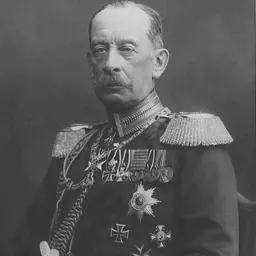


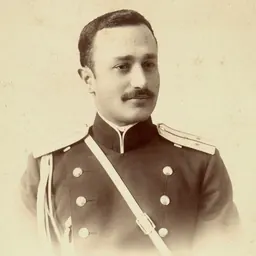
Contemporaries
People whose lives overlapped Thomas Kelly-Kenny's
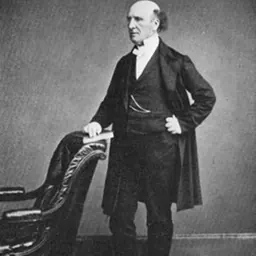
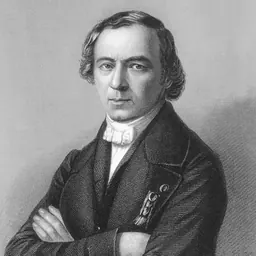

Frequently asked questions
Who was Thomas Kelly-Kenny?
British Army general (1840–1914)
When was Thomas Kelly-Kenny born?
Thomas Kelly-Kenny was born on 27 February 1840.
When did Thomas Kelly-Kenny die?
Thomas Kelly-Kenny died on 26 December 1914.
What was Thomas Kelly-Kenny's occupation?
Thomas Kelly-Kenny was a military personnel.
What nationality was Thomas Kelly-Kenny?
Thomas Kelly-Kenny was British.
Sources & further reading
· Wikipedia: Thomas Kelly-Kenny
Cite this page
APA: Biography.guide. (2026). Thomas Kelly-Kenny. https://biography.guide/thomas-kelly-kenny/
MLA: "Thomas Kelly-Kenny." Biography.guide, https://biography.guide/thomas-kelly-kenny/.
Chicago: "Thomas Kelly-Kenny." Biography.guide. https://biography.guide/thomas-kelly-kenny/.
Data last updated: 2026-09-22 · Spot an error? Report a correction.
Portrait: Wikimedia Commons · author & licence
Page generated 2026-09-27 05:02 UTC