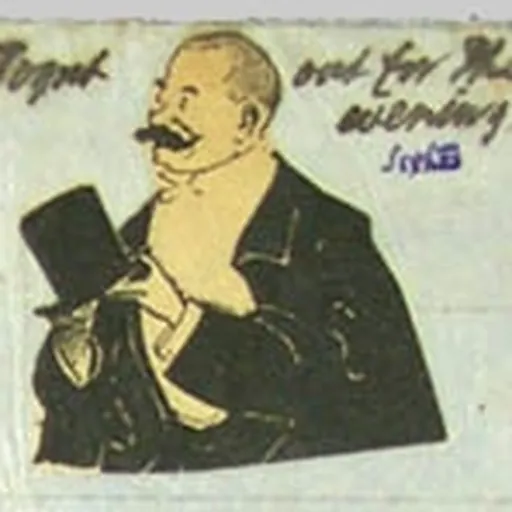
About Thomas Joynt
Lived 1830 – 1907 (aged 76–77). Thomas Joynt was a New Zealand lawyer, known for Bar association.
Thomas Ingham Joynt (December 1830 – 5 September 1907) was a senior member of the New Zealand legal profession from Christchurch. Born in Ireland, he emigrated to Canterbury with his wife and child in 1856. He had commenced legal training in Dublin and was admitted to the bar in 1863 in Christchurch; at the same time, he set up his own legal firm. Over the years, he formed various partnerships with other solicitors. Joynt became known as a defence lawyer and had many high-profile cases, but he was equally successful in civil cases. In 1907, when the first ten King's Counsel were appointed in New Zealand, Joynt was acknowledged as the senior member of the bar. He practised until shortly before his death.
He represented Kaiapoi on the Canterbury Provincial Council from 1871 until the abolition of provincial government some five years later. He served on the Canterbury Executive Council as Provincial Solicitor for 15 months under William Montgomery. He unsuccessfully stood for Parliament in and this marked the end of his political ambitions.
Early life Joynt was born in 1830 in Dunmore, County Galway, Ireland. His parents were Thomas and Sarah Joynt (née Kennedy). He went to school in Tuam and then Dublin. He trained as a lawyer in Dublin, where he met Justice Gresson, who would later admit him as a barrister to the Supreme Court.
Legal career
He first worked as a law clerk in Lyttelton at the Magistrate's Court, but moved to Christchurch in 1858 to take up employment with Gresson and then with Thomas Smith Duncan. After five years with Duncan (whose law firm still exist today as Duncan Cotterill ), he was admitted in 1863 as a barrister and solicitor to the Supreme Court by Gresson, and he started his own law firm. Walter Stringer (KC), James Hay, and Maurice James Gresson (an older brother of Kenneth Macfarlane Gresson; both grandsons of Justice Gresson).
The first case that made him prominent was the successful defence of Mrs Patterson and Miss Williams, who were charged with arson of their leased cafe in Cashel Street. Other prominent cases were the defence for Cedeno, the murder that happened at the house of William Robinson, and the defence of Hugh McLeod, who had murdered his wife. The case was successful and considerable compensation was paid. at the time, he was the senior member of the bar in New Zealand. On the day of his death, which occurred less than three months later, the sitting of the Magistrate's Court was adjourned as a mark of respect. He had a close association with Robert Stout, who at the time of Joynt's death was Chief Justice.
Joynt practised until a fortnight before his death. It is said that he had an excellent command of the English language, and he drew heavily on the bible, Shakespeare, and other poets. He was quick-witted and could cite numerous quotes. In one case, argument was made whether a dog was or was not vicious. One witness described it as "gentle and amiable", whereas the other testified that it had often barked at him savagely. Joynt wryly addressed the judge:
Vox, et praeterea nihil ( Voice and nothing more), your Honour.
He was well read and conversations with him were enjoyed by all. He was immensely proud of the progress that Canterbury had made during his time in the colony. He was re-elected in March 1874 and remained a member of the provincial government until its abolition on 31 October 1876. During the time of William Rolleston as Superintendent of Canterbury, William Montgomery as Provincial Secretary appointed Joynt onto the Executive Council, where he served from January 1874 to April 1875 as Provincial Solicitor. This marked the end to Joynt's ambitions of public service; he never stood again for election after this defeat. Scotston Avenue in St Albans commemorates the property.
His wife died in January 1881 in Sumner. Thomas Joynt died on 5 September 1907 after a short illness at his home, survived by five sons and two daughters, and was buried at Barbadoes Street Cemetery.
Don’t just read it —
keep it.
Full-length biographies made to live with: read them, listen on the way to work, watch them tonight.
- E-book
- Audio
- Video
Instant download · yours to keep · every purchase keeps this site free
Important facts
People in Thomas Joynt's life
Named in this biography and alive at the same time





Related people
Same field, nearest in time


Contemporaries
People whose lives overlapped Thomas Joynt's






Frequently asked questions
Who was Thomas Joynt?
New Zealand lawyer (1830-1907)
When was Thomas Joynt born?
Thomas Joynt was born in 1830 in Dunmore.
When did Thomas Joynt die?
Thomas Joynt died on 5 September 1907 in Christchurch.
What was Thomas Joynt's occupation?
Thomas Joynt was a lawyer.
What was Thomas Joynt known for?
Thomas Joynt was known for Bar association.
What nationality was Thomas Joynt?
Thomas Joynt was New Zealand.
Sources & further reading
Cite this page
APA: Biography.guide. (2026). Thomas Joynt. https://biography.guide/thomas-joynt/
MLA: "Thomas Joynt." Biography.guide, https://biography.guide/thomas-joynt/.
Chicago: "Thomas Joynt." Biography.guide. https://biography.guide/thomas-joynt/.
Data last updated: 2026-09-22 · Spot an error? Report a correction.
Portrait: Wikimedia Commons · author & licence
Page generated 2026-09-27 04:59 UTC