
About Thomas Joannes Stieltjes
Lived 1856 – 1894 (aged 38). Thomas Joannes Stieltjes was a Dutch and French mathematician and university teacher, known for Chebyshev–Markov–Stieltjes inequalities, Fourier-Stieltjes algebra and Heine–Stieltjes polynomials.
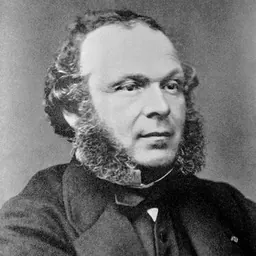
Thomas Joannes Stieltjes ( , ; 29 December 1856 – 31 December 1894) was a Dutch mathematician. He was a pioneer in the field of moment problems and contributed to the study of continued fractions. The Thomas Stieltjes Institute for Mathematics at Leiden University, dissolved in 2011, was named after him, as is the Riemann–Stieltjes integral.
Biography Stieltjes was born in Zwolle on 29 December 1856. His father (who had the same first names) was a civil engineer and politician. Stieltjes Sr. was responsible for the construction of various harbours around Rotterdam, and also seated in the Dutch parliament. Stieltjes Jr. went to university at the Polytechnical School in Delft in 1873. Instead of attending lectures, he spent his student years reading the works of Gauss and Jacobi — the consequence of this being he failed his examinations. There were two further failures (in 1875 and 1876), and his father despaired. His father was friends with H. G. van de Sande Bakhuyzen (who was the director of Leiden University), and Stieltjes Jr. was able to get a job as an assistant at Leiden Observatory.
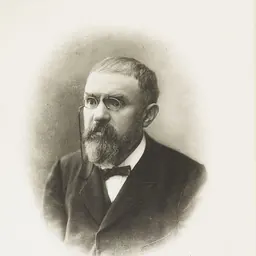
Soon afterwards, Stieltjes began a correspondence with Charles Hermite which lasted for the rest of his life. He originally wrote to Hermite concerning celestial mechanics, but the subject quickly turned to mathematics and he began to devote his spare time to mathematical research.
The director of Leiden Observatory, van de Sande-Bakhuyzen, responded quickly to Stieltjes' request on 1 January 1883 to stop his observational work to allow him to work more on mathematical topics. In 1883, he also married Elizabeth Intveld in May. She also encouraged him to move from astronomy to mathematics. And in September, Stieltjes was asked to substitute at University of Delft for F.J. van den Berg. From then until December of that year, he lectured on analytical geometry and on descriptive geometry. He resigned his post at the observatory at the end of that year.
In 1884, Stieltjes applied for a chair in Groningen. He was initially accepted, but in the end turned down by the Department of Education, since he lacked the required diplomas. In 1884, Hermite and professor David Bierens de Haan arranged for an honorary doctorate to be granted to Stieltjes by Leiden University, enabling him to become a professor. In 1885, he was appointed as member of the Royal Dutch Academy of Sciences (Koninklijke Nederlandse Akademie van Wetenschappen, KNAW), and the next year he became a foreign member. In 1889, he was appointed professor of differential and integral calculus at Toulouse University.
Stieltjes died on 31 December 1894 in Toulouse, France. He was buried in on 2 January 1895.
Research
Stieltjes worked on almost all branches of analysis, continued fractions and number theory. For his work, he is sometimes referred to as "the father of the analytic theory of continued fractions".
His work is also seen as important as a first step towards the theory of Hilbert spaces. Other important contributions to mathematics that he made involved discontinuous functions and divergent series, differential equations, interpolation, the gamma function and elliptic functions. He became known internationally because of the Riemann–Stieltjes integral.
In 1886, Henri Poincaré and Stieltjes, simultaneously and independently, provided a definition of an asymptotic approximation and illustrated its use and practicality. Their papers were published in Acta Mathematica and Annales scientifiques de l'Ecole normale supérieure, respectively.
Awards and honours
Stieltjes' work on continued fractions earned him the of the Académie des Sciences in 1893. In 1884 the University of Leiden awarded him an honorary doctorate, and in 1885 he was elected to membership in the Royal Academy of Sciences of Amsterdam.
In honour of Stieltjes, since 1996, the Stieltjes Prize (Stieltjesprijs) has been awarded annually for the best PhD thesis in mathematics to a student of any Dutch university. All mathematics institutes and departments of Dutch universities are asked for an overview of the PhDs that have taken place in the academic year. The list thus obtained forms the list of candidates for the prize. The award consists of a certificate and an amount of 1200 Euros.
Don’t just read it —
keep it.
Full-length biographies made to live with: read them, listen on the way to work, watch them tonight.
- E-book
- Audio
- Video
Instant download · yours to keep · every purchase keeps this site free
Important facts
more
Mertens conjecture, Montel's theorem, Riemann–Stieltjes integral, Stieltjes constants, Stieltjes matrix, Stieltjes moment problem, Stieltjes polynomials, Stieltjes transformation, Stieltjes–Wigert polynomialsPeople in Thomas Joannes Stieltjes's life
Named in this biography and alive at the same time

Related people
Same field, nearest in time


Contemporaries
People whose lives overlapped Thomas Joannes Stieltjes's


Frequently asked questions
Who was Thomas Joannes Stieltjes?
mathematician (1856–1894)
When was Thomas Joannes Stieltjes born?
Thomas Joannes Stieltjes was born on 29 December 1856 in Zwolle.
When did Thomas Joannes Stieltjes die?
Thomas Joannes Stieltjes died on 31 December 1894 in Toulouse.
What was Thomas Joannes Stieltjes's occupation?
Thomas Joannes Stieltjes was a mathematician and university teacher.
What was Thomas Joannes Stieltjes known for?
Thomas Joannes Stieltjes was known for Chebyshev–Markov–Stieltjes inequalities, Fourier-Stieltjes algebra, Heine–Stieltjes polynomials, Henstock-Kurzweil-Stieltjes integral, Laplace–Stieltjes transform and Lebesgue–Stieltjes integration.
What nationality was Thomas Joannes Stieltjes?
Thomas Joannes Stieltjes was Dutch and French.
Sources & further reading
· Wikipedia: Thomas Joannes Stieltjes
· DBpedia: Thomas Joannes Stieltjes
Cite this page
APA: Biography.guide. (2026). Thomas Joannes Stieltjes. https://biography.guide/thomas-joannes-stieltjes/
MLA: "Thomas Joannes Stieltjes." Biography.guide, https://biography.guide/thomas-joannes-stieltjes/.
Chicago: "Thomas Joannes Stieltjes." Biography.guide. https://biography.guide/thomas-joannes-stieltjes/.
Data last updated: 2026-09-20 · Spot an error? Report a correction.
Page generated 2026-09-27 05:17 UTC