
Thomas J. J. Altizer
American professor and theologian
About Thomas J. J. Altizer
Lived 1927 – 2018 (aged 91). Thomas J. J. Altizer was an American theologian, university teacher and religious studies scholar.
Thomas Jonathan Jackson Altizer (May 28, 1927 – November 28, 2018) was an American university professor, religious scholar, and theologian, noted for his incorporation of Death of God theology and Hegelian dialectical philosophy into his body of work. He regarded his philosophical theology as also being grounded in the works of William Blake and considered his theology to have come into its own with his extended study of Blake's radical visionary thinking: The New Apocalypse: The Radical Christian Vision of William Blake; indeed he regarded himself as the first and only fully Blakean theologian.
Education Altizer was born in Cambridge, Massachusetts, on May 28, 1927, and grew up with two sisters in Charleston, West Virginia. However, a second notable religious experience happened in 1955, while reading an essay on Nietzsche and Rilke, Altizer truly experienced the death of God as a conversion. “…it truly paralleled my earlier experience of the epiphany of Satan, this time I experienced a pure grace, as though it were the very reversal of my experience of Satan.”
He was assistant professor of religion at Wabash College in Crawfordsville, Indiana, from 1954 to 1956. He went on to become an associate professor of Bible and religion at Emory University from 1956 to 1968. He was professor of Religious Studies at the Stony Brook University from 1968 to 1996. Until his death in 2018, he was Professor Emeritus of Religious Studies at the university.
"Death of God" controversy During Altizer's time at Emory, two Time magazine articles featured his religious views—in the October 1965 and April 1966 issues. The latter issue, published at Easter time, put the question on its cover in bold red letters on a plain black background: "Is God Dead?"
Altizer repeatedly claimed that the scorn, outcry, and even death threats he subsequently received were misplaced. Altizer's religious proclamation viewed God's death (really a self-extinction) as a process that began at the world's creation and came to an end through Jesus Christ—whose crucifixion in reality poured out God's full spirit into this world. In developing his position Altizer drew upon the dialectical thought of Hegel, the visionary writings of William Blake, the anthroposophical thought of Owen Barfield, and aspects of Mircea Eliade's studies of the sacred and the profane.
In the mid-1960s Altizer was drawn into discussions about his views with other radical Christian theologians such as Gabriel Vahanian, William Hamilton, and Paul Van Buren, and also the rabbi Richard Rubenstein. Those religious scholars collectively formed a loose network of thinkers who held different versions of the death of God. Altizer also entered into formal critical debates with the orthodox Lutheran John Warwick Montgomery, and the Christian countercult movement apologist Walter Martin. The conservative theologians faulted Altizer on philosophical, methodological and theological questions, such as his reliance on Hegelian dialectical thought, his idiosyncratic semantic use of theological words, and the interpretative principles he used in understanding biblical literature.
In Godhead and the Nothing (2003), Altizer examined the notion of evil. He presented evil as the absence of will, but not separate from God. Orthodox Christianity—considered nihilistic by Nietzsche—named evil and separated it from good without thoroughly examining its nature. However, the immanence of the spirit (after Jesus Christ) within the world embraces everything created. The immanence of the spirit is the answer to the nihilistic state that Christianity, according to Nietzsche, was leading the world into. Through the introduction of God in the material world (immanence), the emptying of meaning would cease. No longer would followers be able to dismiss the present world for a transcendent world. They would have to embrace the present completely, and keep meaning in the here and now.
Beginning in 1996 Altizer lived in the Pocono Mountains, Pennsylvania. His 2006 memoir is entitled Living the Death of God.
Don’t just read it —
keep it.
Full-length biographies made to live with: read them, listen on the way to work, watch them tonight.
- E-book
- Audio
- Video
Instant download · yours to keep · every purchase keeps this site free
Important facts
People in Thomas J. J. Altizer's life
Named in this biography and alive at the same time



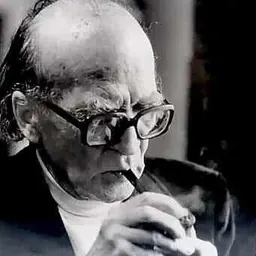



Related people
Same field, nearest in time






Contemporaries
People whose lives overlapped Thomas J. J. Altizer's
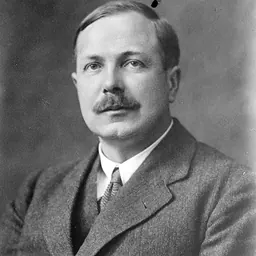

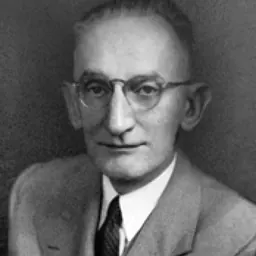


Frequently asked questions
Who was Thomas J. J. Altizer?
American professor and theologian (1927–2018)
When was Thomas J. J. Altizer born?
Thomas J. J. Altizer was born on 28 September 1927 in Charleston, Cambridge.
When did Thomas J. J. Altizer die?
Thomas J. J. Altizer died on 28 November 2018 in Stroudsburg.
What was Thomas J. J. Altizer's occupation?
Thomas J. J. Altizer was a theologian, university teacher and religious studies scholar.
What nationality was Thomas J. J. Altizer?
Thomas J. J. Altizer was American.
Sources & further reading
· Wikipedia: Thomas J. J. Altizer
· DBpedia: Thomas J. J. Altizer
Cite this page
APA: Biography.guide. (2026). Thomas J. J. Altizer. https://biography.guide/thomas-j-j-altizer/
MLA: "Thomas J. J. Altizer." Biography.guide, https://biography.guide/thomas-j-j-altizer/.
Chicago: "Thomas J. J. Altizer." Biography.guide. https://biography.guide/thomas-j-j-altizer/.
Data last updated: 2026-09-20 · Spot an error? Report a correction.
Page generated 2026-09-27 05:08 UTC