
John Warwick Montgomery
Lawyer, Professor of Philosophy, theologian and author
About John Warwick Montgomery
Lived 1931 – 2024 (aged 92). John Warwick Montgomery was an American lawyer, church historian, theologian, university teacher, christian minister and jurist, known for Christian apologetics.
Family Montgomery's family derived from County Antrim in Ireland. His parents were Maurice Warwick Montgomery (owner of a retail feed company) and Harriet (Smith) Montgomery. His one sibling, a sister, died in 2008. He had three children (two daughters and a son) with his first wife, whom he divorced in 1985. In 1988, he married Lanalee de Kant, a professional harpist, with whom he had an adopted son and two grandchildren; she died in March 2021. Montgomery subsequently married Carol Gracina Maughan in February 2022.
Education Montgomery was a scholarly maverick who earned eleven degrees in multiple disciplines: philosophy, librarianship, theology, and law. His degrees included: the A.B. with distinction in Philosophy (Cornell University; Phi Beta Kappa), B.L.S. and M.A. (University of California, Berkeley), B.D. and S.T.M. (Wittenberg University, Springfield, Ohio), LL.B. (La Salle Extension University), M.Phil. in Law (University of Essex, England), Ph.D. (University of Chicago), Th.D. Doctorat d'Universite (University of Strasbourg), LLM and LLD in canon law (Cardiff University). He also was awarded an honorary doctorate in 1999 by the Institute for Religion and Law, Moscow.
Career Montgomery became a Christian in 1949 as an undergraduate student majoring in the classics and philosophy at Cornell University. Upon graduation Montgomery then began studies in librarianship through the University of California, followed by two degrees in theology and ordination as a Lutheran clergyman. His M.A. thesis in library science was published by the University of California as A Seventeenth Century View of European Libraries. In 1959–60 he served on the faculty of theology as principal librarian in the divinity school's library at the University of Chicago, while simultaneously undertaking doctoral studies in bibliographical history.
He then served as chairman of the Department of History at Wilfrid Laurier University in Canada, where he began to develop a reputation as a Christian apologist. Some of his earliest apologetic lectures in defending the historical reliability of the gospel records were presented at the University of British Columbia and the lectures were subsequently published in his book History and Christianity.
On receiving a Canada Council Senior Research Fellowship, Montgomery commenced doctoral studies in theology at the University of Strasbourg, France. His doctoral dissertation, which was on the life and career of the Lutheran pastor Johannes Valentinus Andreae and his alleged connections with Rosicrucianism, was subsequently published as Cross and Crucible. Montgomery regards this particular text as his most important piece of scholarship.
After completing his Th.D in 1964, Montgomery assumed a post as professor of church history at Trinity Evangelical Divinity School in Deerfield, Illinois (1964–1974). It was during the 1960s that he emerged as a significant spokesman for Protestant Evangelicals, writing as a regular columnist in the flagship periodical Christianity Today (1965–1983).
He injected himself into the theological controversies of his denomination, the Lutheran Church – Missouri Synod, concerning Biblical inerrancy and higher criticism. On the wider church scene he wrote against the Death of God theology, and publicly debated one of its proponents, Thomas J. J. Altizer, at the University of Chicago in 1967. He was also critical of Karl Barth, Paul Tillich, and Rudolf Bultmann. He summed up much of his opposition to Liberal Christianity and radical theologies in works such as Crisis in Lutheran Theology, The Suicide of Christian Theology, and God's Inerrant Word.
His role as an apologist for the Christian faith extended to debates with the American atheist Madalyn Murray O'Hair (1967), situation ethicist Joseph Fletcher (1971), Australian atheist Mark Plummer (1986), humanist George A. Wells (1993), and Jesus Seminar scholar Gerd Ludemann.
From 1965 until his death, Montgomery was an ordained minister in the Lutheran Church – Missouri Synod.
During the 1970s, Montgomery began training in the law with the twin aims of reintegrating Christian foundations into jurisprudence, and to integrate insights from legal theory and doctrines of proof relevant to furthering Christian evidentialist apologetics. To that end Montgomery established, in 1980, the Simon Greenleaf School of Law in California, which is now Trinity Law School, the law school of Trinity International University. Montgomery worked as dean and professor from 1980 to 1989. Montgomery was editor of The Simon Greenleaf Law Review, which was published in seven volumes between 1981 and 1987. Montgomery resigned his post as dean and professor in 1989, under mediated resolution. The same year, Montgomery and Michael Richard Smythe founded the Irvine, California-based Institute for Theology and Law which, in 1995, became the current International Academy of Apologetics and Human Rights in Strasbourg, France. In 1991, Montgomery relocated to London, where he became a Barrister-at-Law, wrote widely on apologetics, defended international cases of religious freedom, and taught at the University of Bedfordshire. In 2009, Montgomery passed the French bar examinations and became an ; he was a member of the Paris law firm of Noual Hadjaje Duval.
Montgomery's apologetic work generally centered on establishing the divinity of Christ by assessing the historical and legal evidences for the resurrection. Much of this work has influenced popular apologists such as Josh McDowell, Don Stewart, Francis J. Beckwith, Ross Clifford, Terry Miethe, Gary Habermas, Craig Parton, Rod Rosenbladt, Loren Wilkinson, Kerry McRoberts, and Elliot Miller. He was an advocate of evidentialist apologetics, offering a distinctly Christian philosophy of history in his books The Shape of the Past and Where Is History Going?
Montgomery researched the claims of evidence for Noah's Ark for two years. His quest took him through two thousand years of reports, sightings, and claims, and on two ascents of Mount Ararat: in August 1970 on the South Face and in summer 1971 on the North Face. His effort to collect data and sift fact from fiction yielded his work "The Quest for Noah's Ark". In the introduction he writes that he merely presents the facts and allows the readers to come to their own conclusions. He was a contributing scholar on two film documentaries on the topic: Noah's Ark and the Genesis Flood (1977) and In Search of Noah's Ark (1976).
Montgomery's interest in the occult also yielded his studies on early Rosicrucianism (Cross and Crucible), demonic phenomena (Demon Possession), and analytic considerations of the occult as a spiritual search for truth (Principalities and Powers). In the 1980s, he spent eight years as a Sunday evening radio broadcaster in California, and from 1988 to 1992, as a television presenter of "Christianity on Trial".
Montgomery's legal career included not only teaching law, but also practicing in California, gaining admission to the English bar as a barrister, obtaining a legal license in France, and earning advanced degrees in ecclesiastical law from Cardiff University, and served as Director of Studies for the International Institute of Human Rights, Strasbourg (1979–1981). He wrote on legal-moral problems such as cryonics, stem-cell research, euthanasia, abortion, and divorce, and also argued for a transcendental perspective in international human rights and jurisprudence. He successfully represented clients in religious liberty cases before the Court of Appeals (1986) in Athens, Greece, and the European Court of Human Rights, Strasbourg (1997 and 2001).
Literary output Montgomery was author of over 235 works, including over one hundred scholarly journal articles and more than fifty books in eight languages. He regarded his Tractatus Logico-Theologicus as the most comprehensive presentation of his theology and apologetic method. Articles and essays have appeared in periodicals such as Bibliotheca Sacra, Christian Century, Concordia Theological Quarterly, Ecclesiastical Law Journal, Eternity, Fides et Historia, Interpretation, Journal of the American Scientific Affiliation, Journal of the Evangelical Theological Society, Law and Justice, Library Quarterly, Modern Reformation, Muslim World, New Oxford Review, Religion in Life, Religious Education, and Simon Greenleaf Law Review.
Death Montgomery died in Bischwiller, France on September 25, 2024, at the age of 92.
Don’t just read it —
keep it.
Full-length biographies made to live with: read them, listen on the way to work, watch them tonight.
- E-book
- Audio
- Video
Instant download · yours to keep · every purchase keeps this site free
Important facts
People in John Warwick Montgomery's life
Named in this biography and alive at the same time







Related people
Same field, nearest in time

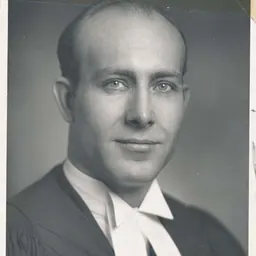
Contemporaries
People whose lives overlapped John Warwick Montgomery's
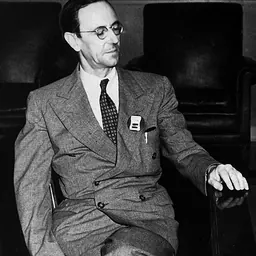
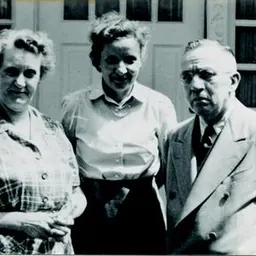
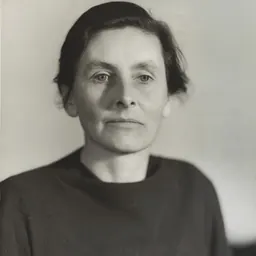
Frequently asked questions
Who was John Warwick Montgomery?
Lawyer, Professor of Philosophy, theologian and author (1931–2024)
When was John Warwick Montgomery born?
John Warwick Montgomery was born on 18 October 1931 in Warsaw.
When did John Warwick Montgomery die?
John Warwick Montgomery died on 25 September 2024 in Bischwiller.
What was John Warwick Montgomery's occupation?
John Warwick Montgomery was a lawyer, church historian, theologian, university teacher, christian minister and jurist.
What was John Warwick Montgomery known for?
John Warwick Montgomery was known for Christian apologetics.
What nationality was John Warwick Montgomery?
John Warwick Montgomery was American.
Sources & further reading
· Wikipedia: John Warwick Montgomery
· DBpedia: John Warwick Montgomery
Cite this page
APA: Biography.guide. (2026). John Warwick Montgomery. https://biography.guide/john-warwick-montgomery/
MLA: "John Warwick Montgomery." Biography.guide, https://biography.guide/john-warwick-montgomery/.
Chicago: "John Warwick Montgomery." Biography.guide. https://biography.guide/john-warwick-montgomery/.
Data last updated: 2026-09-20 · Spot an error? Report a correction.
Page generated 2026-09-27 05:01 UTC