
About Thomas J. Cram
Lived 1804 – 1883 (aged 79). Thomas J. Cram was a military officer, known for U.S. National Geodetic Survey, United States Lake Survey and Wisconsin Territory.
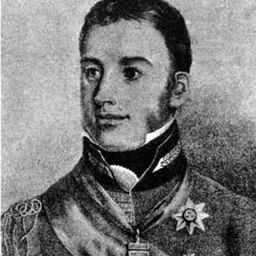
Thomas Jefferson Cram (March 1, 1804 – December 20, 1883) was an American topographical engineer from New Hampshire who served in the United States Army Corps of Topographical Engineers from 1839 to 1863 and the United States Army Corps of Engineers from 1863 to 1869.
Cram served as general superintendent for harbor works on Lake Michigan and the construction of roads in Wisconsin Territory. He led surveys to determine the border of Michigan and Wisconsin Territory in the Upper Peninsula, to explore Oregon and Washington Territories, and to determine the feasibility of a water route to the Pacific Ocean through Central America. He served under Major General Zachary Taylor in the Army of Occupation during the Mexican-American War and conducted coastal and river surveys in Texas.
Cram participated in the United States Lake Survey and led the survey section between Green Bay, Wisconsin, and Chicago, Illinois. He conducted multiple river, canal, and harbor improvement assessments including for the Fox and Wisconsin Rivers in Wisconsin, the Ohio River in Louisville, Kentucky, and the harbor at St. Louis, Missouri, on the Mississippi River. He assisted the United States Coast Survey in New England from 1847 to 1855 and in North Carolina from 1858 to 1861.
During the American Civil War (1861–1865), Cram was promoted to lieutenant colonel and colonel and served as aide-de-camp to Major General John E. Wool.
Biography Cram was born in Acworth, New Hampshire. He graduated from the United States Military Academy in 1826 and taught mathematics and natural and experimental philosophy at the Academy from 1829 to 1836.
Cram worked as an assistant engineer for the railroad industry in Maryland and Pennsylvania for two years and returned to United States Army service as a captain in 1838. In 1839, he was assigned as the general superintendent for harbor works in Lake Michigan and road construction in Wisconsin Territory with Howard Stansbury and Lorenzo Sitgreaves assigned to assist him. He made improvements to the harbors of Chicago, Illinois, St. Joseph, Michigan, and Michigan City, Indiana, and built new harbors at Calumet in Illinois and at Kenosha, Milwaukee, and Racine, Wisconsin. He built seven roads in Wisconsin and used timber truss bridges designed by Stephen Long for all bridge spans greater than in length.
As part of the settlement of the Toledo War, between Michigan and Ohio, most of the Upper Peninsula of Michigan was granted to Michigan. The United States Congress created the Wisconsin Territory in 1836 and appropriated funds to conduct a survey to determine the boundary between Wisconsin and Michigan. In 1840, Cram and Douglass Houghton led the boundary survey team up the Menominee River to its source at Brule Lake. A previous map incorrectly listed Lac Vieux Desert as the headwater of the Menominee River and the Montreal River. He negotiated a treaty with the Ojibwa Chief Ca-sha-o-sha which allowed the survey to continue. The survey could not be completed in 1840 due to errors in the map used by Congress to determine the boundary. Cram returned to the Upper Peninsula in 1841 to continue the survey. He identified Lac Vieux Desert as the source of the Wisconsin River and recommended a different boundary between Wisconsin and Michigan.
In 1844, Cram was assigned to improve the harbor works at St. Louis, Missouri. The harbor required improvements because the flow of the Mississippi River had formed sandbars that trapped ships or required long diversions to avoid them. He proposed several works to remedy the situation but they were deemed too experimental and expensive. The construction of a dam was selected and work began on it until it was interrupted by the outbreak of the Mexican-American War in 1846.
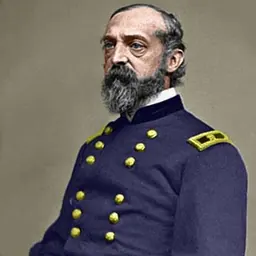
In 1845, Cram served as chief topographical engineer in the Army of Occupation under Major General Zachary Taylor during the Mexican-American War. He conducted systematic topographic surveys of the Nueces River, the Laguna de la Madre, and Aransas Bay. He fell ill with dysentery and was replaced by George Meade.
From 1847 to 1855, he worked as an assistant in the United States Coast Survey
From 1855 to 1858 he was the chief topographical engineer for the Department of the Pacific.
The American Civil War broke out in April 1861. Cram was promoted to major in August 1861 and then to lieutenant colonel in September 1861. He served as aide to Brigadier General — from May 1862 Major General — John E. Wool from 1861 to 1863 and was engaged in the campaign to capture Norfolk, Virginia, in May 1862. Cram transferred to the United States Army Corps of Engineers when the Topographical Engineers were disbanded in 1863, and was promoted to colonel at the end of the war in 1865. He was later brevetted to major general to recognize his war service, and served until his retirement in 1869.
Don’t just read it —
keep it.
Full-length biographies made to live with: read them, listen on the way to work, watch them tonight.
- E-book
- Audio
- Video
Instant download · yours to keep · every purchase keeps this site free
Important facts
People in Thomas J. Cram's life
Named in this biography and alive at the same time



Related people
Same field, nearest in time
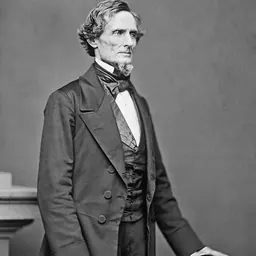
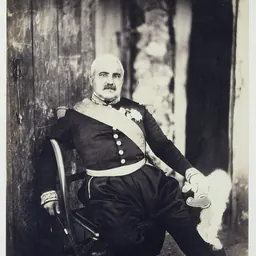
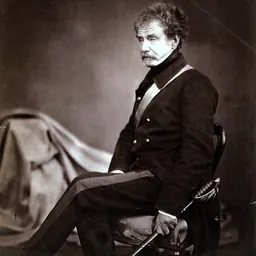

Contemporaries
People whose lives overlapped Thomas J. Cram's






Frequently asked questions
Who was Thomas J. Cram?
Union United States Army officer (1804–1883)
When was Thomas J. Cram born?
Thomas J. Cram was born on 1 March 1804 in Sullivan County.
When did Thomas J. Cram die?
Thomas J. Cram died on 20 December 1883 in Philadelphia.
What was Thomas J. Cram's occupation?
Thomas J. Cram was a military officer.
What was Thomas J. Cram known for?
Thomas J. Cram was known for U.S. National Geodetic Survey, United States Lake Survey and Wisconsin Territory.
Sources & further reading
Cite this page
APA: Biography.guide. (2026). Thomas J. Cram. https://biography.guide/thomas-j-cram/
MLA: "Thomas J. Cram." Biography.guide, https://biography.guide/thomas-j-cram/.
Chicago: "Thomas J. Cram." Biography.guide. https://biography.guide/thomas-j-cram/.
Data last updated: 2026-09-22 · Spot an error? Report a correction.
Page generated 2026-09-27 05:33 UTC