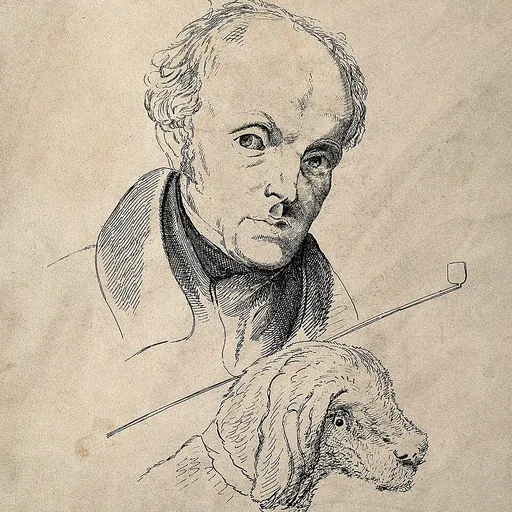
Thomas Ignatius Maria Forster
British astronomer, naturalist, and philosopher
About Thomas Ignatius Maria Forster
Lived 1789 – 1860 (aged 70). Thomas Ignatius Maria Forster was a British astronomer, naturalist, physician and philosopher.
Thomas Ignatius Maria Forster (9 November 1789 – 2 February 1860) was an English astronomer, physician, naturalist and philosopher. An early animal rights activist, he promoted vegetarianism and founded the Animals' Friend Society with Lewis Gompertz. He published pamphlets on a wide variety of subjects, including morality, Pythagorean philosophy, bird migration, Sati, and "phrenology", a term that he coined in 1815.
Life Forster was born in London, on 9 November 1789, the eldest son of Thomas Furly Forster of Walthamstow, who was a botanist, and follower of Jean-Jacques Rousseau. He did not have the conventional classical literary education, but learned some science from his uncle Benjamin Meggot Forster. The Great Comet of 1811 aroused his interest in astronomy, a science which he continued to pursue, and eight years later, on 3 July 1819, he himself discovered a new comet. He declined a fellowship to the Royal Society in 1816 as he disliked some of the rules. He matriculated at Corpus Christi College, Cambridge, in order to study law, but soon abandoned it to study medicine, taking his degree in 1819. Two years before, he had married Julia, daughter of Colonel Mark Beaufoy, and taken up residence at Spa Lodge, Tunbridge Wells. After the birth of his only daughter he moved to Hartwell in Sussex, and then spent three years abroad. During the 1820s, he converted to Roman Catholicism.
After his return to England he became a fellow of the Royal Astronomical Society and helped to found a meteorological society along with Sir Richard Phillips, which had only a brief existence.
Forster lived in Bruges from 1842 to 1852. He then moved to Brussels, where he died on 2 February 1860.
Forster was influenced by John Abernethy under whom he studied surgery. Abernethy believed in diet as being key to health. In 1813, Forster published his Physiological Reflections on the Destructive Operation of Spiritous and Fermented Liquors on the Animal System where he traced his vegetarianism to Italian renaissance writing, Pythagorean ideas on the transmigration of the soul, cruelty to animals, and Hindu practices. He also influenced Shelley's conversion to vegetarianism. alt=Title page of a 1813 copy of Forster's "Researches about atmospheric phaenomena" Title page of a 1813 copy of Forster's "Researches about atmospheric phaenomena" Forster's observations and studies in Continental Europe led to the publication, in 1824, of his "Perennial Calendar". In 1830 he collected and published the letters of John Locke, Shaftesbury, and Algernon Sydney which he inherited from Benjamin Furly.
Other publications included: Researches About Atmospheric Phaenomena (London, 1813; 2nd ed., 1815) Reflections on the Destructive Operation of Spirituous Liquors (London, 1812) Somatopsychonoologia (1823) written under the pen-name Philostratus The Perennial Calendar, and Companion to the Almanack (1824) Pocket Encyclopedia of Natural Phenomena (from his father's MSS., 1826) Medicina Simplex (1832) Beobachtungen uber den Einfluss des Luftdruckes auf das Gehor (Frankfurt, 1835) Observations sur l'influence des Cometes (1836) Philozoia, or Moral Reflections on the actual condition of the Animal Kingdom, and the means of improving the same (Brussels, 1839) Pan, a Pastoral (Brussels, 1840) Essay on Abnormal Affections of the Organs of Sense (Tunbridge Wells, 1841) Sati or Universal Immortality (1843) [in which he wrote favourably on sati, considering it consistent with Christianity] Annales d'un Physicien Voyageur (Bruges, 1848) Numerous articles in The Gentleman's Magazine A Synoptical Catalogue of British Birds: Intended to Identify the Species Mentioned by Different Names in Several Catalogues Already Extant. Forming a Book of Reference to Observations on British Ornithology (printed by and for Nichols, son, and Bentley, 1817)
Don’t just read it —
keep it.
Full-length biographies made to live with: read them, listen on the way to work, watch them tonight.
- E-book
- Audio
- Video
Instant download · yours to keep · every purchase keeps this site free
Important facts
People in Thomas Ignatius Maria Forster's life
Named in this biography and alive at the same time

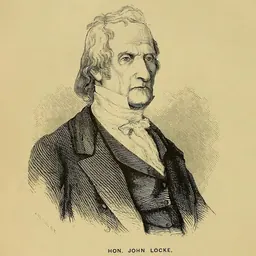
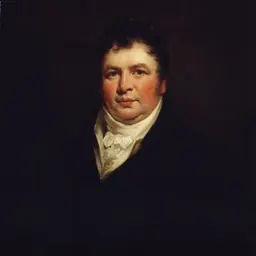



Related people
Same field, nearest in time



Contemporaries
People whose lives overlapped Thomas Ignatius Maria Forster's



Frequently asked questions
Who was Thomas Ignatius Maria Forster?
British astronomer, naturalist, and philosopher (1789-1860)
When was Thomas Ignatius Maria Forster born?
Thomas Ignatius Maria Forster was born on 9 November 1789 in London.
When did Thomas Ignatius Maria Forster die?
Thomas Ignatius Maria Forster died on 2 February 1860 in Brussels metropolitan area.
What was Thomas Ignatius Maria Forster's occupation?
Thomas Ignatius Maria Forster was an astronomer, naturalist, physician and philosopher.
What nationality was Thomas Ignatius Maria Forster?
Thomas Ignatius Maria Forster was British.
Sources & further reading
· Wikipedia: Thomas Ignatius Maria Forster
· DBpedia: Thomas Ignatius Maria Forster
Cite this page
APA: Biography.guide. (2026). Thomas Ignatius Maria Forster. https://biography.guide/thomas-ignatius-maria-forster/
MLA: "Thomas Ignatius Maria Forster." Biography.guide, https://biography.guide/thomas-ignatius-maria-forster/.
Chicago: "Thomas Ignatius Maria Forster." Biography.guide. https://biography.guide/thomas-ignatius-maria-forster/.
Data last updated: 2026-09-22 · Spot an error? Report a correction.
Portrait: Wikimedia Commons · author & licence
Page generated 2026-09-27 04:59 UTC