
About Thomas Hyde Villiers
Lived 1801 – 1832 (aged 31). Thomas Hyde Villiers was a British politician.
Thomas Hyde Villiers (24 January 1801 – 3 December 1832) was a British politician from the Villiers family.
He was the second son of The Hon. George Villiers (third son of Thomas Villiers, 1st Earl of Clarendon). He served in the Colonial Office from 1822 to 1825, and was agent for Berbice and Newfoundland.
He was Member of Parliament for Hedon from 1826 to 1830, for Wootton Bassett in 1830, and for Bletchingley from 1831 to 1832. He held office as Secretary to the Board of Control from 1831 until 1832.
Early life He was the second son of George Villiers (1759–1827), who married, on 17 April 1798, Theresa, only daughter of John Parker, 1st Baron Boringdon. George William Frederick Villiers, 4th Earl of Clarendon was their eldest son, Charles Pelham Villiers their third son, and Henry Montagu Villiers their fifth son.
Villiers was educated at home and, with his eldest brother, at St. John's College, Cambridge, at which he knew Charles Austin, Edward Strutt, John Romilly, and Thomas Babington Macaulay, who were influenced by Jeremy Bentham. In 1822 he graduated B.A., and in 1825 he proceeded M.A.
After his graduation he entered the Colonial Office, at which Sir Henry Taylor became early in 1824 his subordinate. From 1825 Villiers and Taylor shared a house in Suffolk Street.
Villiers in 1828 travelled in Ireland, which he described in letters to Taylor. A letter written by him in February 1829 was shown to Richard Lalor Sheil, who then brought about the suppression of the Catholic Association. Villiers suggested in 1831 the formation of the commission that laid the foundation of the new poor law.
On 18 May 1831 he became Secretary to the Board of Control under Charles Grant. Later in the year, on 2 November 1831, Villiers and Taylor entered as students at Lincoln's Inn. On 22 August 1831 he made a long speech in the House of Commons on the Methuen treaty with Portugal. The committees on India were organised by Villiers, with the assistance of Lord Althorp, and he worked on the renewal of the charter of the East India Company. and Gertrude Villiers (1 August 1834 – 2 July 1896), who in 1853 married The Rev. William Frederick Bickmore.
His granddaughter was Gertrude Mary Amelia Villiers (1861 – 30 Aug 1949) who in 1896 married The Hon. Robert Grimston (18 April 1860 – 8 July 1927).
Death At the time of his death Villiers was a candidate for the constituency of Penryn and Falmouth in Cornwall. After three months of suffering from an abscess in the head, he died on 3 December 1832 at Carclew, the seat of Sir Charles Lemon, near Penryn, where he was staying. A monument was placed to his memory in Mylor church.
Don’t just read it —
keep it.
Full-length biographies made to live with: read them, listen on the way to work, watch them tonight.
- E-book
- Audio
- Video
Instant download · yours to keep · every purchase keeps this site free
Important facts
People in Thomas Hyde Villiers's life
Named in this biography and alive at the same time


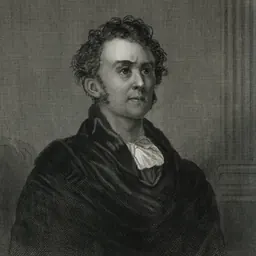
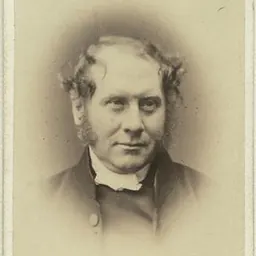
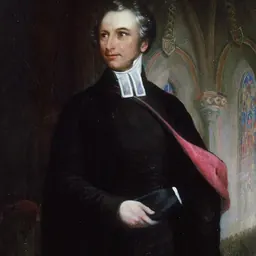
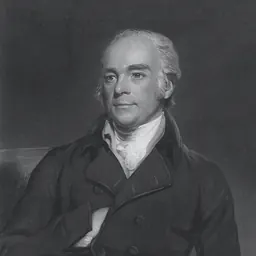
Related people
Same field, nearest in time



Contemporaries
People whose lives overlapped Thomas Hyde Villiers's






Frequently asked questions
Who was Thomas Hyde Villiers?
British politician, 1801-1832
When was Thomas Hyde Villiers born?
Thomas Hyde Villiers was born on 24 January 1801.
When did Thomas Hyde Villiers die?
Thomas Hyde Villiers died on 3 December 1832.
What was Thomas Hyde Villiers's occupation?
Thomas Hyde Villiers was a politician.
What nationality was Thomas Hyde Villiers?
Thomas Hyde Villiers was British.
Sources & further reading
· Wikipedia: Thomas Hyde Villiers
· DBpedia: Thomas Hyde Villiers
Cite this page
APA: Biography.guide. (2026). Thomas Hyde Villiers. https://biography.guide/thomas-hyde-villiers/
MLA: "Thomas Hyde Villiers." Biography.guide, https://biography.guide/thomas-hyde-villiers/.
Chicago: "Thomas Hyde Villiers." Biography.guide. https://biography.guide/thomas-hyde-villiers/.
Data last updated: 2026-09-20 · Spot an error? Report a correction.
Page generated 2026-09-27 05:30 UTC