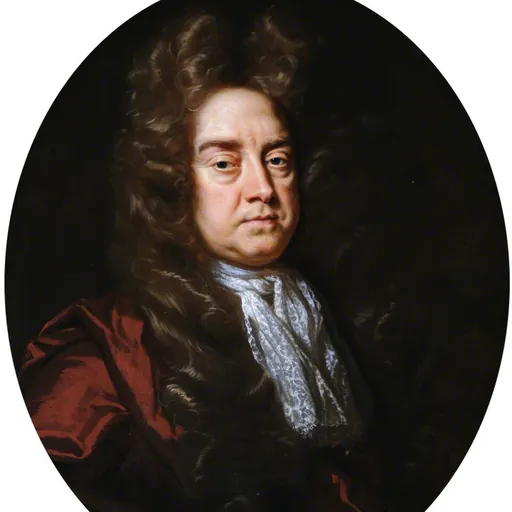
About Thomas Henshaw
Lived 1618 – 1700. Thomas Henshaw was a diplomat, barrister, alchemist and writer.
Thomas Henshaw (1618–1700) was an English lawyer, courtier, diplomat and scientific writer. While not a published alchemist, he was a significant figure in English alchemical work from the 1650s onwards; he is known to have used the pen-name "Halophilus".
Early life The son of Benjamin Henshaw and his wife Anne, and brother to Nathaniel Henshaw. he was baptised at St. Mary Magdalen, Milk Street, City of London, on 15 June 1618. After attending school at Barnet and then at Cripplegate, London, under Thomas Farnaby, he was entered as commoner at University College, Oxford, in 1634, and remained there five years without taking a degree. At the suggestion of Obadiah Walker and Abraham Woodhead, he studied mathematics, a student of William Oughtred at Albury, Surrey for nine months from 1636, finding it more stimulating than the teaching of his tutor John Elmherst. He also knew the Rosicrucian scholar William Backhouse, who was another of Oughtred's pupils.
Henshaw entered the Middle Temple, and in 1637 became tutor there to John Evelyn, to become a lifelong friend, and his brothers. On the outbreak of the First English Civil War he joined Charles I at York. Soon afterwards he went to London, and was taken prisoner by the Parliamentarians. and then entered the French army, in which he became major, He subsequently travelled through Spain, and on to Italy, where he lived at Rome, Venice and Padua. whom he had encountered at Pisa. They visited Athanasius Kircher's showy rooms in Rome together. Evelyn, Henshaw and Francis Bramston were then together at Padua for a period.
At the end of the 1640s Henshaw left to return to England. or earlier, before the king's execution in January 1649.
Under the Commonwealth On his return to England Henshaw kept a low profile into the 1650s, living a studious life in Kensington, then outside London. A "chemical club" in which he was involved was set up in 1650 by Robert Child: other members were Thomas Vaughan and William Webbe. In alchemy he collaborated with Vaughan, who resided with him in Kensington, and Samuel Hartlib reported Henshaw's claims to have found the alkahest, with a formula of provenance from Jan Baptist van Helmont, via Hugh Plat. Henshaw is referred to in the preface to Elias Ashmole's Way to Bliss (1658) as an expert in the occult science of the time; there was a group of eight, with Henshaw, Vaughan and six others. Across the political divide of the time, Henshaw kept in touch with Hartlib, and the title of the Society chimed exactly with the ideas of the Hartlib Circle, and in particular John Hall. The house itself was mostly demolished around 1800.
Henshaw was called to the bar, in 1654, but dropped the practice of the common law. He sold his accommodation in the Middle Temple to Ashmole, in 1658.
Later life Henshaw was one of the council that succeeded the 1660 committee of 12, and that actually set up the Royal Society. He was chosen a Fellow of the Royal Society at its first constitution in 1663, He continued alchemical researches, with Sir Robert Paston. When the Society was in the doldrums in the 1670s, he was one of the group meeting with Robert Hooke to promote its activity. In 1688 he borrowed a work by Franciscus Mercurius van Helmont from Francis Lodwick, another of the "Hooke circle" that functioned also as a book club.
In 1672 Henshaw attended Charles Stewart, 3rd Duke of Richmond, ambassador extraordinary to the court of Denmark, as secretary of the embassy and assistant to the duke. The latter died on 12 December of the same year, and Henshaw was commanded to remain in Denmark as envoy extraordinary, and held the office for two years and a half. and two short treatises on making Salt Peter and Gunpowder. He edited with an epistle to the reader Stephen Skinner's Etymologicon Linguæ Anglicanæ, 1671.
Don’t just read it —
keep it.
Full-length biographies made to live with: read them, listen on the way to work, watch them tonight.
- E-book
- Audio
- Video
Instant download · yours to keep · every purchase keeps this site free
Important facts
People in Thomas Henshaw's life
Named in this biography and alive at the same time

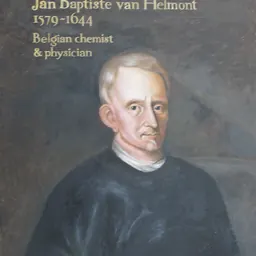



Related people
Same field, nearest in time


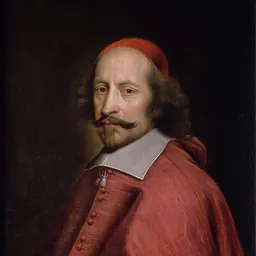
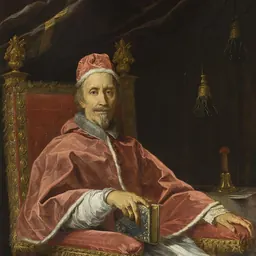
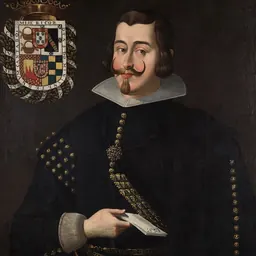
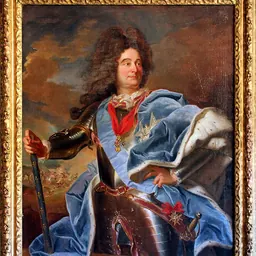
Contemporaries
People whose lives overlapped Thomas Henshaw's




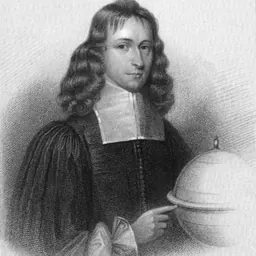
Frequently asked questions
Who was Thomas Henshaw?
English alchemist; (1618-1700)
When was Thomas Henshaw born?
Thomas Henshaw was born in 1618 in London.
When did Thomas Henshaw die?
Thomas Henshaw died in 1700 in Kensington.
What was Thomas Henshaw's occupation?
Thomas Henshaw was a diplomat, barrister, alchemist and writer.
Sources & further reading
· DBpedia: Thomas Henshaw (alchemist)
Cite this page
APA: Biography.guide. (2026). Thomas Henshaw. https://biography.guide/thomas-henshaw/
MLA: "Thomas Henshaw." Biography.guide, https://biography.guide/thomas-henshaw/.
Chicago: "Thomas Henshaw." Biography.guide. https://biography.guide/thomas-henshaw/.
Data last updated: 2026-09-23 · Spot an error? Report a correction.
Portrait: Wikimedia Commons · author & licence
Page generated 2026-09-27 05:08 UTC