
About Clement IX
Lived 1600 – 1669 (aged 69). Clement IX was a diplomat, librettist, catholic priest and catholic bishop.
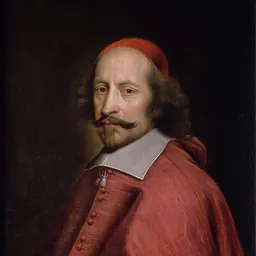
Pope Clement IX (; ; 28 January 1600 – 9 December 1669), born Giulio Rospigliosi, was head of the Catholic Church and ruler of the Papal States from 20 June 1667 to his death in December 1669.
Giulio Rospigliosi was born into the noble Rospigliosi family in 1600 and studied at the Seminario Romano and the University of Pisa. He held various positions in the Church, including Titular Archbishop of Tarsus and Apostolic Nuncio to Spain. As a man of letters, he wrote poetry, dramas, and libretti, and was a patron of the artist Nicolas Poussin.
Appointed as a cardinal by Pope Alexander VII, Rospigliosi was elected as Pope Clement IX in 1667. His pontificate was marked by mediation during European wars, and his popularity in Rome stemmed from his charity, humility, and refusal to advance his family's wealth. He beatified Rose of Lima and canonized Mary Magdalene de' Pazzi and Peter of Alcántara, while also creating 12 new cardinals.
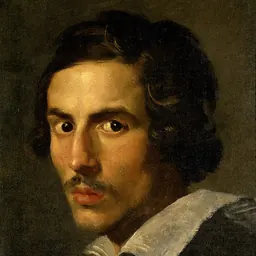
Clement IX was a patron of the arts, commissioning works from Gian Lorenzo Bernini and opening the first public opera house in Rome. He attempted to strengthen Venetian defenses against the Turks in Crete, but was unsuccessful in gaining wider support. In 1669, after learning about the Venetian fortress of Candia surrendering to the Turks, Clement IX fell ill and died.
Biography
Early life and education Giulio Rospigliosi was born in 1600 to the Rospigliosi family, a noble family of Pistoia in the Grand Duchy of Tuscany to Giacomo and Caterina Rospigliosi. He studied at the Seminario Romano and later at the University of Pisa as a pupil of the Jesuits, receiving doctorates in theology, philosophy and both canon and civil law in 1623. After receiving his doctorates, he taught theology there as a professor from 1623 to 1625.
Episcopate and cardinalate Later Rospigliosi worked closely with Pope Urban VIII (1623–1644) where he worked in the diplomatic corps as the Referendary of the Apostolic Signatura. He was appointed as the Titular Archbishop of Tarsus in 1644 and later received episcopal consecration in the Vatican. Rospigliosi also served as the Apostolic Nuncio to Spain from 1644 until 1653 when he decided to retire from that post. He lived in retirement throughout the pontificate of Pope Innocent X who disliked and distanced himself from those associated with his predecessor. He was also made vicar of Santa Maria Maggiore in Rome.
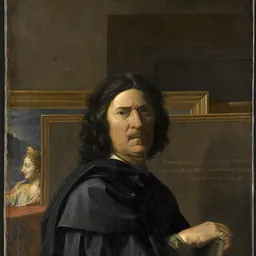
Rospigliosi was an accomplished man of letters who wrote poetry, dramas and libretti, as well as what may be the first comic opera, namely his 1637 libretto Chi soffre, speri. He was also a patron of Nicolas Poussin, commissioning A Dance to the Music of Time from him and dictating its iconography.
Pope Alexander VII appointed him to the cardinalate in 1657 as the Cardinal-Priest of San Sisto Vecchio and was also appointed as the Cardinal Secretary of State in 1655 which he held until 1667. When elected, Rospigliosi received all but two votes since he voted for another while Cardinal Neri Corsini voted for Cardinal Flavio Chigi.
Actions Nothing remarkable occurred under Clement IX's short administration beyond the temporary adjustment of the disputes between the Holy See and those prelates of the Gallican Church who had refused to join in condemning the writings of Jansen. He was mediator during the 1668 peace of Aachen, in the wars between France, Spain, England and the Netherlands.
He was popular with the people of Rome, not so much for his erudition and application to business as for his extreme charity and his affability towards great and small. He increased the goodwill of his subjects by buying off the monopolist who had secured the "macinato", or privilege of selling grain, and as his predecessor had collected the money for the purpose, Clement IX had the decree published in the name of Alexander VII. Two days each week, he occupied a confessional in St. Peter's Basilica and heard anyone who wished to confess to him. He frequently visited the hospitals and was lavish in his alms to the poor. In an age of nepotism, he did little or nothing to advance or enrich his family. In his aversion to notoriety, he refused to permit his name to be placed on the buildings erected during his reign.
Following his death, the Florentine agent in Rome, writing to Grand Duke Ferdinando II de' Medici a few days later, accuses the late Clement IX of having hidden the fact that he was epileptic, which would have, according to the canon law in place at the time, disqualified him from exercising any ecclesiastical functions, however, this has never been proven.
His successor, Pope Clement X (r. 1670–1676), built him an ornate tomb in the basilica of Santa Maria Maggiore; he was the last pope interred there until the death and burial of Pope Francis in 2025.
Artistic works
Libretti for Giovanni Girolamo Kapsperger: I Pastori di Betlemme (1630) for Stefano Landi: Il Sant'Alessio (1631–2, 1634) for Michele Angelo Rossi: Erminia sul Giordano (1633) for (composer unknown): I Santi Didimo e Teodora (1635, 1636) for Marco Marazzoli and Virgilio Mazzocchi: Chi Soffre, Speri (1637, 1639) for Aurelio Aureli: La Sincerità Trionfante (1638, 1639) for Virgilio Mazzocchi: Il San Bonifazio (1638, 1639) for Virgilio Mazzocchi: La Genoinda (1641) for Luigi Rossi: Il Palazzo Incantato (1642) for Virgilio Mazzocchi: Il Sant'Eustachio (1643) for Antonio Maria Abbatini and Marco Marazzoli: Dal Male Il Bene (1654, 1656) for Marco Marazzoli: Le Armi e Gli Amori (1656) for Antonio Maria Abbatini: La Comica del Cielo (1668)
Don’t just read it —
keep it.
Full-length biographies made to live with: read them, listen on the way to work, watch them tonight.
- E-book
- Audio
- Video
Instant download · yours to keep · every purchase keeps this site free
Important facts
People in Clement IX's life
Named in this biography and alive at the same time





Related people
Same field, nearest in time




Contemporaries
People whose lives overlapped Clement IX's





Frequently asked questions
Who was Clement IX?
pope from 1667, lived 1600-1669
When was Clement IX born?
Clement IX was born on 28 January 1600 in Pistoia.
When did Clement IX die?
Clement IX died on 9 December 1669 in Rome.
What was Clement IX's occupation?
Clement IX was a diplomat, librettist, catholic priest and catholic bishop.
Sources & further reading
Cite this page
APA: Biography.guide. (2026). Clement IX. https://biography.guide/clement-ix/
MLA: "Clement IX." Biography.guide, https://biography.guide/clement-ix/.
Chicago: "Clement IX." Biography.guide. https://biography.guide/clement-ix/.
Data last updated: 2026-09-26 · Spot an error? Report a correction.
Page generated 2026-09-27 05:15 UTC