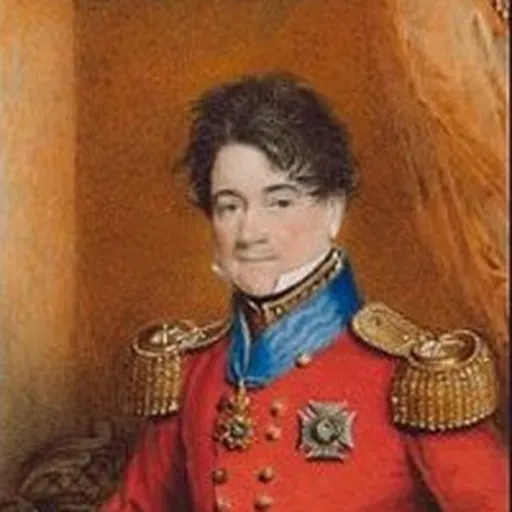
Thomas Hawker
British Army officer; Colonel of the 6th Regiment of Dragoons Guards
About Thomas Hawker
Lived 1777 – 1858 (aged 80–81). Thomas Hawker was a British soldier.
General Sir Thomas Hawker KCH (1777 – 13 June 1858) was a British Army cavalry officer. Hawker began his career in the 11th Light Dragoons in 1795 and fought with them during the 1799 Anglo-Russian invasion of Holland. In 1804, he purchased the rank of major with the 20th Light Dragoons and served with them in Spain during the Peninsular War. He was promoted to command of the regiment in 1808. Hawker served in the force sent to occupy the Republic of Genoa in 1814 and shortly after was promoted to colonel and given command of a light cavalry brigade. Spending some time on half pay after the end of the Napoleonic Wars he returned to active service as lieutenant-colonel of the 13th Light Dragoons. Hawker was in the East Indies between 1822--26 and 1830-36 and was promoted to major-general in 1825. He was appointed a Knight Commander of the Royal Guelphic Order in 1837 and colonel of the 6th Regiment of Dragoon Guards in 1839. Hawker was promoted to the brevet rank of general in 1854.
Military career Born in 1777, Hawker entered the British Army on 16 May 1795 when he was commissioned as a cornet in the 11th Light Dragoons. He was promoted to lieutenant on 9 April 1796 and captain on 10 July 1799. Hawker fought in the Anglo-Russian invasion of Holland in 1799. On 25 December 1800 he was appointed a captain in the Tower Hamlets Militia and in 1803 was appointed an aide-de-camp to William Cathcart, 1st Earl Cathcart who was Commander-in-Chief in Ireland. On 1 December 1804, he purchased the rank of major in the 20th Light Dragoons with which he served in the Mediterranean and Spain during the Peninsular War from 1805 to 1814. Hawker was promoted to lieutenant-colonel on 3 September 1808. Hawker later recounted that the most successful cavalry charge he was ever part of occurred during this war. A French cavalry regiment entered within carbine range and loosed a volley, upon which Hawker commanded his regiment to charge with the sabre. They reached the French unit before they were able to reholster their carbines and inflicted large numbers of casualties. This anecdote was discussed in an 1879 report on cavalry tactics in the journal of the Royal United Services Institution as part of an argument that the use of carbines by cavalry "on the field of battle is nothing short of insanity".
Accompanying the expedition to the Gulf of Genoa in April 1814, Hawker was given the brevet rank of Colonel in June and given command of the light cavalry brigade; in 1815 the brigade joined an Anglo-Austrian force intended to depose Joachim Murat, the King of Naples, but the mission was abandoned after Murat's defeat. After the Napoleonic Wars he spent some time on half pay before returning to the army, on 9 August 1821, as lieutenant-colonel of the 13th Light Dragoons. Hawker served in a command position in the East Indies between 1822 and 1826 and was promoted to the rank of major-general on 27 May 1825. Hawker was promoted to the rank of lieutenant-colonel in the 2nd Royal Tower Hamlets Militia on 7 June 1825. He held positions in the Madras Presidency between 1830 and 1836. During this time he was appointed to a commission investigating the causes of the Mysore (or Nagar) Rebellion of 1830–31. The commission's report was published on 12 December 1833 and criticised the taxation regime of the local Indian ruler.
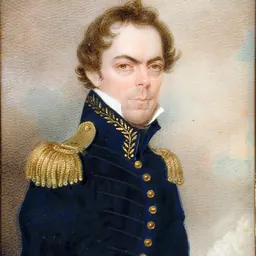
Hawker was appointed a Military Knight Commander of the Royal Guelphic Order (KCH) in March 1837. He was appointed Colonel of the 6th Regiment of Dragoons Guards on 20 June 1839 and was brevetted to General in June 1854. A portrait of Hawker in 20th Light Dragoons uniform and his insignia of the Guelphic Order are in the collection of the National Army Museum, having been acquired in the 1950s – the rarity of the uniform and insignia being of interest. The insignia itself is also held in the museum's medal collection.
Personal life
Hawker married Anna Maria, a daughter of James Harrison, Esq. in 1818. Hawker had at least three sons from the marriage: the Reverend John Hawker, a vicar at Redhill, Hants; Lieutenant Thomas Jones Hawker of the 70th (Surrey) Regiment of Foot who died in the West Indies in 1839 and Francis Richard Hawker, who served as a captain in his father's regiment (the 6th Dragoon Guards) and died in Havant in 1855.
In 1838 he married the eldest daughter of William Woodley, the widow of Frederick Noel, a Royal Naval captain. His second wife survived him.
Don’t just read it —
keep it.
Full-length biographies made to live with: read them, listen on the way to work, watch them tonight.
- E-book
- Audio
- Video
Instant download · yours to keep · every purchase keeps this site free
Important facts
People in Thomas Hawker's life
Named in this biography and alive at the same time


Related people
Same field, nearest in time



Contemporaries
People whose lives overlapped Thomas Hawker's


Frequently asked questions
Who was Thomas Hawker?
British Army officer; Colonel of the 6th Regiment of Dragoons Guards
When was Thomas Hawker born?
Thomas Hawker was born in 1777.
When did Thomas Hawker die?
Thomas Hawker died on 13 June 1858 in Clifton.
What was Thomas Hawker's occupation?
Thomas Hawker was a soldier.
What nationality was Thomas Hawker?
Thomas Hawker was British.
Sources & further reading
· DBpedia: Thomas Hawker (British Army officer)
Cite this page
APA: Biography.guide. (2026). Thomas Hawker. https://biography.guide/thomas-hawker-soldier/
MLA: "Thomas Hawker." Biography.guide, https://biography.guide/thomas-hawker-soldier/.
Chicago: "Thomas Hawker." Biography.guide. https://biography.guide/thomas-hawker-soldier/.
Data last updated: 2026-09-23 · Spot an error? Report a correction.
Portrait: Wikimedia Commons · author & licence
Page generated 2026-09-27 05:06 UTC