
About Thomas Häßler
Born 1966. Thomas Häßler is a German association football player and association football coach.
Thomas Jürgen "Icke" Häßler (; born 30 May 1966) is a German former professional footballer who played as an attacking midfielder. At club level, he made a century of appearances for four teams: 1. FC Köln, Karlsruher SC and 1860 Munich in Germany and Roma in Italy, and spent a season apiece with Juventus, Borussia Dortmund and SV Salzburg. Häßler also appeared over 100 times for the Germany national team.
He was a member of the teams which won the 1990 FIFA World Cup (as West Germany) and UEFA Euro 1996. He also appeared at the 1994 and 1998 FIFA World Cups, the 1992 and 2000 UEFA European Championships, and the 1988 Olympic Games.
Club career
1. FC Köln (1984–1990) Born in West Berlin, Häßler spent his early playing days in youth teams of BFC Meteor 06 and Reinickendorfer Füchse, respectively. He began his professional career in 1984 with 1. FC Köln of the Bundesliga, for whom he played six successful years, helping the club to become Bundesliga runners-up in 1989 and 1990.
Juventus (1990–1991), Roma (1991–1994) Soon after winning the 1990 World Cup with the Germany national team in Italy, Häßler transferred to Juventus for a sum of DM15 million. He spent only one year in Turin before he decided to join another Italian club, A.S. Roma, for a fee of DM14 million. This time he stayed for three years, making 88 appearances and scoring 11 goals.
Karlsruher SC (1994–1998) In 1994, however, Häßler wanted to return to the Bundesliga. Despite offers from some of the biggest German clubs, he decided to sign with Karlsruher SC in a DM7 million deal, the highest transfer sum the club has ever spent. In the following three years, Karlsruhe and its new key player achieved positions in the upper third of the table which resulted in UEFA Cup participations in 1996–97 and 1997–98.
By winning the UEFA Intertoto Cup in 1996, Karlsruhe not only qualified for the UEFA Cup but also accomplished to throw out Häßler's former club AS Roma in the second round of the tournament. In the first leg of the third round, Häßler scored twice in his team's 3–1 win over Brøndby IF in Copenhagen. However, shortly after this win Häßler received the first big injury in his career when he broke his leg in a league match against Fortuna Düsseldorf. Without its captain, Karlsruhe played a catastrophic second leg and was eliminated from the tournament after a 0–5 home defeat. Following his recovery, Häßler returned for the last two games of the season and helped his team to finish in sixth place in the 1996–97 season, securing another year of international football competition. In the end, once again the club failed to survive the third round.
At the end of the 1997–98 season, the club's situation had worsened significantly. For the first time in his career, Häßler was confronted with a possible relegation. Feeling the pressure he once more showed his extraordinary skills and scored four goals in the last three games of the season. Despite Häßler's performances, Karlsruhe lost its last match in a dramatic season final and was relegated from the Bundesliga.
Borussia Dortmund (1998–1999) Due to a contract clause, Häßler could leave Karlsruhe immediately on a free transfer. He decided to join Borussia Dortmund, which had won the UEFA Champions League in 1997. There he met the later assistant of the Germany national team, Michael Skibbe, then with 32 years the youngest head coach in the history of the Bundesliga. In the course of the season, there were some serious disputes between Häßler and Skibbe because the latter entrusted the midfield leadership to Andreas Möller. In the end, Häßler made only 18 appearances and never played over the full 90 minutes.
1860 Munich (1999–2003) Disappointed about his season in Dortmund, Häßler left the club towards Bavaria and signed a contract with TSV 1860 Munich. He spent four very successful years in Munich and became an important part of the team. Already in his first season the club reached a sensational fourth place in the Bundesliga. After they failed to win against Leeds United in the qualification for the UEFA Champions League, Häßler and his team participated in the UEFA Cup. But also with 1860 Munich he failed to overcome the competition's third round. In the following two years, the club took part in the UEFA Intertoto Cup but didn't manage to succeed. He made his 400th and final Bundesliga appearance in a 4–2 home defeat against Bochum on 24 May 2003. After the 2002–03 season, Häßler left Munich to finish his career in Austria.
SV Salzburg (2003–2004) In 2003, Häßler signed a one-year contract with the Austrian club SV Salzburg. He made 19 appearances and reached a seventh place in the 2003–04 season before he announced his retirement.
Overall, Häßler chalked up an entertaining 539 games and a total of 81 goals throughout a football career in which he was voted Footballer of the Year (Germany) in 1989 and 1992.
International career For Germany, Häßler was capped 101 times between 1988 and 2000, scoring 11 goals. Other than the two major tournament wins at the 1990 FIFA World Cup and the 1996 UEFA European Championship, he also played for his country at the 1994 and 1998 FIFA World Cups, Euro 92, and Euro 2000. making his senior debut later that year in 4–0 win over Finland in a World Cup qualifying match on 31 August; he scored his first international goal in a 2–1 win against Wales on 15 November 1989, once again in a World Cup qualifier, in West Germany's final group match, which sealed their place at the World Cup.
Häßler was one of the dominant figures of Euro 92, being voted the outstanding player of the tournament, He displayed a specialty for scoring spectacular free kicks, tireless stamina and dazzling dribbling sprees, as Germany went on to reach the final of the tournament, losing out 2–0 to Denmark. He scored two goals throughout the tournament, both from direct free kicks, the first coming in a 1–1 draw in their opening group match against CIS on 12 June, and his second coming in a 3–2 win over hosts Sweden in the semi-finals on 21 June. He also set-up Jürgen Klinsmann's goal from a corner in a 3–1 defeat to the Netherlands, in the team's final group match on 18 June.
At the 1994 World Cup, he was the top assist provider of the tournament, with five assists, as Germany reached the quarter-finals, losing 2–1 to Bulgaria.
At the 1998 World Cup, he set-up Oliver Bierhoff's opening goal with a cross in a 2–0 win over Iran in Germany's final group match; Germany were once again eliminated in the quarter-finals, following a 3–0 loss to Croatia.
At the age of 34, he was a surprise inclusion in Germany's Euro 2000 squad, after a positive club season.
Style of play A world-class playmaker, who was considered to be one of the best midfielders and German players of the 1990s, Häßler was a talented, dynamic, and creative midfielder, with quick feet and a good right foot, who stood out for his speed, energy, and constant movement across the pitch. A diminutive player, despite not being particularly physically gifted, he was known for his technique and dribbling skills, as well as his ability to score goals or provide assists for teammates, courtesy of his crossing ability; he was also a free kick specialist, and stood out for his leadership throughout his career. or even as a number 10, in either an attacking midfield role behind the forwards or as a second striker, a position in which he was tasked with playing between the lines and linking up the midfield with the attack; he was also used in a creative, holding midfield role on occasion. On 24 May 2014, he was named as the assistant coach of newly Iran Pro League promoted club, Padideh. He will work with his long-time friend, Alireza Marzban.
In February 2016 Häßler joined eighth division Bezirksliga side Club Italia Berlin as their new coach with the self-declared aim of eventual promotion to the 3. Liga.
Trivia Häßler founded the music label MTM Music in March 1996. He participated in the 2016 season of German dance show Let's Dance. In 2017, Häßler participated in German television show Ich bin ein Star – Holt mich hier raus!.
Career statistics Club
International + Appearances and goals by national team and year Footballer of the Year in Germany: 1989, 1992 Onze Mondial: 1990, 1992 UEFA European Championship Team of the Tournament: 1992 FIFA World Cup top assist provider: 1994 DFB-Pokal top scorer: 1996 World XI: 1999
Don’t just read it —
keep it.
Full-length biographies made to live with: read them, listen on the way to work, watch them tonight.
- E-book
- Audio
- Video
Instant download · yours to keep · every purchase keeps this site free
Important facts
People in Thomas Häßler's life
Named in this biography and alive at the same time

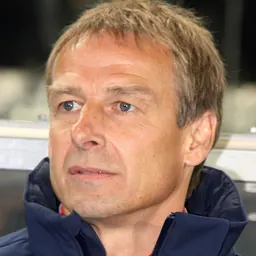

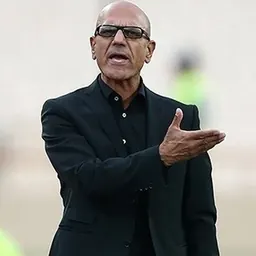
Related people
Same field, nearest in time




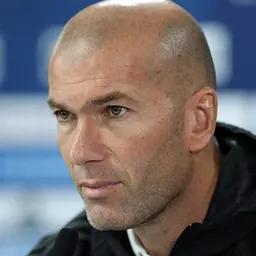

Contemporaries
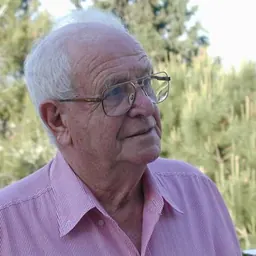
People whose lives overlapped Thomas Häßler's


Frequently asked questions
Who is Thomas Häßler?
German footballer
When was Thomas Häßler born?
Thomas Häßler was born on 30 May 1966 in West Berlin.
What is Thomas Häßler's occupation?
Thomas Häßler is an association football player and association football coach.
What nationality is Thomas Häßler?
Thomas Häßler is German.
Sources & further reading
Cite this page
APA: Biography.guide. (2026). Thomas Häßler. https://biography.guide/thomas-hassler/
MLA: "Thomas Häßler." Biography.guide, https://biography.guide/thomas-hassler/.
Chicago: "Thomas Häßler." Biography.guide. https://biography.guide/thomas-hassler/.
Data last updated: 2026-09-20 · Spot an error? Report a correction.
Page generated 2026-09-27 05:32 UTC