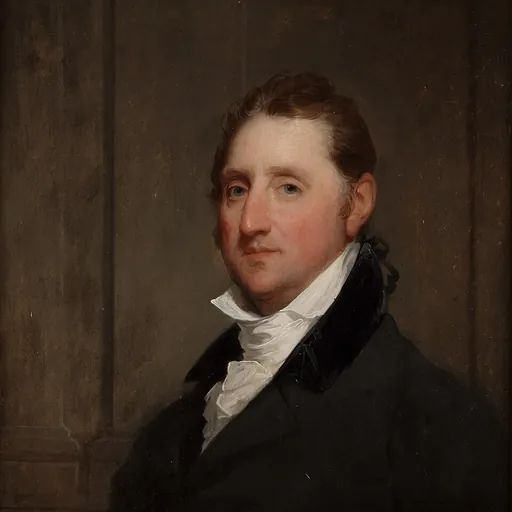
Thomas Handasyd Perkins
American businessman 1764-1854
About Thomas Handasyd Perkins
Lived 1764 – 1854 (aged 89). Thomas Handasyd Perkins was an American businessperson, slave trader and politician.
Colonel Thomas Handasyd Perkins, also known as T. H. Perkins (December 15, 1764 – January 11, 1854), was an American merchant, slave trader, smuggler and philanthropist from a wealthy Boston Brahmin family. Starting with bequests from his grandfather and father-in-law, he amassed a huge fortune. As a young man, he traded slaves in Saint-Domingue, worked as a maritime fur trader trading furs from the American Northwest to China, and then turned to smuggling Turkish opium into China. His philanthropic contributions include the Perkins School for the Blind, renamed in his honor; the Boston Museum of Fine Arts; McLean Hospital; along with having a hand in founding the Massachusetts General Hospital.
Early life Perkins was born on December 15, 1764, in Boston, Massachusetts.
Career
In 1779, he began working, and in 1785, when he turned 21, he became legally entitled to a small bequest that had been left to him by his grandfather, Thomas Handasyd Peck, a Boston merchant who dealt largely in furs and hats. When China opened the port of Canton to foreign businesses in 1785, Perkins became one of the first Boston merchants to engage in the Old China Trade. He sailed as supercargo on the Astrea, captain James Magee, owned by Elias Hasket Derby, to Canton in 1789 with a cargo including ginseng, cheese, lard, wine, and iron. On the trip back it carried tea and silk cloth. During this period, Perkins also traded slaves in Cap‑Français, a port city in the French colony of Saint-Domingue. In 1793, he permanently stopped doing business in Saint-Domingue due to the Haitian Revolution.
Philanthropy In later years Perkins became a philanthropist. In 1826, he and his brother, James Perkins, contributed half the sum of $30,000 that was needed for an addition to the Boston Athenaeum, and the old Boston Athenaeum Gallery of Art was moved to James Perkins's home. The Perkins School for the Blind, still in existence in Watertown, Massachusetts, was renamed in his honor after he donated his Boston mansion to the financially troubled "Massachusetts Asylum for the Blind" in 1832. He was also a major benefactor to the Boston Museum of Fine Arts, McLean Hospital, and helped to found the Massachusetts General Hospital. Throughout the summer of 1817, a sea serpent was reportedly seen by hundreds of people, including the crews of four whaling boats. Described as "a sixty-foot-long creature" by coastal vessel captain Parson Bentley, a skeptical Colonel Perkins decided to attempt to observe it himself. When they arrived at Gloucester, they found everybody on the alert. Many said they had seen "him" — though nobody claimed they had actually gotten close enough to verify the gender. The sea was perfectly smooth. Lee and Perkins picked out an advantageous spot on a point of land projecting into the harbor. Perkins had brought a powerful spyglass with him just in case. Scanning the water, he suddenly noticed an "agitation" at the harbor entrance, "like that which follows a small vessel going five or six miles an hour through the water." Knowing of no shoal where the "agitation" was, he exclaimed to Lee that he had no doubt but that he had seen the sea serpent in pursuit of fish. Lee had not been looking in that direction, and by the time he did, the "agitation" had ceased. In a few minutes, however, the colonel saw on the opposite side of the harbor, "at about two miles distance from where I had first seen, or thought I saw, the snake" the same object moving rapidly up the harbor on the western shore. Now Lee saw it too. As the object approached them, they observed that its motion was not like that of a common snake, either on land or in the water, "but evidently the verticle movement of the caterpillar." As nearly as the colonel could judge, about forty feet of the creature's body was visible at any one time.
Elizabeth Perkins (1791–1885), who married Samuel Cabot Jr. (1784–1863). Sarah Eliot Perkins (1793–1856) Col. Thomas Handasyd Perkins, Jr. (1796–1850), who was known as "Short-arm Tom" and who married Jane Frances Rebecca Dumaresq (1799–1856), the "famous beauty of Kennebec." Mary Ann Cushing Perkins (1798–1880), who married Thomas Graves Cary (1791–1859).
Upon retirement, Perkins built a summer home on Swan Island in the Kennebec River near Richmond, Maine. He helped the island achieve independent municipal status by paying legal fees for its charter and the town was renamed Perkins in gratitude. It is now Perkins Township, a ghost town.
Colonel Perkins died on January 11, 1854, in Brookline, Massachusetts, and is buried in the family plot at Mount Auburn Cemetery.
Descendants Through his son, he was the grandfather of Louisa Perkins, who married prominent Boston painter William Morris Hunt.
Through his daughter Elizabeth, he was the grandfather of seven grandsons, including Edward Clarke Cabot (b. 1818), an architect and artist, James Elliot Cabot (b. 1821), a philosopher and author, and Samuel Cabot III, a surgeon and ornithologist.
Through his daughter Mary Ann, he was the grandfather of Mary Cary, who married Harvard Professor Cornelius Conway Felton (later president of Harvard University), and Elizabeth Cabot Cary (1822–1907), the co-founder and first president of Radcliffe College, who married Louis Agassiz (1807–1873), a Swiss-American biologist and geologist.
Don’t just read it —
keep it.
Full-length biographies made to live with: read them, listen on the way to work, watch them tonight.
- E-book
- Audio
- Video
Instant download · yours to keep · every purchase keeps this site free
Important facts
Family & relationships
People in Thomas Handasyd Perkins's life
Named in this biography and alive at the same time




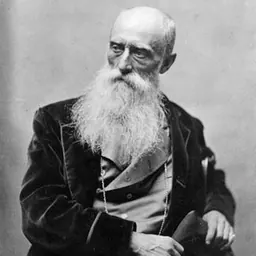
Related people
Same field, nearest in time



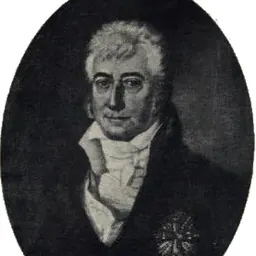

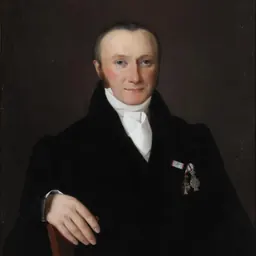
Contemporaries
People whose lives overlapped Thomas Handasyd Perkins's



Frequently asked questions
Who was Thomas Handasyd Perkins?
American businessman 1764-1854
When was Thomas Handasyd Perkins born?
Thomas Handasyd Perkins was born on 15 December 1764 in Boston.
When did Thomas Handasyd Perkins die?
Thomas Handasyd Perkins died on 11 January 1854 in Brookline.
What was Thomas Handasyd Perkins's occupation?
Thomas Handasyd Perkins was a businessperson, slave trader and politician.
What nationality was Thomas Handasyd Perkins?
Thomas Handasyd Perkins was American.
Sources & further reading
· Wikipedia: Thomas Handasyd Perkins
· DBpedia: Thomas Handasyd Perkins
Cite this page
APA: Biography.guide. (2026). Thomas Handasyd Perkins. https://biography.guide/thomas-handasyd-perkins/
MLA: "Thomas Handasyd Perkins." Biography.guide, https://biography.guide/thomas-handasyd-perkins/.
Chicago: "Thomas Handasyd Perkins." Biography.guide. https://biography.guide/thomas-handasyd-perkins/.
Data last updated: 2026-09-23 · Spot an error? Report a correction.
Portrait: Wikimedia Commons · author & licence
Page generated 2026-09-27 05:07 UTC