
Thomas Grier
British flying ace of WWII
About Thomas Grier
Lived 1918 – 1941 (aged 22–23). Thomas Grier was an airman.
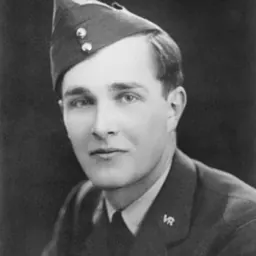
Thomas Grier (1918 – 5 December 1941) was a British flying ace of the Royal Air Force (RAF) during the Second World War. He is credited with the destruction of at least twelve aircraft.
Born in Glasgow, Grier joined the RAF in mid-1938 and was undergoing flying training at the outbreak of the Second World War. He was posted to No. 601 Squadron in June 1940 and flew Hawker Hurricane fighters extensively during the Battle of Britain. Destroying a number of German aircraft during the campaign over southeast England, he was awarded the Distinguished Flying Cross. He was given command of No. 32 Squadron in October 1941 and was killed two months later, aged 23, while on a sortie to German-occupied France.
Early life Thomas Grier was born in 1918 at Glasgow in Scotland to a former British Army soldier and his wife. He attended Dunoon Grammar School before going on to Allan Glen's School. Later living in Stow-on-the-Wold in Gloucestershire, England, in May 1938, he applied to join the Royal Air Force (RAF) on a short service commission and was accepted for training. He was confirmed in the rank of pilot officer in May 1939.
Second World War With the Second World War having commenced the previous year, Grier commenced training on the Hawker Hurricane fighter at No. 6 Operational Training Unit at Sutton Bridge in May 1940. The following month, he was posted to No. 601 Squadron. On 25 September he shot down a Ju 88 to the south of Plymouth. His successes over the preceding months were recognised with an award of the Distinguished Flying Cross in October. By this time, No. 601 Squadron was based at Exeter, covering the West Country, and its pace of operations were much reduced. It was largely inactive for the next several months but on 9 October Grier damaged a He 111 over Dartmouth. From early 1941 it began to fly on fighter sweeps to German-occupied France as part of the RAF's Circus offensive. A group of No. 601 Squadron pilots at Exeter, November 1940; Grier is second left
Squadron command Grier's substantive rank was made up to flight lieutenant in September and the next month he was promoted to acting squadron leader and given command of No. 32 Squadron. His new unit was based at Angle in the West Country and mostly engaged in convoy patrols along the coast. It moved to Manston in November and, using its upgraded Hurricane Mk IIbs, was switched to offensive missions. On one of these, carried out on 5 December, Grier was shot down and killed off Le Havre.
Grier was survived by his wife, Sybil who he married in July 1940, and is commemorated on the Runneymeade Memorial at Englefield Green. He is credited with having destroyed twelve aircraft, four being shared with other pilots. He is also believed to have probably destroyed two more aircraft, one shared, and damaged one other.
Don’t just read it —
keep it.
Full-length biographies made to live with: read them, listen on the way to work, watch them tonight.
- E-book
- Audio
- Video
Instant download · yours to keep · every purchase keeps this site free
Important facts
Related people
Same field, nearest in time




Contemporaries
People whose lives overlapped Thomas Grier's




Frequently asked questions
Who was Thomas Grier?
British flying ace of WWII
When was Thomas Grier born?
Thomas Grier was born in 1918.
When did Thomas Grier die?
Thomas Grier died on 5 December 1941.
What was Thomas Grier's occupation?
Thomas Grier was an airman.
Sources & further reading
Cite this page
APA: Biography.guide. (2026). Thomas Grier. https://biography.guide/thomas-grier/
MLA: "Thomas Grier." Biography.guide, https://biography.guide/thomas-grier/.
Chicago: "Thomas Grier." Biography.guide. https://biography.guide/thomas-grier/.
Data last updated: 2026-09-24 · Spot an error? Report a correction.
Page generated 2026-09-27 05:06 UTC