
Thomas E. Kurtz
American computer scientist and educator
About Thomas E. Kurtz
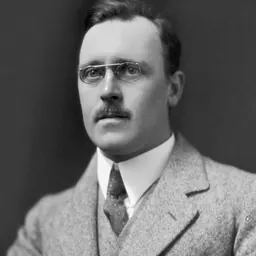
Lived 1928 – 2024 (aged 96). Thomas E. Kurtz was an American computer scientist, mathematician, statistician and inventor, known for BASIC and True BASIC.
Thomas Eugene Kurtz (February 22, 1928 – November 12, 2024) was an American computer scientist and educator. A Dartmouth professor of mathematics, he and colleague John G. Kemeny are best known for co-developing the BASIC programming language and the Dartmouth Time-Sharing System in 1963 and 1964. These innovations made computing more accessible by simplifying programming for non-experts and allowing multiple users to share a single computer, transforming how computers were used in education and research.
For his role in creating BASIC, the IEEE honored Kurtz in 1991 with the Computer Pioneer Award, and in 1994, he was inducted as a fellow of the Association for Computing Machinery.
Early life and education Thomas Kurtz was born on February 22, 1928, in Oak Park, Illinois, United States, to Helen Bell Kurtz and Oscar Christ Kurtz. His father, a German-American, worked for the Lions Clubs International headquarters, holding various roles. From an early age, Kurtz developed an interest in science.
Kurtz enrolled at Knox College and developed an interest in mathematics, eventually taking every offered course in the subject. Encouraged by his advisor to pursue a career in statistics, he switched his major to mathematics during his senior year. Kurtz graduated from Knox College in 1950 with a bachelor's degree in mathematics.
From 1966 to 1975, Kurtz served as Director of the Kiewit Computation Center at Dartmouth, and from 1975 to 1978, Director of the Office of Academic Computing. In 1979, he and Stephen J. Garland started a Computer and Information Systems master's program at Dartmouth. After the program ended in 1988, Kurtz returned to teaching, retiring in 1993.
In 1974, the American Federation of Information Processing Societies gave an award to Kurtz and Kemeny at the National Computer Conference for their work on BASIC and time-sharing. In 1991, the IEEE Computer Society honored Kurtz with the Computer Pioneer Award, and in 1994, he was inducted as a fellow of the Association for Computing Machinery. In 2023, he was inducted as a fellow of the Computer History Museum, with the award presented by Bill Gates.
BASIC
The approachability of BASIC and time-sharing began what the PC and the internet took to a whole new level. — Bill Gates, in a 2023 video for Kurtz's induction as a fellow of the Computer History Museum
Although BASIC was widely regarded as a success, some critics considered it to be confusing for longer programs, especially when the "GO TO" statement was used to jump between parts of a program. In addition, because the language was not designed as a structured language, it made it difficult to split programs into separate parts to improve maintainability. In 1975, when Bill Gates and Paul Allen developed a version of BASIC for the Altair 8800, one of the earliest personal computers, it helped launch the personal computer industry.
Kurtz's work on BASIC was recognized by the IEEE as part of their milestone program, which marks historic places for human innovation from around the world. A commemorative plaque was placed on February 22, 2021.
True BASIC In 1983, Kemeny, Kurtz, and four former Dartmouth students established True BASIC with the goal of introducing a modern commercial version of BASIC that would address the fragmentation caused by numerous incompatible dialects of the language, which were developed for early personal computers with limited memory and hardware-specific limitations. True BASIC featured structured programming constructs such as a do-loop and else-if and support for multiple operating systems.
Initially backed by $2.3 million in investment, the company struggled with profitability. Disagreements with its marketing partner, Addison-Wesley, led True BASIC to take marketing in-house, but sales still fell short of expectations. The company had annual revenues above $1 million in two years, according to the CEO in 1997, but the rise of integrated BASIC implementations, particularly from Microsoft, and declining demand for standalone programming tools limited its market reach.
Personal life Kurtz was married to Patricia Barr from 1953 until their divorce in 1973. They had three children: twin sons Daniel Barr and Timothy David in 1954 and daughter Beth Louise in 1957. In 1974, he married Agnes Seelye Bixler, to whom he remained married until his death.
Don’t just read it —
keep it.
Full-length biographies made to live with: read them, listen on the way to work, watch them tonight.
- E-book
- Audio
- Video
Instant download · yours to keep · every purchase keeps this site free
Important facts
People in Thomas E. Kurtz's life
Named in this biography and alive at the same time




Related people
Same field, nearest in time



Contemporaries
People whose lives overlapped Thomas E. Kurtz's


Frequently asked questions
Who was Thomas E. Kurtz?
American computer scientist and educator (1928–2024)
When was Thomas E. Kurtz born?
Thomas E. Kurtz was born on 22 February 1928 in Oak Park.
When did Thomas E. Kurtz die?
Thomas E. Kurtz died on 12 November 2024 in Lebanon.
What was Thomas E. Kurtz's occupation?
Thomas E. Kurtz was a computer scientist, mathematician, statistician and inventor.
What was Thomas E. Kurtz known for?
Thomas E. Kurtz was known for BASIC and True BASIC.
What nationality was Thomas E. Kurtz?
Thomas E. Kurtz was American.
Sources & further reading
Cite this page
APA: Biography.guide. (2026). Thomas E. Kurtz. https://biography.guide/thomas-e-kurtz/
MLA: "Thomas E. Kurtz." Biography.guide, https://biography.guide/thomas-e-kurtz/.
Chicago: "Thomas E. Kurtz." Biography.guide. https://biography.guide/thomas-e-kurtz/.
Data last updated: 2026-09-20 · Spot an error? Report a correction.
Page generated 2026-09-27 05:12 UTC