
Thomas Davies
British Army officer, artist, and naturalist
About Thomas Davies
Lived 1737 – 1812 (aged 74–75). Thomas Davies was a British ornithologist, painter, military personnel, naturalist and artist.
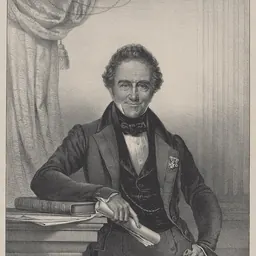
Thomas Davies FRS FLS ( 1737 – 16 March 1812) was a British Army officer, artist, and naturalist.
He was born in Shooter's Hill (London), England and died 16 March 1812 in Blackheath (London). He rose to the rank of Lieutenant-general in the Royal Artillery. He studied drawing and recorded military operations in water-colours during several military campaigns in North America. He later became a noted artist and naturalist. He was the first to illustrate and describe the superb lyrebird.
His work was not well known until after a 1953 auction from the Earl of Derby's library.
French and Indian War His earliest work is a drawing of Halifax during the failed Louisbourg expedition in 1757. The next year, he recorded the military operations during the Siege of Louisbourg, including the Expulsion of the Acadians.
After the attack against Montreal, he surveyed the regions surrounding Lake Ontario for several years, producing both military maps and artistic landscapes. He painted a series of waterfalls, including views of Great Seneca Falls and Niagara Falls. His 1762 watercolour of Niagara Falls, An East View of the Great Cataract of Niagara, was the first eyewitness painting and the first accurate view of the falls.
American Revolutionary War In 1776, Davies returned to North America with General William Howe during the American War for Independence. After the Battle of Long Island in August, he illustrated the British fleet in the harbour. Later that year, he continued with General Howe at the Battle of White Plains and the subsequent Battle of Fort Washington, where he illustrated the battle scene.
Under the command of General Charles Cornwallis at the Battle of Fort Lee, Davies captured the landing at and ascent of the Palisades by the British forces. This work has sometimes been attributed to Lord Francis Rawdon, since he later bought it from Davies.
In 1777, he was sent to command Fort Knyphausen, previously known as Fort Washington. In 1780, he returned to England.
Royal Artillery command After the war, he received several promotions and was assigned to command posts in Gibraltar, the West Indies, and Canada. In 1799, he was appointed colonel commandant of the Royal Artillery. His last promotion was to the rank of lieutenant-general in 1803.
Artist and naturalist
In 1781, he was elected a fellow of the Royal Society. He was also a fellow of the Linnean Society of London and contributed several articles, especially regarding ornithology in Australia. In 1800, he was the first to illustrate and describe the superb lyrebird, in the Transactions of the Linnean Society of London. He also read reports to the society on the southern emu-wren of Australia and the meadow jumping mouse of Canada.
Style Davies' style combines the precision of military artists with the skills of naturalists. His works have been compared to those of Henri Rousseau, George Edwards, and Paul Sandby.
Publications
Gallery
Don’t just read it —
keep it.
Full-length biographies made to live with: read them, listen on the way to work, watch them tonight.
- E-book
- Audio
- Video
Instant download · yours to keep · every purchase keeps this site free
Important facts
People in Thomas Davies's life
Named in this biography and alive at the same time

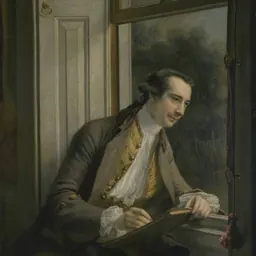
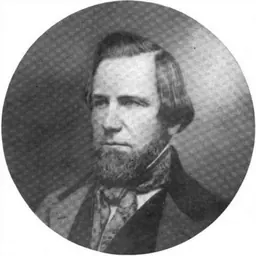
Related people
Same field, nearest in time

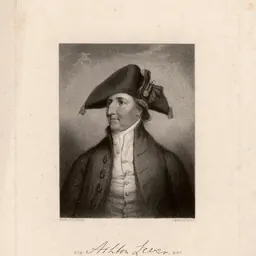
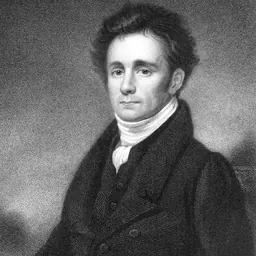
Contemporaries
People whose lives overlapped Thomas Davies's






Frequently asked questions
Who was Thomas Davies?
British Army officer, artist, and naturalist (1737–1812)
When was Thomas Davies born?
Thomas Davies was born in 1737 in Shooter's Hill.
When did Thomas Davies die?
Thomas Davies died on 16 March 1812 in Blackheath.
What was Thomas Davies's occupation?
Thomas Davies was an ornithologist, painter, military personnel, naturalist and artist.
What nationality was Thomas Davies?
Thomas Davies was British.
Sources & further reading
· DBpedia: Thomas Davies (British Army officer)
Cite this page
APA: Biography.guide. (2026). Thomas Davies. https://biography.guide/thomas-davies-ornithologist/
MLA: "Thomas Davies." Biography.guide, https://biography.guide/thomas-davies-ornithologist/.
Chicago: "Thomas Davies." Biography.guide. https://biography.guide/thomas-davies-ornithologist/.
Data last updated: 2026-09-20 · Spot an error? Report a correction.
Page generated 2026-09-27 05:15 UTC