
About Thomas Dalton-Morgan
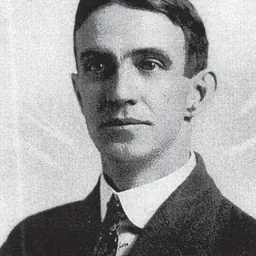
Lived 1917 – 2004 (aged 87). Thomas Dalton-Morgan was a British aircraft pilot.
Thomas Frederick Dalton-Morgan, (23 March 1917 – 18 September 2004) was a fighter pilot and flying ace of the Royal Air Force during the Second World War. He flew during the Battle of Britain, and is counted amongst the ranks of 'The Few'.
Early life Thomas Frederick Dalton-Morgan, a descendant of the English Civil War general Sir Thomas Morgan as well as the seventeenth century privateer Henry Morgan, was born in Cardiff, Wales, on 23 March 1917. He attended Kings Monkton School in Cardiff and then Taunton School.
In August 1935, Dalton-Morgan applied to the Royal Air Force (RAF) for a short service commission and commenced initial training. He commenced further training in November at No. 11 Flying Training School at Wittering. three months later he was posted to No. 22 Squadron.
In late May 1939, Dalton-Morgan was seconded to the training department at the Air Ministry in London. two weeks later he was posted to No. 43 Squadron as a flight commander.
Quickly returning to his squadron, Dalton-Morgan was soon flying combat sorties and shot down four more enemy aircraft over the next three weeks. In early September 1940 he added three Messerschmitt Bf 109s fighters to his tally. On 6 September he again came worse off in combat with Bf 109s and he was wounded in the face and knee and was forced to crash land his Hurricane.
Distinguished Flying Cross (DFC) was gazetted on 6 September 1940:
Once more returning to No. 43 Squadron on 7 September, Dalton-Morgan now took over command and relocated the squadron to Northumberland to refit with new fighters and to train replacement pilots.
Pilot trainer Following the end of the Battle of Britain in October 1940, Dalton-Morgan concentrated on passing on his experience to new pilots. He also worked on developing the Hurricane fighter into a night-fighter with great success. He soon accounted for six further 'kills' flying his Hurricane at night. One of his most successful periods was over the nights of the 6 and 7 May 1941 when he shot down three Luftwaffe bombers over Glasgow. He was promoted to temporary squadron leader on 1 June.
On 8 June he shot down a Junkers Ju 88 and two further 'kills' followed. On 24 July he intercepted another Ju 88 off May Island. Despite his engine starting to fail he pressed home his attack and downed the enemy bomber. His engine then completely quit and he was forced to land on the water, a highly dangerous exercise. He was later picked up by the Royal Navy.
For this attack he received a Bar to his DFC on 31 May 1941:
On 2 October 1941 he shot down another bomber, off Berwick-on-Tweed. Finally, in February 1942, Dalton-Morgan was rested with a tally of at least 14 aircraft shot down and several damaged.
Distinguished Service Order After a short period working as a fighter controller at RAF Turnhouse, near Edinburgh, he was promoted to temporary wing commander on 1 June 1942, and promoted to squadron leader (war-substantive) on 26 August. He returned to operations in late 1942 to become leader of the Ibsley Wing. Commanding eight fighter squadrons, Dalton-Morgan organised long-range offensive sorties and bomber escort duties over northern France. He damaged an Bf 109 in December 1943, and then shot down a Focke-Wulf Fw 190 fighter and damaged another during a sweep over the French port of Brest. He was awarded the Distinguished Service Order on 25 May 1943:
4th Fighter Group Dalton-Morgan's bomber escort experience saw him attached to the 4th Fighter Group of the US 8th Air Force and flew over 70 combat sorties with the group. Promoted to wing commander (war-substantive) on 12 December 1943, he served as operations officer with the 2nd Tactical Air Force.
In the buildup to the Normandy Landings he was part of the planning team organising the roster of ground targets. In January 1945 he was appointed an Officer of the Order of the British Empire. Shortly before the end of the war, he learned his brother John had been killed after being shot down in a de Havilland Mosquito.
Post war After the war he remained in Germany with 2nd Tactical Air Force. He was promoted to the substantive rank of squadron leader on 1 September 1945 and attended the RAF staff College, becoming a senior instructor at the School of Land/Air Warfare. He was mentioned in despatches in 1946, the same year he also received the US Bronze Star Medal.
Promoted to wing commander on 1 July 1947, he commanded the Vickers Vampire equipped Gutersloh Wing before taking command of RAF Wunstorf. He resigned from the RAF on 4 April 1952 with the rank of wing commander.
On leaving the RAF, Dalton-Morgan joined the joint UK/Australian weapons testings facility, at Woomera, which he managed for the next 30 years before retiring in Australia. He died on 18 September 2004.
Don’t just read it —
keep it.
Full-length biographies made to live with: read them, listen on the way to work, watch them tonight.
- E-book
- Audio
- Video
Instant download · yours to keep · every purchase keeps this site free
Important facts
People in Thomas Dalton-Morgan's life
Named in this biography and alive at the same time

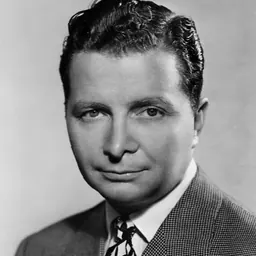

Related people
Same field, nearest in time
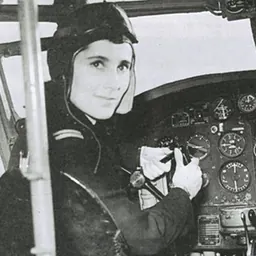


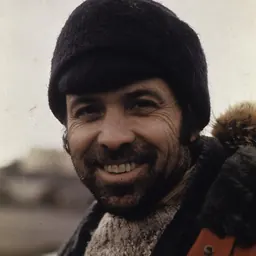
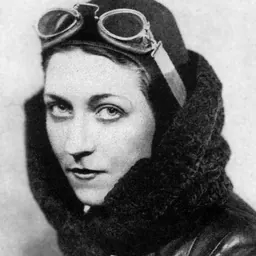

Contemporaries
People whose lives overlapped Thomas Dalton-Morgan's

Frequently asked questions
Who was Thomas Dalton-Morgan?
British RAF officer and fighter pilot ace (1917-2004)
When was Thomas Dalton-Morgan born?
Thomas Dalton-Morgan was born on 23 March 1917 in Cardiff.
When did Thomas Dalton-Morgan die?
Thomas Dalton-Morgan died on 18 September 2004 in Australia.
What was Thomas Dalton-Morgan's occupation?
Thomas Dalton-Morgan was an aircraft pilot.
What nationality was Thomas Dalton-Morgan?
Thomas Dalton-Morgan was British.
Sources & further reading
· Wikipedia: Thomas Dalton-Morgan
· DBpedia: Thomas Dalton-Morgan
Cite this page
APA: Biography.guide. (2026). Thomas Dalton-Morgan. https://biography.guide/thomas-dalton-morgan/
MLA: "Thomas Dalton-Morgan." Biography.guide, https://biography.guide/thomas-dalton-morgan/.
Chicago: "Thomas Dalton-Morgan." Biography.guide. https://biography.guide/thomas-dalton-morgan/.
Data last updated: 2026-09-20 · Spot an error? Report a correction.
Page generated 2026-09-27 05:23 UTC