
About Thomas Crofton Croker
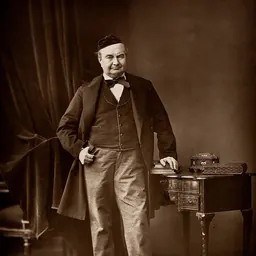
Lived 1798 – 1854 (aged 56). Thomas Crofton Croker was a British writer.
Thomas Crofton Croker (15 January 1798 – 8 August 1854) was an Irish antiquary, best known for his Fairy Legends and Traditions of the South of Ireland (1825–1828), and who also showed considerable interest in Irish song and music.
Although Fairy Legends purported to be an anthology of tales Croker had collected on his field trips, he had lost his manuscript notes and the work had to be reconstructed with the help of friends. He did not acknowledge his debt satisfactorily in the estimation of Thomas Keightley, who voiced his complaint publicly, and soon published his own rival work. The other collaborators generally allowed Croker to take credit, notably William Maginn, though after his death his kinsmen insisted Maginn had written four or more of the tales. Croker retracted ten tales in his third edition of (1834), and after his death, a fourth edition (1859) appeared which was prefaced with a memoir written by his son.
William Butler Yeats, who appropriated a number of tales for his anthology, characterised Croker as belonging to the class of the Anglo-Irish ascendancy, and criticised him for comic distortions of the Irish tradition, an assessment echoed by other Irish critics. Bridget G. MacCarthy wrote a biographical paper that scrutinises Croker's habit of publishing writings by others under his own name. Defenders of Croker include Justin McCarthy and Neil C. Hultin.
Life and works
Croker was born in the city of Cork, the only son of Major Thomas Croker and his wife, the former Miss Dillon, daughter of Croker Dillon and widow of a Mr Fitton. At age 15, he apprenticed in business. During the years 1812 to 1815, he travelled the south of Ireland and began collecting legends and songs. Croker took one Irish coronach (keening) that he collected in Cork in 1813, and translated it into English prose, which was published in the Morning Post in 1815 and caught the attention of the poet George Crabbe in 1817, through the intermediary of the antiquary Richard Sainthill.
In Fairy Legends, the credit for the first piece "The Legend of Knocksheogowna" and three others were claimed by Maginn, including the prominent "Daniel O'Rourke".Refn|group="lower-alpha"|The third by Maginn was "The Legend of Bottle Hill", and a fourth was "Fairies or No Fairies" according to the author's brother (Rev. Charles Arthur Maginn, b. 1815, rector of Castletown, Cloyne, Co. Cork since 1840,
Croker eventually took sole credit, and kept all of the proceeds from the book's financial success, but of these collaborators, only Keightley publicly voiced protest,Refn|group="lower-alpha"|Though "Other contributors also protested", according to Sean O'Sullivan.
Daniel O'Rourke on stage Croker adapted the tale "Daniel O'Rourke" into a Christmas Pantomime under the title "Harlequin and the Eagle", and performed in 1826 at the Adelphi Theatre, for the sake of actor Daniel Terry. The actor had obtained ownership of the theatre, with considerable financial backing from Walter Scott, who was a friend of the actor's. Scott lavished praises on the pantomime at a meeting with Croker.
Legends of the Lakes Croker's third book, Legends of the Lakes; or, Sayings and Doings at Killarney (1829) was both a critical and commercial disappointment. It was written in the form of a guided tour through the landscapes of at Killarney, interspersed with legends told in the dialect of the peasantry.
He claimed to be capable of reading Irish manuscripts, but it is doubtful whether he had any real proficiency in the Irish language.
List of works According to Croker's son, Barney Mahoney (2nd ed., 1832) and My Village versus our Village (1833) were actually written by Croker's wife, Marianne. Daniel O'Rourke, 2nd ed. (1828) Legends of the Lakes, or Sayings and Doings at Killarney (1829) Popular Songs of Ireland (1839) The Keen of the South of Ireland (1844) Popular Songs, Illustrative of the French Invasions of Ireland, Parts I–IV. (1845–1847), repr. (1847)
Additional titles, and notices of the journals he had contributed to, are listed by Croker's son.
Explanatory notes
Don’t just read it —
keep it.
Full-length biographies made to live with: read them, listen on the way to work, watch them tonight.
- E-book
- Audio
- Video
Instant download · yours to keep · every purchase keeps this site free
Important facts
People in Thomas Crofton Croker's life
Named in this biography and alive at the same time
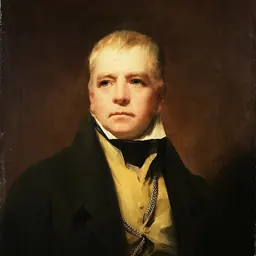


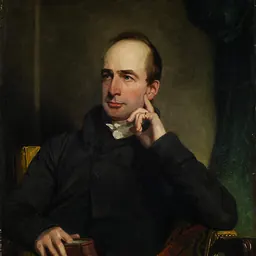

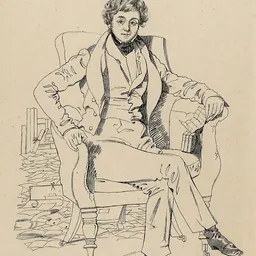


Related people
Same field, nearest in time
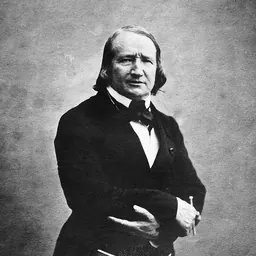




Contemporaries
People whose lives overlapped Thomas Crofton Croker's





Frequently asked questions
Who was Thomas Crofton Croker?
Irish antiquary and artist (1798–1854)
When was Thomas Crofton Croker born?
Thomas Crofton Croker was born on 15 January 1798 in Cork.
When did Thomas Crofton Croker die?
Thomas Crofton Croker died on 8 August 1854 in London.
What was Thomas Crofton Croker's occupation?
Thomas Crofton Croker was a writer.
What nationality was Thomas Crofton Croker?
Thomas Crofton Croker was British.
Sources & further reading
· Wikipedia: Thomas Crofton Croker
· DBpedia: Thomas Crofton Croker
Cite this page
APA: Biography.guide. (2026). Thomas Crofton Croker. https://biography.guide/thomas-crofton-croker/
MLA: "Thomas Crofton Croker." Biography.guide, https://biography.guide/thomas-crofton-croker/.
Chicago: "Thomas Crofton Croker." Biography.guide. https://biography.guide/thomas-crofton-croker/.
Data last updated: 2026-09-25 · Spot an error? Report a correction.
Page generated 2026-09-27 05:11 UTC