
About Thomas Bryan Martin
Lived 1731 – 1798 (aged 66–67). Thomas Bryan Martin was an American politician and judge.
Thomas Bryan Martin (April 11, 1731 – September 23, 1798) was an English-born American land agent, legislator and planter in the colony (and later U.S. state) of Virginia and in present-day West Virginia. Martin was the land agent of the Northern Neck Proprietary for his uncle Thomas Fairfax, 6th Lord Fairfax of Cameron (1693–1781) and served two terms in the House of Burgesses.
Martin was born in Kent in 1731, and was the grandson of Thomas Fairfax, 5th Lord Fairfax of Cameron (1657–1710) through his mother, Frances Fairfax Martin. Raised in humble surroundings in England, Martin relocated to Virginia in 1751 to assist his uncle, Thomas Fairfax, 6th Lord Fairfax of Cameron (known as Lord Fairfax), in administering the Northern Neck Proprietary, which encompassed up to . Martin resided with his uncle on their frontier Greenway Court estate in present-day Clarke County, Virginia. He earned the affections of Lord Fairfax on account of his energetic nature and loyalty, and through Martin's growing influence Lord Fairfax relocated the proprietary's base of operations to Greenway Court in 1762 and made Martin steward and land agent of the proprietary.
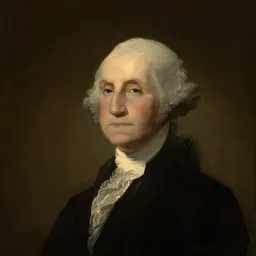
Martin took an active role in political and civil affairs within the proprietary's domain. He served as a vestryman for the Anglican Frederick Parish, and upon the creation of Hampshire County in 1754, he presided as the county's first justice and was further appointed the County Lieutenant. He later represented Hampshire County in the House of Burgesses from 1756 to 1758 and serving with George Washington, represented Frederick County from 1758 until 1761. Martin was appointed a trustee of the frontier towns of Winchester, Stephensburg (present-day Stephens City), and Bath (present-day Berkeley Springs). He was also appointed as the colonel of the Frederick County militia. Though not in the best of health, Martin was relied upon by the settlers of the proprietary to use his considerable resources in response to Native American attacks. Following the outbreak of the American Revolutionary War, Martin refused reappointment by Governor Patrick Henry as a justice of the Frederick County Commission of Peace. Afterward, Martin retreated from civil service entirely, and retired to Greenway Court.
He maintained a low profile during the war, and his uncle Lord Fairfax was treated with respect and consideration despite being the only resident peer in the American colonies. Following the death of Lord Fairfax in 1781, Martin's brother Reverend Denny Martin Fairfax inherited the Northern Neck Proprietary, and Martin was given the Greenway Court estate. He took his uncle's housekeeper Mrs. Crawford as his mistress and died unmarried in 1798. Martin bequeathed his Greenway Court estate and an adjoining to his housekeeper Betsy Powers. Martin's brother Denny Fairfax was unable to properly maintain the proprietary and conveyed the remaining lands in 1797, thus terminating the Fairfax and Martin families' interests in the proprietary before it was formally dissolved in 1806. The city of Martinsburg, West Virginia, was named for Martin by his friend Adam Stephen.
Early life and family
Thomas Bryan Martin was born in Kent, England, in 1731 and was the son of Denny Martin (1695–1762) of Salts Manor and his wife Frances Fairfax Martin (1703–1791). His father and mother married in Loose, Kent. His grandmother Catherine Colepeper Fairfax was the daughter of Thomas Colepeper, 2nd Baron Colepeper and his wife Margaretta van Hesse, who was from a Dutch noble family. Martin was named in honor of his uncle Thomas. He was baptized into the Anglican faith as "Thomas Brian" in Loose on April 11, 1731. Martin and his siblings were raised amid humble surroundings in England. He had seven siblings, including four brothers and three sisters: Edward Martin (1723–1775) John Martin (1724–1746) Reverend Denny Martin (later Fairfax, 1725–1800) Frances Martin (1727–1813) Sibylla Martin (1729–1816) Philip Martin (1733–1821) Anna Susanna Martin (1736–1817)
Northern Neck Proprietary administration
Martin's uncle Thomas Fairfax, 6th Lord Fairfax of Cameron (known as Lord Fairfax) owned the Northern Neck Proprietary land grant, which he had inherited from Martin's great-grandfather Thomas Colepeper, 2nd Baron Colepeper in 1719. The proprietary constituted up to of Virginia's Northern Neck and a vast area spanning west to the North Branch Potomac River headwaters. In 1750, Martin's uncle Lord Fairfax established himself at his hunting plantation Greenway Court estate near present-day White Post in Clarke County with the intention of administering the proprietary himself. With his cousin William Fairfax acting as land agent, Lord Fairfax sought additional assistance in managing the proprietary and scrutinized which of his family members from England would be up to the task.
Lord Fairfax sent for Martin, who arrived in Virginia from England aboard the Hatley on May 24, 1751, accompanied by William Fairfax, who had been seeking an appointment to a position in England. Martin and Fairfax arrived in Williamsburg, where they dined with Fairfax's fellow Virginia Governor's Council member John Blair, Sr., and visited the Governor's Palace and the Capitol before beginning their journey toward the Northern Neck on May 31. Greenway Court had taken its name from the Culpeper family's manor in Kent. Prior to this move, a small land office had been in operation at Greenway Court. In 1767, Martin wrote that plans for further construction and improvements at Greenway Court "remain in status quo and in quo state they are likely to remain...we are building castles, tho' not on earth where one is greatly wanted, but castles in the air." While established at Greenway Court, Martin engaged in agricultural pursuits. In 1768, Martin described tobacco as the crop "which is our all". Like many other planters and farmers in the Shenandoah Valley, Martin had transitioned to the farming of wheat by 1792, at which time he wrote to his brother in England, "Are you all starving that you give such prices for our flour; farming is now my object." Martin was elected as a vestryman, alongside his uncle Lord Fairfax and Gabriel Jones. Martin and his fellow vestrymen set about expanding and enlarging the Anglican presence within the parish. Under the act establishing the county, the first county court was to have been held in June 1754; however, the first court was not held until December 1757. The first court to be held was, in addition to Martin, composed of justices James Simpson, William Miller, Solomon Hedges, and Nathaniel Kuykendall with Gabriel Jones serving as the Clerk of Court. In 1758, Martin and George Washington challenged the incumbents and ran for election to represent Frederick County in the House of Burgesses against Hugh West and Thomas Swearingen. Martin and Washington received considerable support from Lord Fairfax, and the leading Anglican cleric in Frederick County, William Meldrum. Washington received the most votes with 310, followed by Martin with 240 votes, 199 votes for West, and 45 votes for Swearingen. Martin chose not to run for reelection and retired from legislative politics in 1761.
In September 1758, the Virginia General Assembly appointed Martin as one of the trustees of Winchester. Martin was further appointed as a trustee of the town of Stephensburg (present-day Stephens City). His uncle Lord Fairfax, John Hite, Gabriel Jones, Robert Rutherford, Lewis Stephens, and James Wood were also appointed trustees of the towns alongside Martin.
Martin was also appointed as the colonel of the Frederick County militia. While Martin was not in the best of health, he could be relied upon by the settlers of the proprietary to use his considerable resources to act promptly during an emergency, especially in response to attacks by Native Americans.
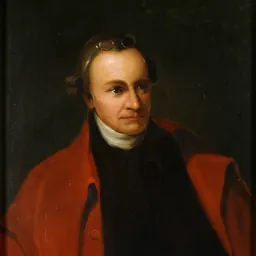
By the outbreak of the American Revolution, Martin was serving as an appointed justice on the Commission of Peace for Frederick County. Martin was reappointed as a justice of the peace by Governor Patrick Henry, along with William Booth and Warner Washington, but all three men declined to serve another term. Martin did not swear into the committee because he refused to serve under the new revolutionary regime, initially believing that American independence from Great Britain was a futile effort. Lord Fairfax devised his property and title to Denny Martin on the condition that he apply to the Parliament of Great Britain for an act to authorize him to inherit the title of Lord Fairfax of Cameron. The late Lord Fairfax had appointed as joint executors of his will and estate, Martin, Gabriel Jones and Peter Hog. Martin also inherited the plantation Lord Fairfax had purchased from John Borden consisting of , the Greenway Court estate and "all the stock of cattle, sheep, hogs, implements of husbandry, household goods and furniture" there. Also descendants of William Fairfax continued to assert back claims against the estates of Lord Fairfax, which had been rendered by William Fairfax prior to 1757. Despite considerable litigation in Virginia, land values in the Northern Neck Proprietary continued to increase, and Thomas Marshall was only one of many who kept moving westward to the new frontier, as Martin noted in a 1790 letter: "The emigration of inhabitants is... astonishing.
Personal life, death and legacy Following the death of Lord Fairfax in 1781, Martin took his uncle's housekeeper Mrs. Crawford as his mistress, and fathered a daughter by her. Powers also received a chariot, harness, and in Stafford County near Falmouth.
Don’t just read it —
keep it.
Full-length biographies made to live with: read them, listen on the way to work, watch them tonight.
- E-book
- Audio
- Video
Instant download · yours to keep · every purchase keeps this site free
Important facts
People in Thomas Bryan Martin's life
Named in this biography and alive at the same time



Related people
Same field, nearest in time




Contemporaries
People whose lives overlapped Thomas Bryan Martin's






Frequently asked questions
Who was Thomas Bryan Martin?
American politician
When was Thomas Bryan Martin born?
Thomas Bryan Martin was born in 1731 in Kent.
When did Thomas Bryan Martin die?
Thomas Bryan Martin died in 1798 in Virginia.
What was Thomas Bryan Martin's occupation?
Thomas Bryan Martin was a politician and judge.
What nationality was Thomas Bryan Martin?
Thomas Bryan Martin was American.
Sources & further reading
· Wikipedia: Thomas Bryan Martin
· DBpedia: Thomas Bryan Martin
Cite this page
APA: Biography.guide. (2026). Thomas Bryan Martin. https://biography.guide/thomas-bryan-martin/
MLA: "Thomas Bryan Martin." Biography.guide, https://biography.guide/thomas-bryan-martin/.
Chicago: "Thomas Bryan Martin." Biography.guide. https://biography.guide/thomas-bryan-martin/.
Data last updated: 2026-09-20 · Spot an error? Report a correction.
Page generated 2026-09-27 05:19 UTC