
About Thomas Bridges
Lived 1842 – 1898 (aged 55–56). Thomas Bridges was an Argentine and British missionary, linguist, cleric and anglicanism, known for Tierra del Fuego.
Thomas Bridges ( – 1898) was an Anglican missionary and linguist, the first to set up a successful mission to the indigenous peoples in Tierra del Fuego, an archipelago shared by Argentina and Chile. Adopted and raised in England by George Pakenham Despard, he accompanied his father to Chile with the Patagonian Missionary Society. After an attack by indigenous people, in 1859 Bridges' father, Despard, left the mission at Keppel Island of the Falkland Islands, to return with his family to England. At the age of 17, Bridges stayed with the mission as its new superintendent. In the late 1860s, he worked to set up a mission at what is now the town of Ushuaia along the southern shore of Tierra del Fuego Island.
Ordained and married during a trip to Great Britain in 1868–1869, Bridges returned to the Falkland Islands with his wife. They settled at the mission at Ushuaia, where four of their six children were born. He continued to work with the Selkʼnam (Ona) and Yaghan peoples for nearly 20 more years. On Bridges' retirement from missionary service in 1886, the Argentine government gave him a large grant of land. He became a sheep and cattle rancher.
As a young man, Bridges had learned the indigenous language of Yamana and closely studied the culture over his lifetime. Over more than a decade, he compiled a grammar and dictionary in Yamana–English of more than 30,000 words. His son Lucas Bridges donated the work to the British Library of London in 1930. Part of the dictionary was published in 1933, then consisting only of the Yamana–English portion. That was edited and published commercially in 1987, since reprinted in 2011. An English–Yamana manuscript, dated 1865, was discovered in the British Library by Alfredo Prieto. The two portions have been published together online at the Patagonia Bookshelf website to provide free access.
Early life Thomas was born in England in 1842. Despard adopted Bridges and another boy,
There is no record of Thomas Bridges in the 1851 UK census. He is believed to be registered as George H. Bridges among the listed students at the private school run by George Despard. The name change was likely due to a transcription error.
Expedition From 1853 to 1855, Despard was curate at Holy Trinity Church in Lenton, Nottingham. He had previously lived in Bristol where he met Allen Gardiner, a commander in the Royal Navy. Gardiner led expeditions to Tierra del Fuego in southern Argentina.
Gardiner tried but was unable to make contact with the indigenous people in Tierra del Fuego. Despard, then secretary of the Patagonian Missionary Society, led the next expedition to the area. He took with him his second wife and his children: four daughters, Emily, Bertha, Florence and Harriet, and his son Emilius. He also took Thomas Bridges, then about 13 years old. This trip was much more successful than earlier ones. Despard made contact with the local indigenous people and persuaded several to go to Keppel Island of the Falklands, where there was a mission and the climate was less severe. Some of the natives learned English while on Keppel Island. Some of the English party, Thomas Bridges in particular, learned the local language of Yámana.
Missionary work After an attack on the Allen Gardiner, Despard petitioned the missionary society to be allowed to return to England because of the danger to his wife and children. When the society gave its approval, he and his family departed. Thomas Bridges, then 17, stayed in order to take charge of the Keppel Island mission.
The next superintendent of the base was the Rev. Waite Hockin Stirling. He spent some time on a lecture tour of England, when he discussed Tierra del Fuego and his work there, and helped raise funds for the missionary society.
While speaking at an award ceremony for schoolteachers in Clevedon, near Bristol, Bridges met Mary Ann Varder, his future wife. She was the daughter of Stephen and Ann Varder; her father was a master carpenter. They lived in Harberton, a village about a mile south-west of Totnes. Five weeks after the couple first met, Thomas and Mary Ann were married by licence in the parish church at Harberton on 7 August 1869.
Return to South America Two days after they were married, the Bridges sailed for Rio de Janeiro, en route for the Falkland Islands, where settlements had been established by the British. In addition, the Allen Gardiner delivered materials at Ushuaia for a new prefabricated mission house to be erected near the first small house "at the top of the hill." On 10 October 1870, Bridges returned there with other men from the Falklands to dig the foundations and build Stirling House out of the iron structural elements delivered the previous year. Mary Ann was pregnant and stayed in the Falkland Islands until after their daughter was born.
After the birth of their daughter Mary, Bridges returned to Ushuaia. He and Jacob Resyck took up residence in Stirling House. Another missionary, Mr. Lewis , traveled to Keppel Island to pick up his family, returning on 14 May with his wife, son, and new baby. The baby was baptised Frank Ooshooia Lewis in Stirling House on 28 May. On 17 August, Bridges sailed with his wife and daughter to Ushuaia, arriving on 27 September 1871. Together with the Lewises, they established the Mission.
When Stirling returned to the Falklands in early January 1872, he received a salute of seven guns and was installed as bishop.
In his records, Bridges noted meeting his first Selkʼnam (Ona) people in 1875. This group lived east of the Yahgan, in the northeastern portion of Tierra del Fuego. Bridges later gave them space on his property, Estancia Harberton, in an effort to protect them from encroachment and attacks by Europeans.
He worked to learn their language, Yahgan. Through the late 1870s, Bridges continued his major work: compiling an English–Yahgan - Yahgan–English dictionary and a grammar of the Yahgan language.
In addition to ministering to the Yahgan, Bridges was also called upon to serve the British community. On 26 April 1881 suffered a massive explosion while it was anchored near Punta Arenas. The ship sank immediately, and 143 members of the crew were killed, most blown to pieces. There were 12 survivors. Small boats set off from the harbor and other ships to aid survivors. Crews worked all afternoon to recover bodies; only three were recovered whole and the crews put the remains into boxes. Bridges presided over a mass funeral for the sailors on ships and boats in the harbour. Mary Ann Varder Bridges (called Mary) was born in 1870, His son Lucas learned Selkʼnam and became close to the people; in addition, he compiled a vocabulary of the Manek'enk (or Haush). His tombstone records that he was 55 years old. Later buried in the same grave were his grandson, Percival William Reynolds (1904–1940); his son, Lucas Bridges, who published a book in 1948 describing his father's mission experience and the various cultures on the islands; and Lucas' wife Jannette McLeod Jardine (1890–1976), whom he had met and married in England. Thomas' widow Mary Ann Bridges returned to England after her husband's death; she lived in Shipbourne, Kent, until 1922. Zagier & Urruty also published a paperback edition of the work in 2011.
Chilean archeologist Alfredo Prieto, of the Universidad de Magallanes, discovered Bridges' English-Yámana dictionary manuscript, dated 1865, in the British Library in London. It included annotations by Rev. John Williams, a later SAMS missionary to the Yahgan. His notes indicated that he had used this manuscript up until the closing of the Anglican mission in 1916. Williams next served as the first Anglican minister at Punta Arenas.
Edited and organized by Prieto, the two portions of the dictionary have been published together online (2004–2013) by Campbell and Grace at their "Patagonia Bookshelf" website. It is the first time that the English-Yahgan/Yámana portion has been published and the complete edition is available for free. Bridges' preface to his English–Yámana manuscript notes that he used the Ellis Phonetic System, developed by the English mathematician Alexander John Ellis, also a philologist.
Books Rev. Thomas Bridges, Yamana–English: A Dictionary of the Speech of Tierra del Fuego, ed. Ferdinand Hestermann and Martin Gusinde, Mödling bei Wien (Vienna): Missionsdruckerei St. Gabriel (1933) Rev. Thomas Bridges, Yamana–English: A Dictionary of the Speech of Tierra del Fuego, ed. Ferdinand Hestermann and Martin Gusinde, Buenos Aires: Zagier & Urruty Publications, 1987/Reprint edition 2011, 664 pages Yahgan Dictionary: Language of the Yamana people of Tierra del Fuego, Manuscript of Rev. Thomas Bridges for English–Yamana, dated 1865, (later annotations by Rev. John Williams), ed. Alfred Prieto, English–Yamana portion published for the first time online, Patagonia Bookshelf, 2004–2013
Don’t just read it —
keep it.
Full-length biographies made to live with: read them, listen on the way to work, watch them tonight.
- E-book
- Audio
- Video
Instant download · yours to keep · every purchase keeps this site free
Important facts
People in Thomas Bridges's life
Named in this biography and alive at the same time




Related people
Same field, nearest in time

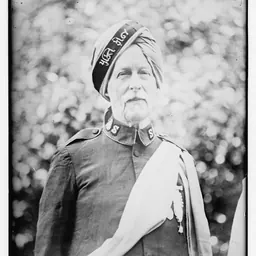
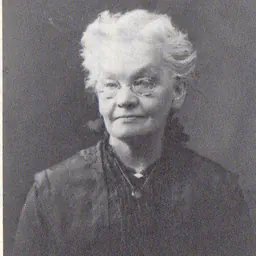
Contemporaries
People whose lives overlapped Thomas Bridges's

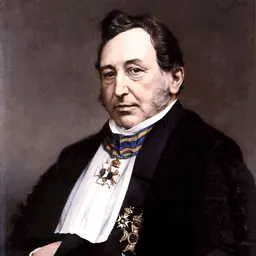

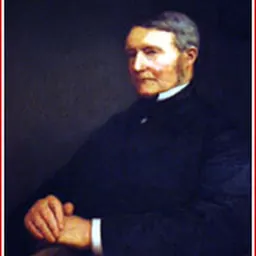
Frequently asked questions
Who was Thomas Bridges?
British missionary (1842–1898)
When was Thomas Bridges born?
Thomas Bridges was born in 1842 in Bristol.
When did Thomas Bridges die?
Thomas Bridges died on 15 July 1898 in Buenos Aires.
What was Thomas Bridges's occupation?
Thomas Bridges was a missionary, linguist, cleric and anglicanism.
What was Thomas Bridges known for?
Thomas Bridges was known for Tierra del Fuego.
What nationality was Thomas Bridges?
Thomas Bridges was Argentine and British.
Sources & further reading
· DBpedia: Thomas Bridges (missionary)
Cite this page
APA: Biography.guide. (2026). Thomas Bridges. https://biography.guide/thomas-bridges-missionary/
MLA: "Thomas Bridges." Biography.guide, https://biography.guide/thomas-bridges-missionary/.
Chicago: "Thomas Bridges." Biography.guide. https://biography.guide/thomas-bridges-missionary/.
Data last updated: 2026-09-22 · Spot an error? Report a correction.
Page generated 2026-09-27 05:34 UTC