
Martin Gusinde
German-Austrian priest and ethnologist
About Martin Gusinde
Lived 1886 – 1969 (aged 82). Martin Gusinde was an Austrian explorer, anthropologist, photographer, university teacher, catholic priest and missionary.
Martín Gusinde (29 October 1886, in Breslau – 18 October 1969, in Mödling, Austria) was an Austrian priest and ethnologist famous for his work in anthropology, particularly on the Fuegians. He was one of the most notable anthropologists in Chile in the first half of the 20th century, together with Max Uhle and Aureliano Oyarzún Navarro.
Career In 1900, Martin Gusinde joined the missionary order Divine Word Missionaries. He began higher studies in 1905 in St. Gabriel in Mödling, near Vienna. After ordination in 1911, Gusinde went to Chile. He worked as a teacher from 1912 to the end of 1913 and subsequently at the Ethnographic Museum in Santiago de Chile with Max Uhle until 1922, becoming a head of department in 1918.
Gusinde undertook four research journeys to Tierra del Fuego between the end of 1918 and 1924. The objective was to explore the different groups of Fuegian people, the Yamana and Selkʼnam (also known as Ona), who had been displaced by settlers and severely depleted by imported diseases for which they lacked natural resistance. He stayed in Tierra del Fuego for 22 months in total. He was allowed to participate in the initiation rites of the groups he studied. On behalf of the Berlin Phonogram Archive, he recorded songs and chants of the indigenous peoples. This was later reprinted in Buenos Aires in 1987, and in a paperback edition in 2011.
During the mid-1930s, he studied the pygmies in the Congo.
Between 1949 and 1957, Gusinde served as a professor at The Catholic University of America in Washington, DC. He undertook an expedition to the Ayom pygmies in New Guinea in 1956. From 1959 to 1960 he taught at Nanzan University in Nagoya, Japan.
He ended his career in research, lecturing and teaching activities at the Mission St. Gabriel in Maria Enzersdorf, Vienna. Martín Gusinde died in Mödling on 10 October 1969.
Legacy In Puerto Williams, Chile, the Martin Gusinde Anthropological Museum was erected in his honour, which records his work with the Tierra del Fuego people. He is also honoured in the placenames, Padre Martin Gusinde street in Padre Hurtado, Santiago, Chile and Martin-Gusinde-Gasse in Maria Enzersdorf, Austria.
Decorations and awards 1952: Karl Renner Prize 1958: Austrian Decoration for Science and Art 1966: Grand Silver Medal with Star for Services to the Republic of Austria Honorary Ring of Vienna
Don’t just read it —
keep it.
Full-length biographies made to live with: read them, listen on the way to work, watch them tonight.
- E-book
- Audio
- Video
Instant download · yours to keep · every purchase keeps this site free
Important facts
People in Martin Gusinde's life
Named in this biography and alive at the same time
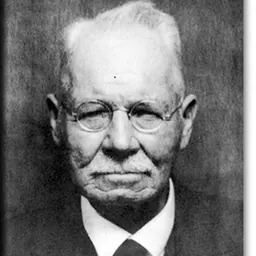



Related people
Same field, nearest in time

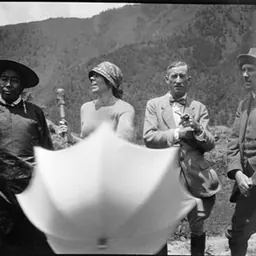


Contemporaries
People whose lives overlapped Martin Gusinde's
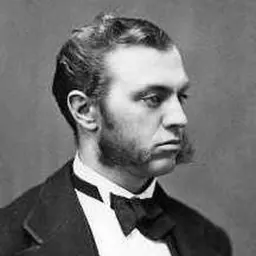




Frequently asked questions
Who was Martin Gusinde?
German-Austrian priest and ethnologist (1886-1969)
When was Martin Gusinde born?
Martin Gusinde was born on 29 October 1886 in Wrocław.
When did Martin Gusinde die?
Martin Gusinde died on 18 October 1969 in Mödling.
What was Martin Gusinde's occupation?
Martin Gusinde was an explorer, anthropologist, photographer, university teacher, catholic priest and missionary.
What nationality was Martin Gusinde?
Martin Gusinde was Austrian.
Sources & further reading
Cite this page
APA: Biography.guide. (2026). Martin Gusinde. https://biography.guide/martin-gusinde/
MLA: "Martin Gusinde." Biography.guide, https://biography.guide/martin-gusinde/.
Chicago: "Martin Gusinde." Biography.guide. https://biography.guide/martin-gusinde/.
Data last updated: 2026-09-20 · Spot an error? Report a correction.
Page generated 2026-09-27 05:21 UTC