
About Thomas Blackburn
Lived 1916 – 1977 (aged 61). Thomas Blackburn was a British poet.
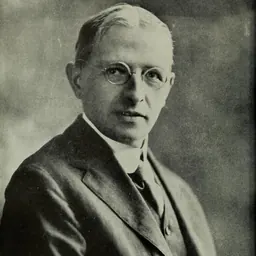
Thomas Eliel Fenwick Blackburn (10 February 1916 – 13 August 1977) was a British poet whose work was characterised by its self-examination and spiritual imagery.
His memoir, A Clip of Steel (1969), describes the effects of a traumatic childhood under a repressive clergyman father. The mother disappeared once she returned to Mauritius, and Eliel was raised by his uncle, who brought him up to be a passionate Anglican. His father, haunted by feelings of racial inferiority, also repeatedly scrubbed his face with peroxide in order to lighten his complexion. Alan Morrison, discussing this experience, noted that "Blackburn" is "a cruelly apt surname for someone whose father used to literally try to burn the black off his skin". He studied law at Selwyn College, Cambridge at the insistence of his father.
This was followed by a short spell as an articled clerk; then Brookfield Hall, a treatment centre for alcoholics and drug-addicts, where he was expelled for drunkenly attempting to seduce the wife of one of the medical staff; and finally several months of shock therapy at the hands of a Harley Street doctor. He graduated from Durham in 1940. He agreed after being persuaded by the Leeds academic Bonamy Dobrée. One of the poems from this collection, "Sediment", about his father, won the Guinness Poetry Prize. This book was followed two years later by the only novel he published, The Feast of the Wolf, which is inspired by the vampire myth. While fictional, its frank depiction of mental illness and substance abuse was likely influenced by Blackburn's own experiences.
Critical reception and legacy In his review of A Smell of Burning for Poetry, the literary critic Gene Baro identified the conflict between "the darker human impulses" and the need for "spiritual integration" as the defining theme of Blackburn's work. His earliest verses were stylistically influenced by W. B. Yeats, and X. J. Kennedy, commenting in the New York Times Book Review, noted that, while reading Blackburn, "one at times feels as though a rather weary shade of Yeats had been reincarnated".
Outside of literature, his main passion was mountaineering, which he first took up while a student at Durham University.
Death Blackburn died on 13 August 1977 at his cottage in Snowdonia.
Accounts of his death differ. One version states he died from a cerebral haemorrhage while getting into bed, having just finished a letter to his brother John. Alternatively, Contemporary Authors reports the cause as an "apparently deliberate" overdose of anti-depressants.
Selected publications Poetry
Prose
Monograph
Don’t just read it —
keep it.
Full-length biographies made to live with: read them, listen on the way to work, watch them tonight.
- E-book
- Audio
- Video
Instant download · yours to keep · every purchase keeps this site free
Important facts
People in Thomas Blackburn's life
Named in this biography and alive at the same time



Related people
Same field, nearest in time

Contemporaries
People whose lives overlapped Thomas Blackburn's



Frequently asked questions
Who was Thomas Blackburn?
British writer (1916–1977)
When was Thomas Blackburn born?
Thomas Blackburn was born on 10 February 1916.
When did Thomas Blackburn die?
Thomas Blackburn died on 13 August 1977.
What was Thomas Blackburn's occupation?
Thomas Blackburn was a poet.
What nationality was Thomas Blackburn?
Thomas Blackburn was British.
Sources & further reading
· DBpedia: Thomas Blackburn (poet)
Cite this page
APA: Biography.guide. (2026). Thomas Blackburn. https://biography.guide/thomas-blackburn-poet/
MLA: "Thomas Blackburn." Biography.guide, https://biography.guide/thomas-blackburn-poet/.
Chicago: "Thomas Blackburn." Biography.guide. https://biography.guide/thomas-blackburn-poet/.
Data last updated: 2026-09-20 · Spot an error? Report a correction.
Page generated 2026-09-27 05:06 UTC