
About Thomas Bermingham, 1st Earl of Louth
Lived 1717 – 1799 (aged 81). Thomas Bermingham, 1st Earl of Louth was a British politician.
Thomas Bermingham, 1st Earl of Louth (16 November 1717 – 11 January 1799), was an Anglo-Irish politician and peer. He was also the last person to be summoned to Parliament as Baron Athenry.
Lord Louth was the son of the 14th Baron Athenry by his first marriage to Lady Mary Nugent, daughter of the 4th Earl of Westmeath. He was elected to the Irish House of Commons as Member of Parliament for County Galway, sitting between 1745 and 1750, when on 4 March 1750 he succeeded his father as Baron Athenry and became a member of the Irish House of Lords. He was invested as a member of the Privy Council of Ireland, but was ejected from it in 1767 by Lord Townshend, the newly arrived Lord Lieutenant of Ireland, who wished to make a "clean sweep" of the Irish administration, removing all those he regarded as corrupt or inefficient. On 23 April 1759, Lord Athenry was created Earl of Louth in the Peerage of Ireland, a title previously held by John de Bermingham, 1st Earl of Louth, a cousin of his remote ancestor Rickard de Bermingham. The barony fell into abeyance and became dormant: among those who unsuccessfully claimed it after him were his grandson Thomas Sewell, and the family of John Birmingham.
His daughters were- Elizabeth, who married: firstly, Thomas Bailey Heath Sewell (son of Sir Thomas Sewell, Master of the Rolls); secondly, Francis Duffield; and thirdly, Joseph Russell Mary, married the 2nd Earl of Howth Louisa, who married: firstly, the 1st Baron Wallscourt; and secondly, James Daly.
In recent research on Irish slave owning families, 'John Bermingham' was shown in 1798 as the owner of an estate called Dalgin 'a la cote orientale de Demerarie.' This may be John Bermingham, commonly called 'Lord Baron Athenry', but it also conceivably could be his nephew John, son of Edward Bermingham and Ann Waddell, who died in 1811. In a Will of John Bermingham, commonly called Lord Baron Athenry of Daligan House, Galway, proved 27/06/1803, he left his property, including unspecified estates in South America and the West Indies, in trust for his three natural children, Michael, Thomas and Edward.
Don’t just read it —
keep it.
Full-length biographies made to live with: read them, listen on the way to work, watch them tonight.
- E-book
- Audio
- Video
Instant download · yours to keep · every purchase keeps this site free
Important facts
People in Thomas Bermingham, 1st Earl of Louth's life
Named in this biography and alive at the same time


Related people
Same field, nearest in time
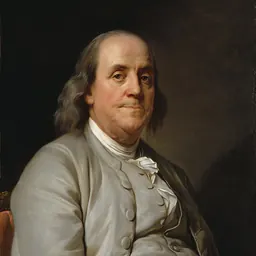


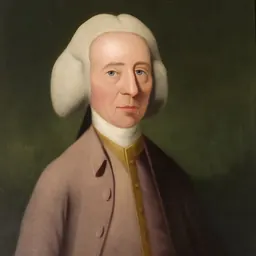


Contemporaries
People whose lives overlapped Thomas Bermingham, 1st Earl of Louth's

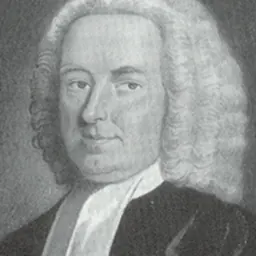



Frequently asked questions
Who was Thomas Bermingham, 1st Earl of Louth?
Irish politician
When was Thomas Bermingham, 1st Earl of Louth born?
Thomas Bermingham, 1st Earl of Louth was born on 16 November 1717.
When did Thomas Bermingham, 1st Earl of Louth die?
Thomas Bermingham, 1st Earl of Louth died on 11 January 1799.
What was Thomas Bermingham, 1st Earl of Louth's occupation?
Thomas Bermingham, 1st Earl of Louth was a politician.
What nationality was Thomas Bermingham, 1st Earl of Louth?
Thomas Bermingham, 1st Earl of Louth was British.
Sources & further reading
· Wikipedia: Thomas Bermingham, 1st Earl of Louth
· DBpedia: Thomas Bermingham, 1st Earl of Louth
Cite this page
APA: Biography.guide. (2026). Thomas Bermingham, 1st Earl of Louth. https://biography.guide/thomas-bermingham-1st-earl-of-louth/
MLA: "Thomas Bermingham, 1st Earl of Louth." Biography.guide, https://biography.guide/thomas-bermingham-1st-earl-of-louth/.
Chicago: "Thomas Bermingham, 1st Earl of Louth." Biography.guide. https://biography.guide/thomas-bermingham-1st-earl-of-louth/.
Data last updated: 2026-09-20 · Spot an error? Report a correction.
Page generated 2026-09-27 04:59 UTC