
About Thomas Alexander Tefft
Lived 1826 – 1859 (aged 33). Thomas Alexander Tefft was an American architect.
Tefft's design for Freight House No. 1, of the Providence and Worcester Railroad, Providence. 1847, demolished. Tefft's Cotton Mill in Cannelton, IN, completed in 1851. The mill is shown here before its restoration. Providence Union Station, 1847–1896. Note the similarity in style to the Cannelton Cotton Mill Thomas Alexander Tefft (August 2, 1826 – December 12, 1859) was an American architect, from Providence, Rhode Island. Tefft, one of the nation's first professionally trained architects, is considered a master of Rundbogenstil and a leading American proponent of its use. Prior to his untimely death, Tefft "offered the most advanced designs of [his] day in America"
Life and career
Early life Tefft was born in rural Richmond, Rhode Island, outside of the small village of Wood River Junction. He was the fourth child of William C. and Sarah Tefft. His family worshiped at the Richmond Six-Principle Baptist Church. During his childhood, Tefft experienced poor health; unable to exert himself physically, he developed an appreciation of books. At the age of 10, he enrolled at a school kept by Elisha Baggs. During his later adolescence, Tefft taught at a local schoolhouse.
During the 1840s, the state school commissioner, Henry Barnard, embarked on an inspection of the state's public schools. Noting Tefft's talents for drawing and the other arts, Barnard convinced him to move to Providence and study architecture. He entered the office of Tallman and Bucklin–then one of the city's primary offices. By 1846, Tefft played a dominant role in the firm's designs. In 1847, he enrolled at Brown University, where he studied under Alexis Caswell.
Later career and death In 1851, Tefft graduated from Brown. At the same time, the partnership of Tallman and Bucklin was dissolved. Tefft then opened his own office, and ran a notable practice that lasted only five years. In 1856, he decided to embark on a grand tour of Europe. Due to the beginning of an economic downturn, the only work that Tefft had in his office were the initial designs of Vassar College. With that project stagnating, he chose to go. He departed on the steamer Arago on December 13, 1856. In December 1859, he fell ill with a fever in Florence at the home of his friend, sculptor Hiram Powers. He died there on the 12th. Tefft was first buried in the English Cemetery in Florence; in February 1860, his body was shipped back to Rhode Island, where it was reinterred in Swan Point Cemetery.
Works
With Tallman and Bucklin, 1846–1851 Barrington School, 351 Nayatt Road, Barrington, Rhode Island (1840) – now a private home
Butler Hospital, 345 Blackstone Blvd., Providence, RI (1847) – significantly altered Elisha Dyer House, 11 Greene St., Providence, RI (1847) – demolished Freight House No. 1, Canal St. at Elizabeth, Providence, RI (1847–48) – served as the passenger station until Union Station was completed, demolished Gatehouse, Swan Point Cemetery, 585 Blackstone Blvd., Providence, RI (1847) – demolished Receiving Vault, Swan Point Cemetery, 585 Blackstone Blvd., Providence, RI (1847) Second Universalist Church, 151 Weybosset St., Providence, RI (1847–49) – burned in 2006 St. Paul's Episcopal Church, 55 Main St., Wickford, RI (1847) Liberty Street School, 10 Liberty St., Warren, Rhode Island (1847) Allendale School, 545 Woonasquatucket Ave., Allendale, RI (1848) Centerdale School, Thomas St., Centerdale, RI (1848) – demolished Providence Union Station, Kennedy Plaza, Providence, RI (1848) – burned in 1896 Remodeling of house for Richard James Arnold, 124 S. Main St., Providence, RI (1848) – This house was once the Sabin Tavern; it was demolished in 1891. Union High and Grammar School, 60 High School St., Woonsocket, RI (1848–49) – burned in 1875 Young Ladies' High School, 235 Benefit St., Providence, RI (1848) Indiana Cotton Mills, 310 Washington St., Cannelton, Indiana (1849–50) – now the Cotton Mill Apartments Menzies Sweet House, 12 Arnold St., Providence, RI (1850) Paris Hill House, 201 Washington St., Providence, RI (1851) – later the home of the Union Club of Providence, demolished in 1915 St. Thomas Episcopal Church, 1 Smith Ave., Greenville, RI (1851) – tower added in 1891 American Antiquarian Society, 185 Salisbury St., Worcester, MA (1852) – demolished in 1909 Gatehouse, Butler Hospital, 345 Blackstone Blvd., Providence, RI (1852) – demolished Taunton Bank Building, 9 Taunton Green, Taunton, MA (1852) – altered Wakefield Baptist Church, 236 Main St., Wakefield, RI (1852) Weeden Block, 41 Westminster St., Providence, RI (circa 1852) – demolished Edward Pearce House, 2 Benevolent St., Providence, RI (1853) – demolished by the Hope Club for a parking lot in 1960 Emily Harper House, 80 Ocean Ave., Newport, RI (1853) – greatly expanded in the 1870s, demolished in 1966 Howard Block, 171 Westminster St., Providence, RI (1853) – burned in 1858 John B. Palmer House, 151 Waterman St., Providence, RI (1853) – demolished in 1961 Joseph B. Tompkins House, 38 Catherine St., Newport, RI (1853) Oakwoods, Oakwoods Dr., Peace Dale, RI (1853) – the home of Rowland Hazard, demolished Quatrel, 669 Bellevue Ave., Newport, RI (1853–54) – for Earl P. Mason Tully D. Bowen House, 389 Benefit St., Providence, RI (1853) Henry E. Russell House, Lake St. and Grove Hill, New Britain, CT (1854) – demolished Richmond College, Grace St., Richmond, VA (1854–55) – only one wing was ever built to Tefft's design, the rest deviated from his plan, demolished Richmond Female Institute, N. 10th and E. Marshall Sts., Richmond, VA (1854) – demolished in 1924 Robert Lippitt House, 193 Hope St., Providence, RI (1854) Roger Williams Free Baptist Church, 1076 Westminster St., Providence, RI (1855) – demolished Bank of North America Building, 48 Weybosset St., Providence, RI (1856) – ground floor altered Seth Padelford Stable, 17 Benevolent St., Providence, RI (1856) – demolished in 1955
Gallery
Don’t just read it —
keep it.
Full-length biographies made to live with: read them, listen on the way to work, watch them tonight.
- E-book
- Audio
- Video
Instant download · yours to keep · every purchase keeps this site free
Important facts
People in Thomas Alexander Tefft's life
Named in this biography and alive at the same time

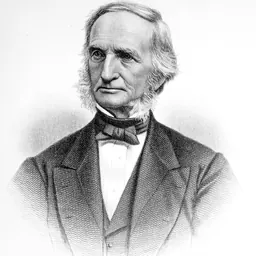
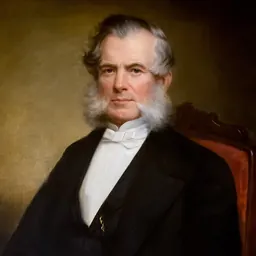
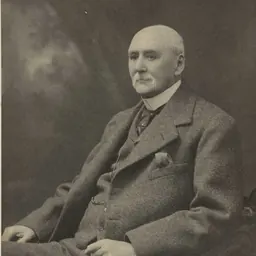
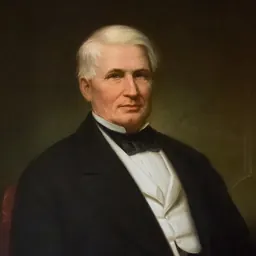

Related people
Same field, nearest in time



Contemporaries
People whose lives overlapped Thomas Alexander Tefft's





Frequently asked questions
Who was Thomas Alexander Tefft?
American architect (1826–1859)
When was Thomas Alexander Tefft born?
Thomas Alexander Tefft was born on 2 August 1826 in Richmond.
When did Thomas Alexander Tefft die?
Thomas Alexander Tefft died on 12 December 1859 in Florence.
What was Thomas Alexander Tefft's occupation?
Thomas Alexander Tefft was an architect.
What nationality was Thomas Alexander Tefft?
Thomas Alexander Tefft was American.
Sources & further reading
· Wikipedia: Thomas Alexander Tefft
· DBpedia: Thomas Alexander Tefft
Cite this page
APA: Biography.guide. (2026). Thomas Alexander Tefft. https://biography.guide/thomas-alexander-tefft/
MLA: "Thomas Alexander Tefft." Biography.guide, https://biography.guide/thomas-alexander-tefft/.
Chicago: "Thomas Alexander Tefft." Biography.guide. https://biography.guide/thomas-alexander-tefft/.
Data last updated: 2026-09-20 · Spot an error? Report a correction.
Page generated 2026-09-27 05:19 UTC