
Thomas A. Spragens
American academic administrator
About Thomas A. Spragens
Lived 1917 – 2006 (aged 88). Thomas A. Spragens was an American writer, academic administrator and civil servant.
Thomas Arthur Spragens ( ; April 25, 1917 – February 11, 2006) was an American administrator who was the 17th president of Centre College in Danville, Kentucky. A graduate of the University of Kentucky, Spragens worked for the state and federal government early in his career, before joining the staff at Stanford University as a presidential advisor. He was the president of Stephens College in Columbia, Missouri, for a five-year term, and left Stephens to go to Centre in 1957.
The first Centre president who was not a member of the clergy, Spragens worked to lessen the ties between the college and the Presbyterian Church, which led to a significant rise in students reporting that they were non-denominational; it also led to attendance at chapel becoming optional for students. Spragens was an effective fundraiser for the school; his Fund for the Future Campaign ultimately raised $34 million. He was instrumental in the integration of the school, and admitted Centre's first black student in 1962. The same year, he led an effort to consolidate the school's women's department, formerly the Kentucky College for Women, onto Centre's campus. Many parts of campus were upgraded during his presidency; after twenty years, three quarters of Centre's facilities had been either built or renovated. During his term, which ended in 1981, Centre's student enrollment and faculty numbers both nearly doubled, its endowment increased, and the property value of its campus rose.
He was selected by two governors to be a part of commissions which studied higher education in Kentucky, and was a part of the American Association of Colleges and Universities, the Southern Association of Colleges and Schools, and the American Council on Education at different times. He was active in Democratic Party politics, and was a delegate to the 1968 Democratic National Convention in support of Senator Eugene McCarthy. Additionally, he was a part of an effort which culminated in the 1962 founding of what is now the Southern Collegiate Athletic Conference, of which Centre remained a charter member until 2011.
Early life and education
Spragens was born on April 25, 1917, in Lebanon, Kentucky. He was the third of seven children in his family. He attended Lebanon High School, graduating in 1934, for a year and a half, but afterwards transferred to the College of Arts and Sciences and majored in economics. At Stephens, he implemented a plan which saw the use of closed-circuit television as an academic aid, for which the school received "wide notice in educational circles". Television was used mainly as a supplement to seminar-style classes with small numbers of students, and it allowed lecturers to speak to multiple sections of a class simultaneously. In his final week at Stephens, the college announced a 40-year campus relocation project at a total cost of $12 million (equivalent to $ million in ) with the eventual goal of abandoning its current facilities and constructing new instructional, residential, and athletic buildings at a site near U.S. Route 63.
In 1957, he was contacted by Don Campbell, a friend of his and chairman of the trustee presidential search committee at Centre, regarding the school's vacant presidency. He was offered the job, and despite having turned down a similar offer from what he later called a "stronger" college, he accepted the position at Centre.
President of Centre College, 1957–1981 Spragens was announced as Centre's next president by their board of trustees on August 22, 1957. In doing so, he became the fourth president in the college's history who was not an ordained minister, He spent his first full day on campus the following day, when he presided over his first faculty meeting, and addressed the student body for the first time at a convocation on November 19. He was formally inaugurated in a ceremony on the morning of April 21, 1959, which included an inaugural address given by Stanford president Wallace Sterling.
In 1959, he introduced a ten-year plan with the goals of increasing the college's enrollment (with the specific goal of 750 students), adding to the faculty, and increasing the number of majors offered by the college. The following year, the college announced a $6.5 million (equivalent to $ million in ) fundraising campaign in celebration of Centre's 150-year anniversary, a marked increase from the $20,000 to $25,000 typically raised every year. On June 9, 1958, he received an honorary Doctor of Letters degree from Westminster College, which was conferred upon him at their commencement ceremony. After beginning his term, he immediately declared that the school would move towards full integration and not discriminate by race when determining admissions, and the college admitted its first black student when Timothy Kusi, a Ghanaian student who transferred from Kentucky State College (now Kentucky State University), enrolled in 1962. This change was received well by much of the campus community. The campus of the former Kentucky College for Women, at the time operating as Centre's women's department, closed that same year, at which point it was consolidated onto Centre's campus, with Spragens presiding over the merger. He hired Shirley Anne Walker, a French language professor who became Centre's first black faculty member at the start of the 1971–1972 academic year.
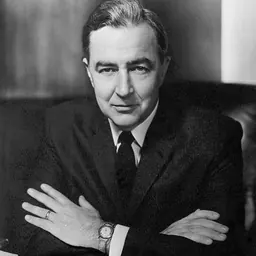
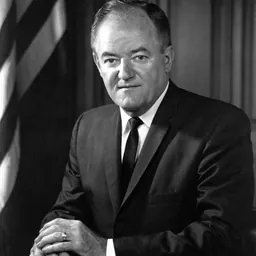
As football grew more popular at Centre during the late 1950s and early 1960s, Spragens sought to keep the college's priorities on academics rather than athletics. After he was announced as president in August 1957, he said that he would continue the existing policy of lessened emphasis on athletics, saying that they were a "corollary aspect" of the school. He advocated for the creation of a new athletic association which would eliminate gate receipts; Centre was joined in this association by Washington and Lee University, Southwestern University at Memphis (now Rhodes College), and the University of the South, with Washington University in St. Louis added later the same year as the league's fifth charter member. This association ultimately became the College Athletic Conference (now the Southern Collegiate Athletic Conference) and was formally founded on September 1, 1962. Centre remained a member of the conference until 2011, when they left, along with six other SCAC schools and one independent school, to form the Southern Athletic Association. During the 1960s, Spragens decided to end the agreement under which Centre leased its football field to Danville High School, and underwent a facilities exchange with the local school district by which the Centre women's campus was given to the district and the old Danville High School site was given to the college. This trimester system, referred to as "The New Curriculum", consisted of two terms of regular length, during which students would take four courses, with a six-week two-course winter term in between. He was selected as a delegate to the 1968 Democratic National Convention, held in Chicago, after serving as the chair of the Boyle County Democratic Convention and attending the state convention. He did both in support of Senator Eugene McCarthy of Minnesota, though McCarthy eventually lost the nomination to Vice President Hubert Humphrey, also of Minnesota. These upgrades increased the property value of the campus to $21.2 million (equivalent to $ million in ) by the time he left office. He worked as a fundraiser for, and advisor to, the college for six months following his resignation. He ended up as a consultant for one year to the newly hired president of Kentucky State, Raymond Burse, a Centre alumnus himself. He received honorary degrees from a number of colleges and universities: Westminster College, the University of Kentucky, the University of Alabama, Berea College, and Kentucky State University, in addition to Centre.
Personal life and death
Spragens met Catharine Smallwood, a native of Oxford, Mississippi, and an alumna of the University of Mississippi, The couple had two sons, Thomas Jr. and David, and one daughter, Barbara.
Spragens died on February 11, 2006, in Columbia, South Carolina, at the age of 88. His memorial service was scheduled for March 4, 2006, at the First Presbyterian Church in Danville. He is buried in Danville's Bellevue Cemetery.
Legacy
During his 24-year tenure as president, the college's enrollment nearly doubled, from 380 students to nearly 700, and the size of its faculty followed the same trend, increasing from 38 members to 68. Centre's endowment also grew, from $2.8 million (equivalent to $ million in ) to $18 million (equivalent to $ million in ). Three of Kentucky's four Rhodes Scholars at the time of his resignation had graduated from Centre over the previous fifteen years. the boards of numerous organizations including Shaker Village, Leadership Kentucky, Presbyterian Homes and Services, and Pikeville College (now the University of Pikeville), and was a city commissioner in Danville.
Don’t just read it —
keep it.
Full-length biographies made to live with: read them, listen on the way to work, watch them tonight.
- E-book
- Audio
- Video
Instant download · yours to keep · every purchase keeps this site free
Important facts
People in Thomas A. Spragens's life
Named in this biography and alive at the same time



Related people
Same field, nearest in time


Contemporaries
People whose lives overlapped Thomas A. Spragens's



Frequently asked questions
Who was Thomas A. Spragens?
American academic administrator (1917–2006)
When was Thomas A. Spragens born?
Thomas A. Spragens was born on 25 April 1917 in Lebanon.
When did Thomas A. Spragens die?
Thomas A. Spragens died on 11 February 2006 in Columbia.
What was Thomas A. Spragens's occupation?
Thomas A. Spragens was a writer, academic administrator and civil servant.
What nationality was Thomas A. Spragens?
Thomas A. Spragens was American.
Sources & further reading
· Wikipedia: Thomas A. Spragens
Cite this page
APA: Biography.guide. (2026). Thomas A. Spragens. https://biography.guide/thomas-a-spragens/
MLA: "Thomas A. Spragens." Biography.guide, https://biography.guide/thomas-a-spragens/.
Chicago: "Thomas A. Spragens." Biography.guide. https://biography.guide/thomas-a-spragens/.
Data last updated: 2026-09-20 · Spot an error? Report a correction.
Page generated 2026-09-27 05:24 UTC