
About Thomas A. Bird
Lived 1918 – 2017 (aged 98). Thomas A. Bird was an architect.
Major Thomas Arthur Bird DSO, MC & Bar (11 August 1918 – 9 August 2017) was a distinguished British soldier and architect whose inspirational command of the anti-tank company (‘S’ Company) of 2nd Battalion, The Rifle Brigade, at Outpost Snipe during the Second Battle of El Alamein helped destroy the armoured counter-attack of General Erwin Rommel’s Afrika Korps. ‘When all seemed to be lost, there would be Dicky boy, calm and seemingly aloof from the dangers around us…’. The Daily Sketch described Snipe as ‘the finest action of the war’. He later became a noted architect working in collaboration with Richard Tyler (as Bird & Tyler Associates) from 1955 to 1985 in the neo-classical genre, having rejected an earlier flirtation with modernism.
He remains the only soldier to have witnessed two Victoria Cross actions, that of Second Lieutenant George Ward Gunn of 3rd Regiment Royal Horse Artillery (posthumously at Sidi Rezegh in 1941) and that of Colonel Victor Buller Turner, at Snipe.
Tom Bird died at his home in Turville Heath on 9 August 2017, two days before his 99th birthday.
Military Cross: Tobruk January 1941 Bird was ordered to test Tobruk’s western defences at Ras el Medauuar. He repeatedly drove his carriers up to the wire and minefields (at one point driving over a mine that failed to explode), firing all his Brens, supported by 4 RHA’s 25-pounders. In return they were met by ‘very heavy defensive fire’ as the citation stated. The citation continued: ‘Working his carrier around the flank, he completely surrounded the strong enemy position, protected by mines and booby traps, and forced it to surrender.’ The citation praised his ‘conspicuous gallantry and leadership’, ‘skill and coolness’. Some 2,000 Italians were captured.
Bar to MC: Ban Gebel Kalakh July 1942 Bird’s brigadier (‘who had clearly never been on a patrol himself’ ) told him to lay on a strong night patrol to penetrate the enemy opposite (‘in depth’) to find out their strength. ‘The more I thought about it the less I liked it – how were we going to extricate ourselves?’ Bird ‘interpreted’ the orders and made a raid on the nearest outpost (‘across 2,700 yards of open ground in brilliant moonlight’, as the citation states), to ‘see what we could capture’, arranging for 4th RHA to shell it while his own Brens gave covering fire from a flank. ‘It all had to be nicely timed so that the shelling and covering fire only stopped when we were very close to the outpost. All went well…’ The citation continues: ‘100 yards short of the objective a wire fence was encountered, which he negotiated under intense fire, and then took his patrol in with great gallantry and determination, overrunning three posts and capturing two officers and fifteen other ranks. In spite of heavy small-arms and mortar fire he withdrew his patrol without casualties. The success of this patrol was almost entirely due to the careful preparation and courageous leadership of its commander, to his unwavering determination to attack and capture a heavily defended position…’
Distinguished Service Order: El Alamein (Snipe) October 1942 A 6-pounder anti-tank gun of the type used in the Snipe action, photographed in the Western Desert on 29 October 1942 (E18802)Extract from the citation; ‘Major BIRD, with his courage and leadership, was an inspiration to all ranks.. [he] paid no heed to his own safety [and] was always at the critical point performing many duties, directing the fire of a gun whose No. 1 was wounded, loading another…fetching ammunition and cheering his men. All this he did under intense fire’.
The Snipe action destroyed at least 33 tanks and 5 self-propelled guns, and blunted Rommel’s armoured counter-thrust.
Rifleman R L Crimp, who later published his diary, witnessed Bird’s action at around 11.30 am;
‘Several guns are now completely out of ammo. The situation’s so bad that two officers of ‘S’ Company [Bird and one of his platoon commanders, Lt Jack Toms] try to effect a re-distribution of what remains by jeep. They travel slowly over the dunes (four-wheeled drive carrying them on), quite heedless of the M/G bullets slashing the air around them and panzers potting straight at them, collecting odd rounds from knocked-out guns or the guns of knocked-out crews, and taking them to guns that can still strike back. One bullet amongst the ammo on board and the lot would go sky-high.’ ADC to Wavell in India After recovering from his wounds at Snipe, he was asked by Field Marshal Archibald Wavell, then Commander-in-Chief India, to be his ADC and Comptroller. Bird was a fellow Wykehamist, had been at Winchester with Archie John, Wavell’s son, and had often been invited to dine with the Wavells in Cairo when ‘The Chief’ (as Wavell was known) was Commander-in-Chief Middle East – rather to the envy of his brother officers. In a letter of 24 February 1943 Wavell wrote to Gen O’Connor (then a POW in Italy) that he had a new ADC ‘who was with my boy at Winchester; his name is Bird and he has been wounded three times and has got a DSO and two Military Crosses so he deserves a bit of a rest from the desert.’
On Wavell being asked to replace Lord Linlithgow as Viceroy in June 1943, Bird returned to his battalion – briefly acting as ADC to General Auchinleck (when he
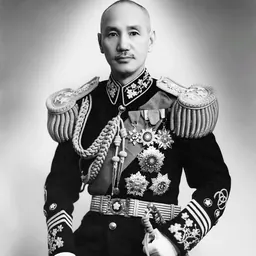
replaced Wavell as C-in-C India) and as ADC to General Sir Henry (‘Jumbo’) Wilson (then C-in-C Middle East Command) for the Cairo Conference (Sextant - November 22-26), where he met Roosevelt, Churchill and Chiang Kai-shek, and learnt the date of D-Day.
Arnhem
After a 6-month spell back in England as an instructor at the School of Infantry at Barnard Castle, Co Durham (from January 1944) Bird joined 8th Rifle Brigade in their push towards Arnhem to relieve the Paras of the 6th Airborne Division at Arnhem Bridge, but was seriously wounded by mortar fire on September 23. His fighting war was over.
ADC in Washington Upon release from hospital he accepted the post of ADC to Field Marshal Wilson in Washington who had replaced Field Marshal Sir John Dill as Chief of the British Joint Mission. There he stayed throughout 1945, joining Wilson in Germany for the Potsdam Conference where they were General Eisenhower’s guests. While dining with Ike the news arrived of the successful testing of an atom bomb. Perversely perhaps, Bird had been privy to its secret while Vice President Truman had not.
Bird was demobbed in December 1945 and returned to London and his architectural studies.
Architectural practice Back in London Bird returned to his architectural studies at the AA. He was trained in the Modern ethos. He received his diploma in 1948 and joined the leading Modern practice in London of Maxwell Fry and Jane Drew. But he rejected the Modernist dogma and set up on his own in 1952, with Fry providing work. In 1955 Bird entered into partnership with Richard Tyler, whom he’d met in the Western Desert, where Tyler had lost a leg. Bird and Tyler, until their retirement in 1985, designed, restored and remodelled numerous country houses all over Britain. They seldom collaborated, but provided constructive criticism of each other’s projects. Bird specialised in reconstructions or, occasionally, entirely new country houses (for example Gredington Park in Shropshire for Lord Kenyon, 1982). His clients were mostly traditional landowners. His work is distinguished by restraint and sensitivity, as at Sansaw, Shropshire (for Robin Bibby Thompson), where careful remodelling maintained the old appearance of a 19th Century Queen Anne Revival original; and Roddam Hall in Northumberland (for Lord Vinson) where he took off the top storey and dramatically remodelled the interior. One of his more modest houses was misidentified by Pevsner as ‘good Georgian.’ Among his best known work is Hall Barn (1972), Buckinghamshire (for Lord Burnham), where 19th century additions had unbalanced the late 17th century design and made it too big. Perhaps his major country house, and a foray into the grandiose, is Lushhill in Wiltshire (1966), built for Captain Fred Barker in Regency style, for whom he had already designed a stud farm. One architectural historian praised the ‘amazing achievement’ of its elevations, its ‘lavish interior’ and ‘spectacular oval staircase hall’.
Personal life Tom Bird was married in March 1945 in Boston, Massachusetts, USA to Alice Maclaurin Hunsaker, youngest daughter of noted aeronautical pioneer Professor Jerome C.Hunsaker of MIT, who was Chairman of the US National Advisory Committee for Aeronautics (later NASA). He led the team that designed the first plane to cross the Atlantic, the NC (Navy Curtis) 4. Alice Bird died on 22 October 2015 in Henley-on-Thames, Oxfordshire, UK. They had three children; two sons, Antony and Nicholas (who run Bird Battlefield Tours); one daughter, Sarah.
Bird collected modern paintings, including works by John Piper, Fred Uhlman, Anthony Gross and Felix Kelly. He was High Sheriff of Buckinghamshire from 1989 to 1990. Bird was also a fine sportsman, playing cricket for Berkshire, I Zingari, Butterflies, Free Foresters and Henley, for whom he once played against an MCC team (brought by ‘Plum’ Warner) which included both Dennis and Leslie Compton. Bird was a proficient Alpine skier and climber, a good tennis player and fisherman, and an excellent shot, only retiring in his mid-eighties. In 1960 he bought a mainly mid-19th century house remodelled for the Duchess of Bedford by CE Kempe, Chenies Place in Buckinghamshire. The 12-acre gardens were laid out by Edwin Lutyens and Gertrude Jekyll, which Bird and his wife restored.
Articles and media Bird was amused when asked by Italian TV to correct a fanciful impression that Italian troops were prone to surrender. He said, truthfully, that their armoured units in their vulnerable tanks were very brave indeed. Bird appeared in many articles and books, including a Financial Times profile entitled ‘The Modest Face of Heroism’ (1992), and a novel in which he is the hero (‘Killing had become second nature to Bird…’). An article in Country Life devoted to Bird’s country houses, described Bird’s neo-classical architecture as ‘self-effacing’, and ‘dignified and well-proportioned’. Bird retired in 1985 ‘when bricks went metric’ as he put it, although he did the occasional design for a friend, like the millennium folly he built for Sir Alistair Horne in Turville, Buckinghamshire, and he never stopped drawing and sketching.
Tom Bird died at his home in Turville Heath on August 9, 2017.
Don’t just read it —
keep it.
Full-length biographies made to live with: read them, listen on the way to work, watch them tonight.
- E-book
- Audio
- Video
Instant download · yours to keep · every purchase keeps this site free
Important facts
People in Thomas A. Bird's life
Named in this biography and alive at the same time






Related people
Same field, nearest in time


Contemporaries
People whose lives overlapped Thomas A. Bird's


Frequently asked questions
Who was Thomas A. Bird?
British soldier and architect (1918-2017)
When was Thomas A. Bird born?
Thomas A. Bird was born on 11 August 1918.
When did Thomas A. Bird die?
Thomas A. Bird died on 9 August 2017.
What was Thomas A. Bird's occupation?
Thomas A. Bird was an architect.
Sources & further reading
Cite this page
APA: Biography.guide. (2026). Thomas A. Bird. https://biography.guide/thomas-a-bird/
MLA: "Thomas A. Bird." Biography.guide, https://biography.guide/thomas-a-bird/.
Chicago: "Thomas A. Bird." Biography.guide. https://biography.guide/thomas-a-bird/.
Data last updated: 2026-09-20 · Spot an error? Report a correction.
Page generated 2026-09-27 05:15 UTC