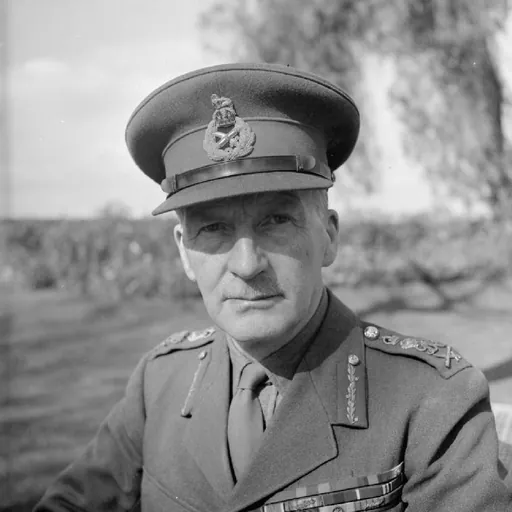
About John Dill
Lived 1881 – 1944 (aged 62). John Dill was a British military officer, diplomat and general field marshal.
Field Marshal Sir John Greer Dill (25 December 1881 – 4 November 1944) was a senior British Army officer with service in both the First World War and the Second World War. From May 1940 to December 1941 he was the Chief of the Imperial General Staff, the professional head of the British Army, and subsequently served in Washington, D.C., as Chief of the British Joint Staff Mission and then Senior British Representative on the Combined Chiefs of Staff.
Early life Born in Ireland in Lurgan, County Armagh, on 25 December 1881, John Greer Dill's father, also named John, (and who died when the younger John was just twelve years old) was the local bank manager and his mother, Jane, (who died just months after her husband) was a Greer from Woodville, Lurgan. With the death of both parents, "John and his sister were then cared for by an uncle, the Reverend Joseph Grundy Burton".
Always intended for a career in the armed forces, Dill, along with his sister, Nicolina Frances, attended Methodist College Belfast, from 1887 to 1889. This was followed by his education at Cheltenham College in Gloucestershire, England and the Royal Military College, Sandhurst. According to historian Richard Doherty, Dill's conduct at Sandhurst were "exemplary" although there "were no indications of the outstanding intelligence for which he would later be noted and his marks were described as mediocre".
Early life and military career From Sandhurst Dill was commissioned on 8 May 1901 as a second lieutenant into the 1st Battalion of the Leinster Regiment,
Dill, by now a lieutenant since 15 August 1903 (later antedated to 27 May), was appointed as his battalion's adjutant on 15 August 1906, having previously been assistant adjutant from 1902. and was still there on the outbreak of the First World War eighteen months later.
First World War Shortly after the war began, and after having briefly serving on the staff of Southern Command, Dill, in October, became brigade major of the 25th Brigade, part of the 8th Division, which was sent to the Western Front to join the British Expeditionary Force (BEF), where Dill would remain for the rest of the war. He was present at the Battle of Neuve Chapelle in 1915 and for which he was later appointed a Companion of the Distinguished Service Order.
During 1916 Dill, promoted in May to major, served on the General Staff of the 55th (West Lancashire) Division and Canadian Corps, before being promoted to Lieutenant-Colonel and Chief of Staff (GSO1) of the 37th Division in January 1917. and had been mentioned in despatches eight times. From the spring of 1918 he was Head of Operations at GHQ, an important promotion after the sacking of many of Field Marshal Sir Douglas Haig's senior staff following the Battle of Cambrai. He was appointed a Companion of the Order of St Michael and St George (CMG) in the 1918 New Year Honours. He also received a number of foreign decorations for his service, including the Officer of the Legion of Honour, the French Croix de guerre, Commander of the Order of the Crown of Belgium, Officer of the Order of the Crown of Romania. returned to the Staff College and served as an instructor there. In June 1928 he was appointed a temporary brigadier. In 1929 he was posted to India and in December 1930 was promoted to the permanent rank of major-general before returning to appointments at the Staff College (for in fact the third time but this time as the college's commandant).
After three years there he went to the War Office in London as Director of Military Operations and Intelligence, holding that post until 1 September 1936. Alongside his other positions, he was appointed to the largely honorary role of colonel of the East Lancashire Regiment on 24 December 1932, a position he held until his death, taking over from Major General Sir Lothian Nicholson. holding the post until 1937. He was knighted in the 1937 Coronation Honours with his promotion to Knight Commander of the Order of the Bath (KCB), and he was then appointed General Officer Commanding, Aldershot Command. He was promoted to general on 1 October 1939 (with seniority backdated to 5 December 1937). Dill was appointed Vice Chief of the Imperial General Staff (and a member of the Army Council), under Ironside, by the then Prime Minister Neville Chamberlain. On 27 May 1940, after Chamberlain had been replaced by Churchill, Dill replaced Ironside as CIGS.
General Sir John Dill, Chief of the Imperial General Staff, visits Maadi Camp, Egypt, presumably in 1940 or 1941. From left to right: Brigadiers Reginald Miles and Edward Puttick, Major-General Bernard Freyberg and General Dill, Brigadiers James Hargest and Harold Barrowclough.
Faced with the prospect of a German invasion, Dill produced a memorandum on 15 June advocating the use of chemical warfare against an enemy landing. Although acknowledging that first use of chemical weapons would alienate the United States and invite retaliation, he concluded that "at a time when our National existence is at stake ... we should not hesitate to adopt whatever means appear to offer the best chance of success."
After criticism from the Director of Home Defence and other offices Dill withdrew the memorandum. Nevertheless, the proposal was largely endorsed by Churchill on 30 June and it was ordered that the Royal Air Force begin preparations for deploying mustard gas, although he added that actual employment would need to be ordered by the Cabinet. and posted him to Washington, D.C. as his personal representative where he became Chief of the British Joint Staff Mission, then Senior British Representative on the Combined Chiefs of Staff. Dill showed a great flair as a diplomatic military presence. In 1943 alone he attended the Quebec Conference, the Casablanca Conference, the Tehran Conference and meetings in India, China and Brazil. He also served on the Combined Policy Committee set up by the British and United States governments under the Quebec Agreement to oversee the construction of the atomic bomb. He was awarded the Howland Memorial Prize in 1944, in part to ensure his continued favour with Churchill.
In the United States he was immensely important in making the Chiefs of Staff committee – which included members from both countries – function, often promoting unity of action. He was particularly friendly with General George Marshall and the two exercised a great deal of influence on President Franklin Delano Roosevelt who described Dill as "the most important figure in the remarkable accord which has been developed in the combined operations of our two countries".
Death Equestrian statue of Field Marshal Sir John Dill over his grave in Arlington National Cemetery.
Dill served in Washington until his death from aplastic anaemia in November 1944. His funeral arrangements reflected the great professional and personal respect and affection that he had earned. A memorial service was held in Washington National Cathedral and the route of the cortege was lined by some thousands of troops, following which he was interred in Arlington National Cemetery, where a simple service was conducted at the graveside. A witness recorded that "I have never seen so many men so visibly shaken by sadness. [General George] Marshall's face was truly stricken ...". He was sorely missed by the American Joint Chiefs of Staff, who sent a warm message of condolence to their British colleagues:
Dill was posthumously awarded the American Army Distinguished Service Medal in 1944 The equestrian statue honoring Dill is one of only two at the cemetery, the other is that of Major-General Philip Kearny's.
Don’t just read it —
keep it.
Full-length biographies made to live with: read them, listen on the way to work, watch them tonight.
- E-book
- Audio
- Video
Instant download · yours to keep · every purchase keeps this site free
Important facts
People in John Dill's life
Named in this biography and alive at the same time




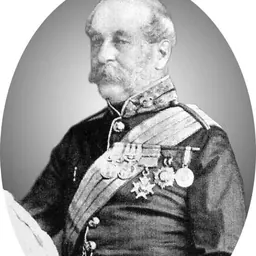
Related people
Same field, nearest in time


Contemporaries
People whose lives overlapped John Dill's





Frequently asked questions
Who was John Dill?
Army officer (1881–1944)
When was John Dill born?
John Dill was born on 25 December 1881 in Lurgan.
When did John Dill die?
John Dill died on 4 November 1944 in Walter Reed Army Medical Center.
What was John Dill's occupation?
John Dill was a military officer, diplomat and general field marshal.
What nationality was John Dill?
John Dill was British.
Sources & further reading
Cite this page
APA: Biography.guide. (2026). John Dill. https://biography.guide/john-dill/
MLA: "John Dill." Biography.guide, https://biography.guide/john-dill/.
Chicago: "John Dill." Biography.guide. https://biography.guide/john-dill/.
Data last updated: 2026-09-20 · Spot an error? Report a correction.
Portrait: Wikimedia Commons · author & licence
Page generated 2026-09-27 04:58 UTC