
About Thiru Narayana Iyengar
Lived 1861 – 1947 (aged 85). Thiru Narayana Iyengar was a poet.
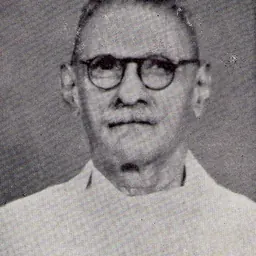
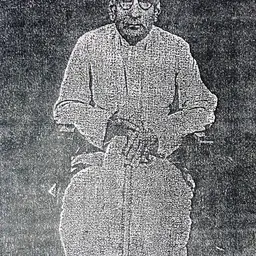
Maha vidhwan Thirumaaligai Appan Narayana Iyengar (31 October 1861 – 1947) was an influential Tamil and Sanskrit scholar whose lifelong dedication to Tamil literature and education made a lasting impact on the cultural landscape of Tamil Nadu. Born to Thirumaaligai Appan Iyengar and Shenkamalavalli Ammal in EthirkOtai, near Srivilliputhur, Narayana Iyengar showed a profound aptitude for languages from a young age. He mastered both Tamil and Sanskrit, alongside disciplines like tarka sastra (logic), astrology, and medicine. His literary contributions included translating classical Sanskrit texts into Tamil and publishing original works that deepened the appreciation of Tamil grammar, literature, history, and religious studies.
Narayana Iyengar played a foundational role in the Madurai Tamil Sangam, established in 1901, where he served as an educator, administrator, and editor. His most notable editorial work was with Senthamizh magazine, which became an important medium for scholarly research and cultural discourse. Through Senthamizh, he shared insights on Tamil and Sanskrit literature and encouraged a balanced examination of differing perspectives. His articulate, fearless commentary on subjects ranging from linguistic nuances to cultural history earned him acclaim from readers and the literary community.
He received multiple awards including a golden armlet, medal, and shawl from the Madras government and recognition from prominent universities.
Initial years and education Iyengar learnt Sanskrit literature and grammar from Pandalkudi Venkatachariar, tarka sastra from Samaacharyar and Vaishnava literature including Naalayira Divya Prabhandham from Sidhadikkaadu Srinivasachariar. He also learnt the Shaiva literature like Sivagyana bodham, Sivagyaana Sidhiyaar, Thevaaram, Tiruvasakam from Palanikumara Thambiraan of Thiruvaavaduthurai Aadheenam.
He, along with Paandithurai Thevar, zamindar of Paalavanatham did their residential education with Sadavadhaanam Muthuswamy Iyengar, father of Mu Raghava Iyengar.
When Paandithurai Thevar established the Madurai Tamil Sangam on 14 September 1901, he assigned Iyengar management responsibilities in the Sangam for which he moved to Madurai.
Iyengar was in the management team of the Madurai Tamil Sangam since its inception. He was the first head of the Senthamil College institution and performed it for 45 years. Apart from that he also performed other functions – administrator, editor of Senthamizh magazine. Thiru Narayana Iyengar was the editor of the Senthamizh monthly from 1911. until his death in 1947.
It was during this period as Senthamizh editor that he did many research works in Tamil and Sanskrit literature and published his works in the monthly journal. His articles in the Senthamizh magazine on literature - Tamil and Sanskrit, grammar, tarka sastra, history and religion were informative to the readers. His expertise in these topics, his unbiased position in assessing the different points of view, his fearlessness to state the facts were well commended by the readers of Senthamizh. He published many such works in the magazine and which were later published as books.
In 1938, Iyengar wrote a paper titled Valmiki and Tamil in Senthamizh monthly, which analysed Maharishi Valmiki's relationship with Tamil and whether Tamil could have been the spoken language throughout India during the Ramayana times.
His work Bharathazhwan Vaibhavam in the Senthamizh magazine was discussed in the Tamil literary circles. In that work, the detailed meaning given by Thiru Narayana Iyengar for the Kamban song that begins "Vanthethire thozhuthaanai" were refuted by Naavalar Somasundara Bharathiar. Thiru Narayana Iyengar's reply to that rebuttal with detailed grammatical explanations and poetic nuances are even today a feast for the lovers of the Tamil language. He was dedicated to Madurai Tamil Sangam and loyal to Paandithurai Thevar that he did not take up opportunities that came to him from other universities.
During the 80th birthday celebrations of Ue. Ve. Swaminatha Iyer, Iyengar requested him to write his autobiography and said that he was the one with the greatest asset – needlessness.
Here below are what some of the various Tamil literati had to say about him:
Naavalar Somasundara Bharathiar said of him Vaanmeegarum Tamizhum – first published in Senthamizh monthly in the year 1938. Later published as book along with other papers. Bharathazhwan Vaibhavam - initially published in Senthamizh, was later released as a book named Padiyil Gunathu Bharathanambi. Anda Kola Viruthi – published in Senthamizh in 1931. Later published as part of Vaanmeegarum Tamizhum book. Amritha Ranjani – first published in Senthamizh in 1939. Later published as part of Vaanmeegarum Tamizhum book. Pazhamozhi Naanooru Urai - Detailed meaning for the first 200 of Pazhamozhi Naanooru Paandiam – a common script and short-hand for many languages including Tamil
Don’t just read it —
keep it.
Full-length biographies made to live with: read them, listen on the way to work, watch them tonight.
- E-book
- Audio
- Video
Instant download · yours to keep · every purchase keeps this site free
Important facts
People in Thiru Narayana Iyengar's life
Named in this biography and alive at the same time
Related people
Same field, nearest in time

Contemporaries
People whose lives overlapped Thiru Narayana Iyengar's



Frequently asked questions
Who was Thiru Narayana Iyengar?
Indian literary scholar
When was Thiru Narayana Iyengar born?
Thiru Narayana Iyengar was born on 31 October 1861.
When did Thiru Narayana Iyengar die?
Thiru Narayana Iyengar died on 29 July 1947.
What was Thiru Narayana Iyengar's occupation?
Thiru Narayana Iyengar was a poet.
Sources & further reading
· Wikipedia: Thiru Narayana Iyengar
· DBpedia: Thiru Narayana Iyengar
Cite this page
APA: Biography.guide. (2026). Thiru Narayana Iyengar. https://biography.guide/thiru-narayana-iyengar/
MLA: "Thiru Narayana Iyengar." Biography.guide, https://biography.guide/thiru-narayana-iyengar/.
Chicago: "Thiru Narayana Iyengar." Biography.guide. https://biography.guide/thiru-narayana-iyengar/.
Data last updated: 2026-09-20 · Spot an error? Report a correction.
Page generated 2026-09-27 05:22 UTC