
About Therezinha Zerbini
Lived 1928 – 2015 (aged 86). Therezinha Zerbini was a Brazilian lawyer, teacher, politician and writer.
Therezinha de Jesus Zerbini ORB (née de Godoy Zerbini; 12 December 1928 – 14 March 2015) was a Brazilian attorney, feminist leader, and founder of the Women's Movement for Amnesty in Brazil. Zerbini chronicled contemporary Brazilian history, reporting on civilians and politicians who had been imprisoned, tortured, and persecuted by the dictatorship, which was systematically denied by the military authorities.
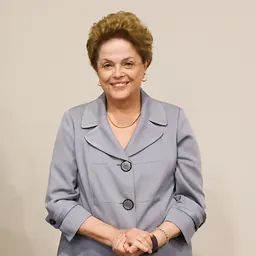
Zerbini was a political prisoner who occupied the same cell as president Dilma Rousseff in the Tiradentes State Prison. The amnesty movement was greatly enhanced when the Brazilian Committee for Amnesty (CBA) in Rio de Janeiro was launched, formed by lawyers of political prisoners demanding a broad, general, and unrestricted amnesty, promoted by the Order of Attorneys of Brazil, in February 1978. The following month, Zerbini risked her life in an attempt to deliver a letter to American president Jimmy Carter.
In 1979, Zerbini stood by Leonel Brizola, member of the Brazilian Labor Party (PTB) in São Paulo and founder of the Democratic Labor Party (PDT), when the acronym of the party was lost to Ivete Vargas. Despite her clear position against the military dictatorship, Zerbini also signed the "Manifesto for the Defense of Democracy", coordinated by national personalities, intellectuals, and politicians in reaction to the political practices of the Lula government, thus supporting the democrat Jose Serra.
Life Zerbni met her husband, Euryale Jesus Zerbini, twenty years her senior, in 1951, when he commanded the security forces in São Paulo. He was the brother of cardiologist Euryclides de Jesus Zerbini. At the time, she was a social worker at the Mandaqui Hospital, which cared for children with tuberculosis. Therezinha Zerbini was required to respond to a military police investigation for helping Frei Tito to get a sitio in Ibiúna, owned by a friend of the Zerbini family, which would be the place where the União Nacional dos Estudantes Congress (an organization outlawed by the military regime) was to be held. She was indicted in December 1969 and convicted under the National Security Act, spending eight months in prison,
In 1975, Therezinha Zerbini founded the Female Movement for Amnesty (Movimento Feminino pela Anistia, MFPA), which issued a manifesto for general amnesty, managing to gather 16,000 signatures supporting the cause. She dealt with complaints regarding imprisonment, torture, and political persecution, a fact systematically denied by the Brazilian military government. Thereafter, the MFPA began forming committees for amnesty in major cities throughout the country.
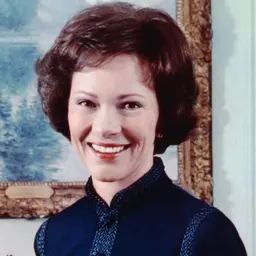
Female Movement for Amnesty The opposition group MFPA was founded at a time when guerrilla warfare had erupted in Brazil. At the same time, the reorganization of Brazilian society and citizens' electoral participation, even under limitations, were valued as a "means in itself" for achieving a real democracy. The movement was considered a landmark when political activity returned to public spaces, aggregating and mobilizing various sectors of Brazilian society, such as the Brazilian Democratic Movement (MDB), the Brazilian Communist Party (PCB), and other political parties still considered illegal entities, as well as the Christian left, academic personnel, trade associations, and Brazilians living in exile, such as political prisoners and their families. The MFPA was a legalized movement with founding documents and a legal statute recorded in 1976, consisting mainly of Catholic women such as Zerbini and other middle-class activists. In this sense, Zerbini created opposition from inside the regime, playing against its own initial justification, thus attempting to preserve a democracy threatened by totalitarianism. In February 1978, the movement was expanded with the creation of the Brazilian Committee for Amnesty (Comite Brasileiro pela Anistia, CBA) in Rio de Janeiro. Formed initially by lawyers of political prisoners in support of the Order of Attorneys of Brazil, the CBA called for an immediate broad amnesty. The following month, during the visit of then-US President Jimmy Carter to Brasília, Zerbini was able to break through US security around the president and deliver a letter to the First Lady, Rosalynn Carter, on behalf of Brazilian women and the movement for amnesty.
Don’t just read it —
keep it.
Full-length biographies made to live with: read them, listen on the way to work, watch them tonight.
- E-book
- Audio
- Video
Instant download · yours to keep · every purchase keeps this site free
Important facts
People in Therezinha Zerbini's life
Named in this biography and alive at the same time





Related people
Same field, nearest in time



Contemporaries
People whose lives overlapped Therezinha Zerbini's

Frequently asked questions
Who was Therezinha Zerbini?
Brazilian attorney, feminist leader (1928-2015)
When was Therezinha Zerbini born?
Therezinha Zerbini was born on 12 December 1928 in São Paulo.
When did Therezinha Zerbini die?
Therezinha Zerbini died on 14 March 2015 in São Paulo.
What was Therezinha Zerbini's occupation?
Therezinha Zerbini was a lawyer, teacher, politician and writer.
What nationality was Therezinha Zerbini?
Therezinha Zerbini was Brazilian.
Sources & further reading
· Wikipedia: Therezinha Zerbini
Cite this page
APA: Biography.guide. (2026). Therezinha Zerbini. https://biography.guide/therezinha-zerbini/
MLA: "Therezinha Zerbini." Biography.guide, https://biography.guide/therezinha-zerbini/.
Chicago: "Therezinha Zerbini." Biography.guide. https://biography.guide/therezinha-zerbini/.
Data last updated: 2026-09-20 · Spot an error? Report a correction.
Page generated 2026-09-27 05:06 UTC