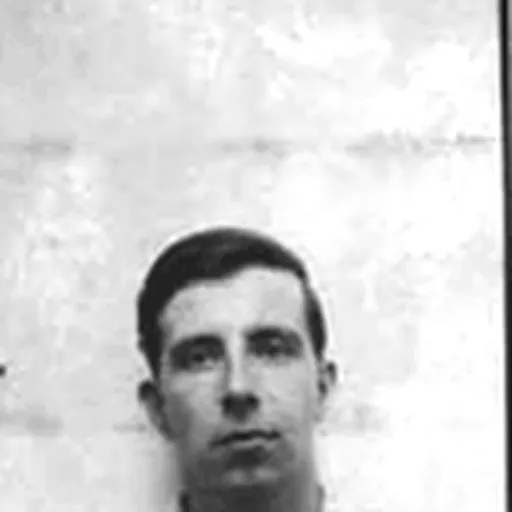
About Theodore Welton
Lived 1918 – 2010 (aged 92). Theodore Welton was an American physicist and nuclear physicist, known for Fluctuation-dissipation theorem, Lamb shift and Manhattan Project.
Theodore "Ted" Allen Welton (July 4, 1918 – November 14, 2010) was an American theoretical physicist best known as the co-author of the fluctuation dissipation theorem. During 1944 and 1945 he worked at Project Y in Los Alamos, New Mexico on nuclear weapons in Richard Feynman's T-4 Group after being recruited by Feynman.
Welton was born in Saratoga Springs, New York and educated at the Massachusetts Institute of Technology, where he received a B.S. degree in 1939. He received his Ph.D. from the University of Illinois in 1944.
He worked at Los Alamos National Laboratory on diffusion problems during the Manhattan Project and was present at the Trinity Test.
After World War II he taught at MIT and the University of Pennsylvania. In 1948, he gave a simple qualitative description of the quantum electrodynamic corrections in atomic physics such as the Lamb shift as the interaction of non-relativistic treated electrons with stochastic quantum mechanical fluctuations of the electrodynamic field in the vacuum state, the mean value of which vanishes, but the standard deviation does not. In 1950 he worked at Oak Ridge National Laboratory in the Theoretical Physics Division; and in the following year, with Herbert Callen, he published the landmark fluctuation-dissipation theorem, showing that the explanations of Brownian motion and Johnson noise are specific examples of the more general theorem. Over the course of his career, Welton contributed to the development of nuclear reactors, and worked on particle physics and electron microscopy.
In 1953, he became a Fellow of the American Physical Society. He also received a Humboldt Prize for his work in physics.
He was married twice and had four children from his first marriage.
Don’t just read it —
keep it.
Full-length biographies made to live with: read them, listen on the way to work, watch them tonight.
- E-book
- Audio
- Video
Instant download · yours to keep · every purchase keeps this site free
Important facts
People in Theodore Welton's life
Named in this biography and alive at the same time

Related people
Same field, nearest in time



Contemporaries
People whose lives overlapped Theodore Welton's



Frequently asked questions
Who was Theodore Welton?
American physicist
When was Theodore Welton born?
Theodore Welton was born on 4 July 1918 in Saratoga Springs.
When did Theodore Welton die?
Theodore Welton died on 14 November 2010 in Pleasant Hill.
What was Theodore Welton's occupation?
Theodore Welton was a physicist and nuclear physicist.
What was Theodore Welton known for?
Theodore Welton was known for Fluctuation-dissipation theorem, Lamb shift and Manhattan Project.
What nationality was Theodore Welton?
Theodore Welton was American.
Sources & further reading
Cite this page
APA: Biography.guide. (2026). Theodore Welton. https://biography.guide/theodore-welton/
MLA: "Theodore Welton." Biography.guide, https://biography.guide/theodore-welton/.
Chicago: "Theodore Welton." Biography.guide. https://biography.guide/theodore-welton/.
Data last updated: 2026-09-21 · Spot an error? Report a correction.
Portrait: Wikimedia Commons · author & licence
Page generated 2026-09-27 05:01 UTC