
Theodore Lukens
American conservationist, Mayor of Pasadena, California, forester
About Theodore Lukens
Lived 1848 – 1918 (aged 69). Theodore Lukens was an American politician.
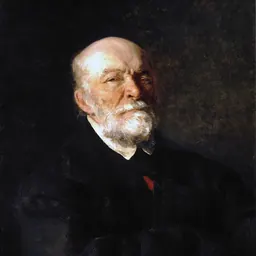
Theodore Parker Lukens (October 6, 1848 – July 1, 1918) was an American conservationist, real estate investor, civic leader, and forester who believed that burned over mountains could again be covered in timber which would protect watersheds. Lukens collected pine cones and seeds of different types and conducted experimental plantings on the mountain slopes above Pasadena, California. His perseverance earned him the name "Father of Forestry."
Lukens established Henninger Flats tree nursery, which provided seed stock for an estimated 70,000 trees. He worked for the United States Forest Service and was acting supervisor of the San Gabriel Timberland Reserve and the San Bernardino Forest Reserve in 1906. Lukens remained prominent in civic and conservation issues until his death in 1918.
Reforestation Lukens was interested in growing plants, even before moving out to Southern California from Illinois, where he had owned and operated a nursery in Whiteside County, Illinois. By 1882 the Lukens family established a home in Pasadena. Lukens already knew of the hardwoods in his native Midwest but now the former nurseryman sought to learn about the native and non-native trees of Southern California. Among them: live oak, pepper, camphor, umbrella, eucalyptus and various citrus trees.
Lukens undertook several expeditions to study the San Gabriel and San Bernardino Mountains from 1897 to 1899. He learned the "paradise" of Southern California had some serious problems as well. The increased use and misuse of resources by miners, loggers and livestock owners had devastated the lands. Wildfires caused the worst damage due to the Mediterranean climate of long, hot and dry summers which turned fires into infernos, leaving behind burned and bare hillsides, resulting in erosion and flooding during the rainy season.
Among the different species of trees Lukens studied, the knobcone pine was the best choice he believed, for its fire-resistant properties. The cones, which are embedded in the tree, only open and release seeds after a wildfire. He learned how to open the cones by boiling them and the method of watering and care that produced seedlings. The cone is sealed by a glaze-like resin and only opens after melting from heat of at least 200 °F (93 °C). The knobcone is well suited for reforestation as it grows on rocky hillsides in serpentine or granitic soil. Botanist Willis Linn Jepson observed that the knobcone grows on sites that are the "most hopelessly inhospitable in the California mountains".
Lukens' belief in the solution of tree planting was shown by lectures he gave, as well as writings and photographs he prepared. His proposals gained support. In 1899, William Kerckhoff, president of the Forest and Water Association, paid for $50 worth of seed to give University of Southern California forestry students for planting, and in a two-week period, more than 60,000 seeds were sown by the young foresters. The next year Lukens, with support by the Forest and Water Association, planted several thousand knobcone and ponderosa pine seeds in the San Gabriel mountains above Altadena, California. Lukens' reported to the association that "ridges and crowns of hills were selected, that when the trees came into fruiting the seed would be cast in different directions down steep slopes." On a wider scale, the conservation movement was gaining momentum throughout California. In 1899, 24 organizations met in San Francisco and formed The California Society for Conserving Water and Protecting Forests. Another group formed was The Forest and Water Society of Southern California, composed of the Los Angeles Chamber of Commerce and the Southern California Academy of Science.
Tree nursery at Henninger Flats In 1903, Lukens expanded the tree-planting enterprise with a lease on the Henninger property for the US Forest Service, of which he was an employee. Chief Forester Gifford Pinchot approved the lease in October 1903 for the clearing of . Reforestation became official policy. Improvements included a 48' by 60' lath house and rabbit-proof fence. The first firebreak constructed in the San Gabriel Reserve was around Henninger Flats to protect the site. the second-largest city park in California. The nursery received many orders for seed and seedlings from foresters worldwide, including Chile and Australia. Galen Clark, former Guardian of the Yosemite Grant, approved massive tree plantings, and declared this a "grand enterprise..." in a 1904 letter to Lukens.
In 1907, John Muir visited the tree nursery and was greatly impressed by the work done at the site. A Los Angeles Times article in June, 1912 compared Lukens to the famed Johnny Appleseed. Locally, his work at Henninger Flats was recognized when the Los Angeles County Board of Supervisors and George H. Maxwell, executive director of the National Reclamation Association, inspected the tree nursery and nearby slopes, accompanied by Lukens. Afterwards, the Pasadena Star, on June 21, 1915, reported- "It was truthfully and justly the proudest moment of Mr. Lukens' life. His work was ranked by the speakers as among the most important for the future of Southern California and as a climax Mr. Maxwell said that in his years of travel and investigation of reclamation projects he had found none more of importance to mankind than the thing Mr. Lukens had done in solving the problem of reforestation of denuded watershed areas."
Although Lukens' work was recognized by fellow Southern Californians, the Forest Service had a different view. The Henninger Flats nursery was closed by the Forest Service in 1908 and moved to Lytle Creek. In a 'doleful' report written in 1912, the tree planting efforts on the national forest lands were deemed a failure by Assistant Chief of Silviculture T.D. Woodbury. The Forest Service's determined efforts to convert indigenous chaparral into forests fell short due to rabbits, rodents and a baking-hot sun and the project was eventually abandoned. Woodbury's report also suggested that tree planting become a research subject and recommended it be assigned to the newly established Feather River Experiment Station, located in the Plumas National Forest.
Lukens had chosen the property for good reason-he had visited the site back in 1892 along with R.J. Busch, a Los Angeles businessman, and with the owner 's permission, they started the first experimental reforestation in California on the property by planting some selected conifers there. Those selected conifers were thriving when Lukens made a return visit about ten years later.
History of property The landowner was businessman Peter Stiel who acquired the parcel through the Homestead Act. In August, 1893, Steil then sold it to his friend William Henninger who had been living on the property since 1884.
Lukens knew how serious the threat of wildfire was in the mountains and pushed for more firefighters, which the Forest Service granted. A joint survey by the state of California and the US Forest Service (then Bureau of Forestry) found the forest conditions in deplorable shape. Watersheds were being damaged yearly by fire, overgrazing, and land clearing. Logging had badly deteriorated the forests. The survey results produced several actions, one of which was the passage by the California legislature of the Forest Protection Act that created a State Board of Forestry with a State Forester.
Lukens hired 55 men for firefighting and other duties, but less than one year later, he was instructed to reduce the force to 25 which he found unacceptable. He wrote letters to Pinchot and influential friends in an attempt to bring political pressure to rescind the order. The agency also made expense and payroll mistakes which cost him money, He tendered his 11-word resignation on August 12, 1906
One particular trip in 1895 to Yosemite's Hetch Hetchy Valley was for the sole purpose of meeting the famed conservationist John Muir, who was reported to be roaming the valley. Lukens outfitted himself at Crocker's Station, a stagecoach stop and resort, with food, two pack animals and Elwell the guide. A few miles south of the valley, he came across a man wearing a rumpled suit, vest, white shirt; without food, pack animals or companions.
He was indeed Muir, and Lukens persuaded him to join his well-stocked entourage and they headed back to Hetch Hetchy Valley, but only after Lukens took a photo to memorialize the event. The photograph is titled "John Muir Resting". The two men discussed topics on forest preservation, as well as watershed restoration and Southern California wildfires. with recorded heights exceeding , and has the longest cones, up to in length. During the last week of the trip, they camped at Tenaya Lake, where they met Gertrude Towne and Nellie Anderson and their mule, Plumduff. Muir and Lukens led the intrepid adventuresses up Mt. Conness to the summit at where Miss Towne drew sketches of the distinctive peak. Mount Dana, elevation , was climbed the next day by the group before Muir had to return home to Martinez. Muir sent Lukems a copy of Picturesque California, volume II with a note to read Jeanne Carr's chapter on Los Angeles County. Lukens and Muir maintained a friendship until Muir's death in 1914.
Sierra Club At Muir's urging, Lukens became actively involved in several Sierra Club campaigns: to purchase privately held toll roads for public use into Yosemite National Park, and to protect Hetch Hetchy Valley in Yosemite.
John Muir, now president of the Sierra Club, appointed Lukens to the Club committee of Publications & Communications and directed him to write articles and speak about government-owned toll roads and of California relinquishing both Yosemite Valley and the Mariposa Grove of Big Trees to the federal government, which were then under state management. In a letter to Lukens, Muir urged Lukens to "stir up the Senate Interior Section and make their lives wretched until they do what is right for the woods."
Lukens corresponded with various people and local newspapers concerning the Sierra Club campaign. In a letter to the Pasadena Daily News, Lukens wrote- "The small portion of this great park now owned and controlled by the State of California should be receded to the national government, and have it all under one management. then there would be no need of petition for roads. The whole park would be cared for as the Yellowstone now is..." -Pasadena Daily News, undated.
Lukens spent most of 1896 actively involved in the politics of conservation, except for three months spent mountaineering in Yosemite, which ended in controversy a year later. He was accompanied by Walter Richardson, a young Pasadenian. Both Lukens and Richardson wrote about the horseback trip for the Sierra Club Bulletin and the weekly Pasadena newspaper Town Talk. Highlights of the expedition included trail-building into steep Tehipite Valley, which Richardson named "Lukens Trail". (A young hiker by the name of Amy Racina would write a non-fiction book of her fall, survival and rescue in this same valley in 2003.) They had special permission to carry firearms for "personal protection" only, as no hunting was allowed in the park. While the men stayed at a private cattlemen's cabin, five bears were killed. No guilty conscience appears in Lukens' journals, possibly because he was on private land. The United States Army was the park's law enforcement and viewed the situation as a violation of the permit. The reports and the permit were sent to the Sierra Club in January, 1897. The incident led to an exchange of letters between Lukens and Muir. Lukens was unapologetic about the hunting incident but Muir in turn advocated the creation of wildlife refuges within the national park and forest reservations. "Sort of a wild beast paradise," Muir described it in a letter to Lukens. Both Muir and Lukens continued their conservation efforts.
During 1897 Both Lukens and Muir were active in different areas of the evolving conservation movement. "I've been writing about the forests, doing what little I can to save them," Muir wrote to a colleague, Henry Fairfield Osborne. Lukens that year began his campaign for watershed protection of the San Gabriel Reserve. He advocated fire protection, tree planting and removal of stockmen from the reserve. He and others undertook two pack trips into the reserve in 1897 and one expedition in 1998. Lukens wrote little, but was a prolific photographer, documenting trees, rocks and conditions during the pack trips. Lukens was often quoted in newspapers, because he gave talks to community groups about his ideas for preserving the watersheds. In an 1898 article in the Los Angeles Times, Lukens was quoted terming the driving of stock in the mountains as "Hoofed Locusts." His argument (and Muir's) was that sheep destroyed the mountain meadows by grazing away all vegetation and that stockman were guilty of setting wildfires at the end of the season to create more meadow for the following year.
Lukens's first tree planting expedition on the mountain ridges occurred in 1900. Fifteen years later the Los Angeles County Board of Supervisors ascended Mt. Wilson to view the earlier work: "As the father of reforestation of these mountains, it was a happy day for T.P. Lukens who went with the party and looked with a feeling of pride on the result of his efforts many years ago," The Los Angeles Times reported June 12, 1915. Although Lukens' advocacy of reforestation was well received by local officials, it does not appear that further reforestation efforts were carried out. The 1915 article went on to predict, "as a result of this foresight and the trip yesterday, 1,000,000 trees perhaps will be planted on the barren and burned stretches of the mountains this year." No news report exists indicating the plan was carried out. Lukens was then four months shy of his 67th birthday.
Early life Lukens was born into a German Quaker family in Ohio on October 6, 1848. When Lukens was 6 years old, the family moved to Illinois and began a nursery business. He enlisted in the US Cavalry at 20 and two years later received an honorable discharge. After military service, he married his first wife, Charlotte Dyer. He began his own nursery business in Whiteside County, Illinois, growing fruit and ornamental trees. The nursery also included a floral department. He involved himself in local community affairs, including the job of tax collector from 1873 to 1876. He helped the local banking industry during the Panic of 1893 by enlisting aid from bankers in Los Angeles. Although short-lived, the Panic of 1893 was severe with over 150 national and 172 state bank failures.
Mayor
Lukens served as president (mayor) of Pasadena twice; the first two-year term was 1890–1892 and a partial term from 1894 to 1895 when he was replaced by John S. Cox. Lukens's second term as mayor ended on January 2, 1895, as he was summarily "retired" from office because he refused to endorse a resolution allowing a franchise by Southern Pacific Railroad for a railway through Arroyo Parkway to Broadway Street to Green Street. There was already a Santa Fe line, the electric Mount Lowe Railway to Echo Mountain and a local rail line to Los Angeles. The council voted against their president and for the franchise and Lukens left with his convictions intact. Public opinion was expressed in newspapers and favored Lukens' decision. "To be disposed from a position for no other fault than standing for principles, is an honor rather than a disgrace", commented the Los Angeles Daily Hotel Gazette.
Lukens was a member of many local boards and committees, such as the Pasadena World's Fair Committee and provided orange trees and 60 palm trees for the exhibit in the World's Columbian Exposition held in Chicago, Illinois in 1892 that commemorated the 400th anniversary of America's discovery by Christopher Columbus. He was awarded a medal of honor with his name inscribed. In addition, Lukens served as president of Pasadena Mutual Building and Loan Association, board member of two schools which were the Los Angeles State Normal School (college) and California Institute of Technology, and he was a member of the Los Angeles Chamber of Commerce.
Later years Lukens became a grandfather in 1891 to Charlotte (or "Lottie") Jones, and in 1893, Ralph Jones. The health of Lukens and his wife Charlotte was declining by 1903, and Charlotte died in December 1905. Lukens then requested his three-month leave of absence from the Forest Service. Lukens remarried July, 1906 to Hannah Sybil Swett, a long-time family friend and Christian Scientist. He subsequently adopted his wife's religion.
In his waning years, Lukens remained active in local affairs and conservation. He promoted the establishment of a park above Devil's Gate Dam, which eventually became a reality as Oak Grove Park. Two months before his death, Lukens wrote a report on conservation and forestry for the annual meeting of the Bureau of Forestry.
Theodore Lukens died July 1, 1918, and is buried next to his first wife at Mountain View Cemetery in Altadena, California. H. Sybil Swett Lukens died in December of that same year. The Los Angeles Times published an obituary on Theodore Lukens on July 5, 1918, which stated in part, "There is a new, growing forest of neglected pine trees on the slopes of the Sierras [San Gabriel Mountains] above Pasadena that stand as a living proof that Lukens could have reforested our mountains if we had only given him the help he asked. He would have restored to us the lost beauty of the hills and he would have, at the same time, saved us from a disaster which may one day overtake us."
A Lukens Memorial Forestry Society was begun by poet John S. McGroarty and Marshall V. Hartranft, co-founder of the socialist Little Lands Colony. The Society fostered reforestation and endured until the 1950s.
Decades after her father's death, Helen sold his records, diaries and papers to the Huntington Library which are now used in various studies. The collection is over 3,600 pieces.
Tributes
The "Father of Forestry" Theodore Lukens is memorialized today with Mount Lukens, in Yosemite, and his home listed on the National Register of Historic Places.
Sister Elsie Peak was renamed to Mount Lukens by the Forest Service in the 1920s. Mount Lukens is the highest point within the city limits of Los Angeles at an elevation of 5,074 feet (1,546.5 m).
Robert Bradford Marshall, a 30-year veteran of the US Geological Survey named a lake in Yosemite National Park for Lukens in 1894.
The Lukens family home on 267 N. El Molino Avenue in Pasadena was added to the National Register of Historic Places on March 29, 1984. The house was designed by Harry Ridgeway, who also designed the city jail and some of Pasadena's early Methodist and Episcopal churches.
Don’t just read it —
keep it.
Full-length biographies made to live with: read them, listen on the way to work, watch them tonight.
- E-book
- Audio
- Video
Instant download · yours to keep · every purchase keeps this site free
Important facts
People in Theodore Lukens's life
Named in this biography and alive at the same time





Related people
Same field, nearest in time






Contemporaries
People whose lives overlapped Theodore Lukens's




Frequently asked questions
Who was Theodore Lukens?
American conservationist, Mayor of Pasadena, California, forester (1848–1918)
When was Theodore Lukens born?
Theodore Lukens was born on 6 October 1848 in New Concord.
When did Theodore Lukens die?
Theodore Lukens died on 1 July 1918 in Pasadena.
What was Theodore Lukens's occupation?
Theodore Lukens was a politician.
What nationality was Theodore Lukens?
Theodore Lukens was American.
Sources & further reading
Cite this page
APA: Biography.guide. (2026). Theodore Lukens. https://biography.guide/theodore-lukens/
MLA: "Theodore Lukens." Biography.guide, https://biography.guide/theodore-lukens/.
Chicago: "Theodore Lukens." Biography.guide. https://biography.guide/theodore-lukens/.
Data last updated: 2026-09-20 · Spot an error? Report a correction.
Page generated 2026-09-27 05:17 UTC