
About Theodore Holmes Bullock
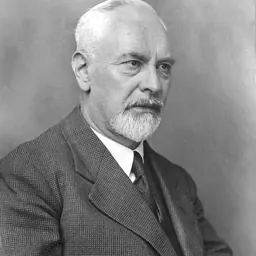
Lived 1915 – 2005 (aged 90). Theodore Holmes Bullock was an American neuroscientist and physiologist.
Biography The second of four children, Bullock was born May 16, 1915, in Nanking, China. His parents, Amasa and Ruth Bullock (née Beckwith), were Presbyterian missionaries and had arrived in China in 1909. In 1928, when Bullock was thirteen, the family returned to the United States, and settled in Southern California. Bullock’s life as a neuroscientist began with histological studies of brain degeneration that he performed while still in high school. During this time he also studied marine biology and other courses at the Pomona College Marine Biological Laboratory. He received an Associate of Arts degree from Pasadena Junior College in 1934, and a BA from University of California, Berkeley in 1936, where he studied zoology. In 1937 Bullock married Martha Runquist, whom he remained married to until the end of his life, 68 years later. They had two children, Christine and Steve.
Bullock's doctorate work was performed at UC Berkeley under the supervision of S. F. Light, and focused on the organization of the nervous system (both anatomy and physiology) in acorn worms, generally considered a sister group to the chordates. This marked the beginning of his studies on simple nervous systems, which he used to explore the neural mechanisms that work together to produce an output in response to a stimulus, both at the physiological and behavioral level. During this time, the importance of comparative studies also became apparent to him. He believed that to fully understand how the brain and nervous system work, one must search for commonalities, and also for differences in nervous systems across different taxonomic levels. After earning his PhD in 1940, he accepted a postdoctoral fellowship, and later a teaching position at Yale. During his four years at Yale, Bullock worked at the Marine Biological Laboratory (MBL) at Woods Hole during the summers. Here he taught invertebrate zoology and their famous physiology course, and he studied nerve nets in coelenterates and the structure and physiology of giant nerve fibers in annelids. His studies on nerve nets lead him to be one of the first experimentalists to understand the value and importance of computational techniques for modeling and data analysis.
In 1944 Bullock accepted a faculty position at the University of Missouri, where he taught medical students anatomy and physiology. Two years later he joined the faculty at University of California, Los Angeles (UCLA), where he remained for the next twenty years. During this time, he helped pioneer the field of comparative and integrative neurobiology. In one series of famous experiments on the cardiac ganglion in lobsters, Bullock demonstrated that neurons can communicate not just via action potential and chemical synapse, but through non-synaptic interactions without such impulses. Today we know that this type of electrical interaction is mediated by gap junctions. This idea, that electrical synapses couple groups of cells into functional units, lead to Bullock’s lifelong interest in field potentials, which are generated by the summated electrical activity of millions of brain cells. Bullock was a respected teacher who taught many courses while at UCLA, such as zoology and advanced invertebrate biology. He spent the summers of 1955-1957 at Woods Hole as the director of the Invertebrate Zoology course.
In 1966 Bullock left UCLA to join the University of California, San Diego (UCSD) School of Medicine’s new Department of Neurosciences. He also served as the chairman of the Neurobiology Unit of Scripps Institution of Oceanography in La Jolla, CA. One reason for his move to UCSD was that he hoped to bridge the gap between Marine Biology and medicine.
Bullock published a vast array of papers. Other than the species previously mentioned, he also studied the nervous systems of corals, sea urchins, spirunculids, Limulus, Aplysia, starfish, rattlesnakes, rays, sharks, porpoises, sea lions, cuttlefish, catfish, sloths, manatees, salamanders, frogs, turtles, hagfish, crayfish, tuna, ratfish, bats, crabs, octopodes, snakes, rats and humans. In 1965 together with Adrian Horridge, Bullock published the seminal two-volume “bible of invertebrate neurobiology”: Structure and Function in the Nervous System of Invertebrates.
Bullock was known as an inspired teacher and mentor. More than 100 scientists passed through his laboratory as postdoctoral fellows and research associates. From 1949 to 1999, Bullock was the primary adviser for 36 graduating PhD students (17 at Scripps), and in 1982 he retired as a Professor Emeritus. However, retirement could not stop him from remaining at the forefront of comparative neuroscience. At the age of 88 Bullock re-established a modeling study on nerve-nets, and built a model that accurately predicted the input-output relationships for a range of different stimuli. Bullock maintained an active research laboratory and continued studying the anatomy and physiology of the nervous system up until his death, 20 December 2005.
Notable awards and positions
1950–51, Fulbright scholarship, The Zoological Station, Naples, Italy 1955–56, President, The American Association of University Professors 1961, Elected as a member, The American Academy of Arts and Sciences 1963, Admitted into the National Academy of Sciences (NAS), served as chair of the NAS Zoology Section, and when it was later dissolved he became chair of the new Section of Neurobiology 1965, President, The American Society of Zoologists (now the Society for Integrative and Comparative Biology (SICB)) 1968, Karl Spencer Lashley Award, The American Philosophical Society 1970, Elected as a member, The American Philosophical Society 1973, Queen’s Fellow in Marine Biology, Australia 1973-4, Third president of The Society for Neuroscience 1984, First president of the International Society for Neuroethology 1984, Ralph W. Gerard Prize in Neuroscience, The Society for Neuroscience 1988, Honorary Doctorate, University of Frankfurt 2000, Honorary Doctorate, University of Loyola Chicago
Don’t just read it —
keep it.
Full-length biographies made to live with: read them, listen on the way to work, watch them tonight.
- E-book
- Audio
- Video
Instant download · yours to keep · every purchase keeps this site free
Important facts
People in Theodore Holmes Bullock's life
Named in this biography and alive at the same time
Related people
Same field, nearest in time



Contemporaries
People whose lives overlapped Theodore Holmes Bullock's



Frequently asked questions
Who was Theodore Holmes Bullock?
American neuroscientist (1915–2005)
When was Theodore Holmes Bullock born?
Theodore Holmes Bullock was born on 16 May 1915 in Nanjing.
When did Theodore Holmes Bullock die?
Theodore Holmes Bullock died on 20 December 2005 in San Diego.
What was Theodore Holmes Bullock's occupation?
Theodore Holmes Bullock was a neuroscientist and physiologist.
What nationality was Theodore Holmes Bullock?
Theodore Holmes Bullock was American.
Sources & further reading
· Wikipedia: Theodore Holmes Bullock
· DBpedia: Theodore Holmes Bullock
Cite this page
APA: Biography.guide. (2026). Theodore Holmes Bullock. https://biography.guide/theodore-holmes-bullock/
MLA: "Theodore Holmes Bullock." Biography.guide, https://biography.guide/theodore-holmes-bullock/.
Chicago: "Theodore Holmes Bullock." Biography.guide. https://biography.guide/theodore-holmes-bullock/.
Data last updated: 2026-09-20 · Spot an error? Report a correction.
Page generated 2026-09-27 05:19 UTC