
About Theobald Butler
Lived 1650 – 1720 (aged 69–70). Theobald Butler was a politician.
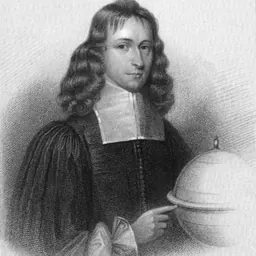
Sir Theobald (Toby) Butler (1650–1721) was a leading barrister and politician in late seventeenth-century Ireland, who held office as Solicitor General for Ireland. He is mainly remembered for framing the civil articles of the Treaty of Limerick, and for his eloquent but unsuccessful plea to the Irish House of Commons against the passing of the Popery Act 1704 (2 Anne c. 6 (I)), which allowed any Protestant son of a Roman Catholic landowner to prevent his Catholic brothers from inheriting the family property. He was a much loved "character" in Dublin, and his great popularity shielded him from the penalties that he might otherwise have suffered as a result of his religious beliefs. Only his few enemies attacked him for his willingness to come to an accommodation with the new regime in order to preserve his own property.
Family
He was born at Boytonrath, County Tipperary, second of the five sons of James and Mary Butler, who were distant cousins. In the turmoil following the Irish Rebellion of 1641 the family lost possession of their Boytonrath estate, and Toby's maternal grandfather, another James Butler, who was a staunch opponent of the Cromwellian regime, was hanged for murder on trumped up charges in 1653 (it appears that he was not accused of murder himself, but of responsibility for crimes committed by soldiers under his command). The family settled at Ballyline near Ennis, County Clare, where Toby grew up. and was knighted. He was briefly Third Serjeant and Solicitor General, Recorder of Clonmel, second justice of the Palatine Court of Tipperary, and a Commissioner of the Revenue, and he sat on a Commission to examine the validity of Royal Charters.
After the Treaty
Butler returned to his practice at the Bar, and his practice flourished through the 1690s.
While his loyalty to King James II was not in doubt, he never seems to have contemplated joining the King in exile, as his colleague Garrett Dillon did, nor was any pressure put on him to do so. He was protected by his great popularity, and by the fact that the Butlers were still a powerful clan politically; the Ormonde Butlers, the senior branch of the family, had safeguarded their position by supporting the Glorious Revolution, although they later turned Jacobite.
Popery Act
As the eighteenth century began, the legal position of Roman Catholics steadily worsened, and in 1703 a Bill "to prevent the further growth of Popery" was introduced in the House of Commons. It provided that when a Catholic landowner died his sons would share the land equally, unless one of them became a Protestant, in which case he would inherit the whole estate. Butler as a Catholic was now ineligible to sit in the House of Commons, but he was permitted to make an address from the bar of the House on 22 February. His speech was justly celebrated for its eloquence:
Is this not against the laws of God and man? Against the rules of reason and justice by which all men ought to be governed? .... For God's sake gentlemen, will you consider whether this is according to the golden rule, to do as you would be done by? ... surely you will not, nay you cannot, take from us our birthrights.
He repeated his plea to the House of Lords a few days later, but both Houses of Parliament, entirely unmoved, duly passed the Popery Act. During his later years Sir Toby was troubled by a lawsuit over his Saggart estate, brought by the informer John Brenan, and another over certain lands in County Galway, which was brought against him by Penelope, Lady Prendergast, widow of Sir Thomas Prendergast. The case reached the House of Lords in 1720, but was not concluded there: it went on for 40 years, long after Sir Toby's death. Lady Prendergast was a determined litigant who was involved in numerous lawsuits in her later years, although it is fair to say that her aim was not greed, but a wish to safeguard her son's inheritance.
Death and reputation
He died in March 1721 and was buried in the churchyard of St James' Church in Dublin city. His burial in a Protestant churchyard may simply be a tribute to his almost universal popularity; on the other hand it may be evidence that he did occasionally attend Church of Ireland services. His memorial, which still exists, and was restored by his descendants in the 1870s, has a very simple Latin inscription by his eldest son James praising "the best of fathers".
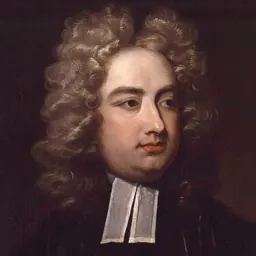
This high opinion of Butler seems to have been generally shared: Jonathan Swift called him a man who was "universally beloved". One of the few dissenting voices, speaking for those embittered Catholics who had lost everything under the new regime, said that he deserved a place in Purgatory, along with the notably accommodating judge Denis Daly, who had also recently died.
Marriage and children
He married Margaret Roche, daughter of Dominick Roche, Mayor of Limerick, on whom James II during his time in Ireland conferred the titles Viscount Cahiravahilla and Baron Tarbert, and his wife Agnes Burke of Cahirmichael. They had at least five sons – James, John (the owner of Ballymount House in South Dublin), Theobald, Jordan and Henry – and a daughter Frances, who married her cousin Thomas Butler, 6th Baron Cahir.
Don’t just read it —
keep it.
Full-length biographies made to live with: read them, listen on the way to work, watch them tonight.
- E-book
- Audio
- Video
Instant download · yours to keep · every purchase keeps this site free
Important facts
People in Theobald Butler's life
Named in this biography and alive at the same time




Related people
Same field, nearest in time


Contemporaries
People whose lives overlapped Theobald Butler's



Frequently asked questions
Who was Theobald Butler?
Irish barrister and politician
When was Theobald Butler born?
Theobald Butler was born in 1650.
When did Theobald Butler die?
Theobald Butler died in 1720.
What was Theobald Butler's occupation?
Theobald Butler was a politician.
Sources & further reading
· DBpedia: Theobald Butler (solicitor-general)
Cite this page
APA: Biography.guide. (2026). Theobald Butler. https://biography.guide/theobald-butler/
MLA: "Theobald Butler." Biography.guide, https://biography.guide/theobald-butler/.
Chicago: "Theobald Butler." Biography.guide. https://biography.guide/theobald-butler/.
Data last updated: 2026-09-20 · Spot an error? Report a correction.
Page generated 2026-09-27 05:25 UTC