
About Theo Osterkamp
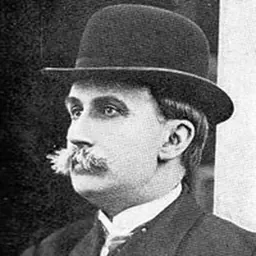
Lived 1892 – 1975 (aged 82). Theo Osterkamp was a German flying ace, forester, businessperson and fighter pilot.
Theodor "Theo" Osterkamp (15 April 1892 – 2 January 1975) was a German fighter pilot during World War I and World War II. A flying ace, he achieved 32 victories in World War I. In World War II, he led Jagdgeschwader 51 up to the Battle of Britain and claimed a further six victories during World War II, in the process becoming one of only a few men to score victories and become an ace in both world wars.
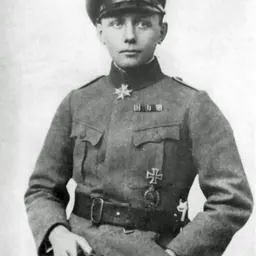
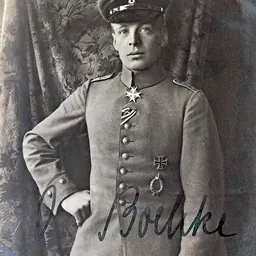
Early life and World War I Osterkamp was born in Rölsdorf near Düren, West Germany, and grew up in Aschersleben, modern day Saxony-Anhalt. He was born in 1892 as the second son of the factory owner Hermann Osterkamp and Anna Wilhelmine née Blank. Osterkamp received his Abitur from the Gymnasium in Dessau. His schoolmates in Dessau included the future pilots Oswald Boelcke and Gotthard Sachsenberg.
When the First World War started he was studying forestry but decided to enlist in the German Army. He was rejected for service due to his "slight build" and he instead enlisted in the Marinefliegerkorps in August 1914. He then flew with the 2. Marine-Fliegerabteilung in Flanders. During 1915–1916, he served as an air observer, and became the first German pilot to fly a land-based aircraft to England on a reconnaissance-mission. Osterkamp claimed his first (but unconfirmed) kill on 6 September 1916 as an observer to pilot Leutnant zur See Wilhelm Mattheus in a LVG C.II two-seater aircraft. In March 1917, he joined the Kampffliegerschule (Combat pilot school) in Putzig and then joined Marine Feld Jagdstaffel 1 on the 14th of April 1917 On 21 March 1917, Leutnant Osterkamp took command of Marine Feld Jagdstaffel 2 He scored a total of 32 victories during the war, and was awarded the Prussian military order Pour le Mérite on 2 September 1918, and was one of the last individuals to receive it.
September 1918 1) Theodor Osterkamp 2) Gotthard Sachsenberg.
Interwar years 1933, Wedding of Theodor Osterkamp with Fel Gudrun Pagge in Eppendorf, Hamburg. Osterkamp joined the new Luftwaffe on 1 August 1933 with the rank of Hauptmann. He also participated in the second, third and fourth FAI International Tourist Plane Contest Challenge 1930 (11th place), Challenge 1932 (12th place) and Challenge 1934 (5th place). On 1 April 1935, Osterkamp was appointed Staffelkapitän (squadron leader) of 4. Staffel (4th squadron) of Jagdgeschwader 132 "Richthofen" (JG 132—132nd Fighter Wing), the first commander of this newly created Staffel. On 15 March 1936, Osterkamp transferred command of 4. Staffel to Hauptmann Clemens Graf von Schönborn-Wiesentheid. Osterkamp was then appointed Gruppenkommandeur (group commander) of II. Gruppe of Jagdgeschwader 134 "Horst Wessel" (JG 134—134th Fighter Wing). He held this position until November 1937 when he was transferred to the Jagdfliegerschule Werneuchen, later (JFS 1).
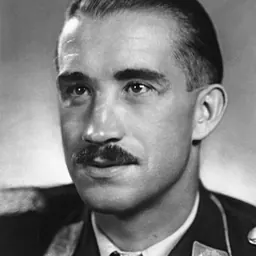
World War II Adolf Galland and Werner Mölders attending Theo Osterkamp's birthday on 15 April 1941. World War II in Europe began on Friday 1 September 1939 when German forces invaded Poland. On 19 September, Oberst Osterkamp was appointed Geschwaderkommodore of Jagdgeschwader 51 (JG 51—51st Fighter Wing). During the Battle of France, he claimed four victories. During the Kanalkampf period of the Battle of Britain in July 1940, he claimed a further two victories, (a Bristol Blenheim on 1 June and a Spitfire on 13 July 1940) bringing his total to six. He was replaced as commander of JG 51 by Werner Mölders on 23 July with the latter formally taking command on the 27 July. Promoted to Generalmajor, Osterkamp was awarded his Knight's Cross of the Iron Cross on 22 August 1940. Following his replacement in JG 51, Osterkamp was appointed Jagdfliegerführer 2, the commander of fighter aircraft in Luftflotte 2.
On 1 August 1942, he was transferred to Luftgaustab z.b.V. Afrika. On 5 April 1943, he was appointed Jagdfliegerführer Sizilien and served until replaced on 15 June by Adolf Galland. He then served in a number of staff positions until being appointed Inspekteur der Luftwaffen-Bodenorganisation (Inspector of Luftwaffe ground organisation) in 1944. His criticism of the Oberkommando der Luftwaffe (Luftwaffe High Command) led to his dismissal from service in December 1944.
Post-war career In 1960, he was appointed honorary chairman of the Gemeinschaft der Jagdflieger, the Association of Fighter Pilots.
Summary of career Aerial victory claims Mathews and Foreman, authors of Luftwaffe Aces — Biographies and Victory Claims, researched the German Federal Archives and found records for 31 aerial victory claims, plus six further unconfirmed claims during World War I and three further unconfirmed claims during World War II. This number includes 29 claims during the World War I and two on the Western Front of World War II.
Chronicle of aerial victories Claim Date Time Type Location Claim Date Time Type Location World War I – Marine Feld Jagdstaffel 1 –April – September 1917 1 30 April 1917 Nieuport Oostkerke 4 11 July 1917 21:45 Sopwith 1½ Strutter north of Veurne 2 12 May 1917 Sopwith Triplane Ostend 5 12 July 1917 21:00 Royal Aircraft Factory S.E.5 Zandvoorde 3 5 June 1917 Sopwith Camel Nieuwpoort 6 24 September 1917 SPAD S.VII west of Westrozebeke – Marine Feld Jagdstaffel 2 –March – September 1918 7 16 March 1918 15:55 Sopwith Camel south of Pervijze 20 12 August 1918 20:50 Sopwith Camel Ramskapelle 8 26 March 1918 Sopwith Camel Avekapelle 12 August 1918 20:50 Sopwith Camel Diksmuide 9 23 April 1918 Sopwith Camel north of Ostend 12 August 1918 21:00 Martinsyde G.100 north of Oostkerke 10 25 April 1918 SPAD S.VII Pervijze 15 August 1918 Martinsyde G.100 Ostend 11 11 May 1918 17:02 Sopwith Camel over sear near Bredene 21 16 August 1918 Airco DH.9 Blankenberge 5 June 1918 SPAD S.VII Pervijze 22 21 August 1918 14:00 Airco DH.9 over sea near Bredene 12 7 June 1918 13:10 Sopwith Camel Ramskapelle 23 23 August 1918 12:10 Sopwith Camel Pervijze 13 12 June 1918 11:50 Airco DH.4 southwest of Pervijze 30 August 1918 14:40 Airco DH.9 Ostend 12 June 1918 Sopwith Camel De Panne 24 16 September 1918 Sopwith Camel Koksijde 14 27 June 1918 Sopwith Camel over sea near Wenduine 25 16 September 1918 Sopwith Camel Koksijde 15 28 June 1918 20:55 Sopwith Camel southwest of Lake Blankaart 26 20 September 1918 Sopwith Camel Praatbos 16 29 June 1918 Bristol F.2 Fighter southeast of Pervijze 27 28 September 1918 12:30 Sopwith Camel Woumen 17 20 July 1918 10:25 Sopwith Camel east of Nieuport 28 28 September 1918 18:10 Bréguet 14 Pierkenshoek 18 25 July 1918 20:53 Sopwith Camel south of Nieuwpoort 29 29 September 1918 Bréguet 14 west of Zarren 19 29 July 1918 Airco DH.4 south of Oudekapelle World War II – Stab of Jagdgeschwader 51 –Battle of France — 10 May – 25 June 1940 1 12 May 1940 Fokker G.I Soesterberg 31 May 1940 Hawker Hurricane Dunkirk 22 May 1940 Hawker Hurricane Roubaix 1 June 1940 Bristol Blenheim? Dunkirk – Stab of Jagdgeschwader 51 –At the Channel and over England — 26 June – 23 July 1940 2 13 July 1940 Supermarine Spitfire Dover
Awards and decorations Kingdom of Prussia: Iron Cross 2nd Class & 1st Class Royal House Order of Hohenzollern, Knight's Cross with Swords Pour le Mérite (2 September 1918) German Empire: Imperial Navy Pilot’s Badge Weimar Republic: Baltic Cross Duchy of Anhalt: House Order of Albert the Bear, Knight's Badge 2nd Class with Swords Friedrich Cross Free and Hanseatic City of Hamburg: Hanseatic Cross Grand Duchy of Oldenburg: Friedrich August Cross 2nd Class & 1st Class Austria-Hungary: Military Merit Cross, 3rd Class with War Decoration Nazi Germany: Honour Cross of the World War 1914/1918 for Combatants Combined Pilot/Observer Badge Wehrmacht Long Service Award (Luftwaffe) 4th Class 1939 Clasp to the Iron Cross 2nd Class & 1st Class Knight's Cross of the Iron Cross on 22 August 1940 as Generalmajor and Jagdfliegerführer of Luftflotte 2
Publications
Don’t just read it —
keep it.
Full-length biographies made to live with: read them, listen on the way to work, watch them tonight.
- E-book
- Audio
- Video
Instant download · yours to keep · every purchase keeps this site free
Important facts
People in Theo Osterkamp's life
Named in this biography and alive at the same time



Related people
Same field, nearest in time


Contemporaries
People whose lives overlapped Theo Osterkamp's
Frequently asked questions
Who was Theo Osterkamp?
German flying ace (1892–1975)
When was Theo Osterkamp born?
Theo Osterkamp was born on 15 April 1892 in Düren.
When did Theo Osterkamp die?
Theo Osterkamp died on 2 January 1975 in Baden-Baden.
What was Theo Osterkamp's occupation?
Theo Osterkamp was a flying ace, forester, businessperson and fighter pilot.
What nationality was Theo Osterkamp?
Theo Osterkamp was German.
Sources & further reading
Cite this page
APA: Biography.guide. (2026). Theo Osterkamp. https://biography.guide/theo-osterkamp/
MLA: "Theo Osterkamp." Biography.guide, https://biography.guide/theo-osterkamp/.
Chicago: "Theo Osterkamp." Biography.guide. https://biography.guide/theo-osterkamp/.
Data last updated: 2026-09-20 · Spot an error? Report a correction.
Page generated 2026-09-27 05:32 UTC