
About Thembile Skweyiya
Lived 1939 – 2015 (aged 76). Thembile Skweyiya was a South African judge, lawyer and member of the Constitutional Court of Austria.
Thembile Lewis Skweyiya (17 June 1939 – 1 September 2015) was a South African lawyer and judge who served on the Constitutional Court of South Africa between February 2004 and May 2014. He rose to prominence as a civil rights lawyer during apartheid and he served three years in the KwaZulu-Natal High Court before his elevation to the Constitutional Court.
Born in the Western Cape, Skweyiya was educated at the University of Natal, where he became involved in anti-apartheid politics. He was admitted as an advocate of the Supreme Court of South Africa in 1970, and in 1989 he became the first black African lawyer to take silk in South Africa. Practising law in Durban, Skweyiya specialised in commercial law and civil law, but became best known in the 1980s as counsel to several anti-apartheid activists and organisations.
President Thabo Mbeki appointed Skweyiya to the KwaZulu-Natal High Court in February 2001, and he immediately began a lengthy acting stint in the Constitutional Court. After he joined the bench of the higher court permanently in February 2004, Skweyiya developed a reputation as a progressive justice with a particular interest in children's rights. He retired from the bench in May 2014 and thereafter served as Inspecting Judge of Correctional Services from May 2015 until his death in September 2015.
Early life and education Skweyiya was born on 17 June 1939 in Worcester in the former Cape Province. He attended primary school in Cape Town but matriculated at Healdtown in the Eastern Cape in 1959. His family, originally from the Cradock region of the Eastern Cape, was politically active during apartheid; his younger brother, Zola Skweyiya, was a prominent activist and later became a member of cabinet.
He attended the University of Natal, where he completed a Bachelor of Social Science in 1963 and an LLB in 1967. He later recounted that it was Griffiths Mxenge, his friend and a prominent human rights lawyer, who told him to "do your LLB and then you can be a learned doctor."
Hiatus from legal practice Skweyiya was among the lawyers who helped draft the post-apartheid Constitution,
Instead of taking up the post of Inspector-General, Skweyiya pursued a hiatus in the corporate sector, becoming a director of several different South African companies. He also occasionally acted as a judge in the High Court of South Africa, both in the Kwa-Zulu Natal Division and in the Eastern Cape Division; cumulatively, between October 1995 and January 2001, he served two years as an acting judge. until he did so on 1 February 2001, Soon after his appointment, he began a lengthy stint as an acting judge in the Constitutional Court, where he sat between August 2001 and May 2002.
Later in 2002, the National Association of Democratic Lawyers nominated Skweyiya for permanent appointment to a vacancy on the Constitutional Court, but, though he was shortlisted by the Judicial Service Commission, President Thabo Mbeki opted to appoint Dikgang Moseneke instead.
Constitutional Court: 2004–2014 Following another set of Judicial Service Commission interviews in October 2003, Mbeki announced on 7 January 2004 that he would appoint Skweyiya permanently to the Constitutional Court. He joined the bench on 1 February 2004; Skweyiya was widely viewed as a progressive justice. Commentators noted his focus on social justice and his special interest in children's rights, including his contribution to the interpretation of the concept of the best interests of the child, which Section 28 of the Bill of Rights declares to be "paramount". Nonkosi Mhlantla was finally appointed in December 2015.
Retirement A year after his retirement, on 1 May 2015, Skweyiya took office as Inspecting Judge of Correctional Services, a position at the head of the Judicial Inspectorate for Correctional Services. President Jacob Zuma appointed him to a three-year term in the office. Until his death, Skweyiya was also the Chancellor of the University of Fort Hare, a position which he had assumed in 2008.
He died on 1 September 2015 after a short illness. He received a special official funeral, at which Deputy President Cyril Ramaphosa delivered the eulogy.
Personal life He was married to Sayo Nomakhosi Skweyiya, with whom he had four children. '''
Don’t just read it —
keep it.
Full-length biographies made to live with: read them, listen on the way to work, watch them tonight.
- E-book
- Audio
- Video
Instant download · yours to keep · every purchase keeps this site free
Important facts
People in Thembile Skweyiya's life
Named in this biography and alive at the same time




Related people
Same field, nearest in time
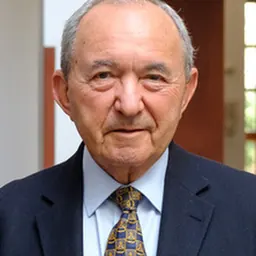
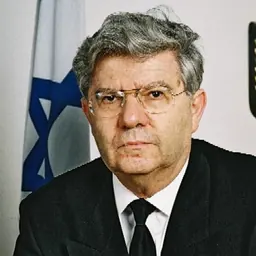
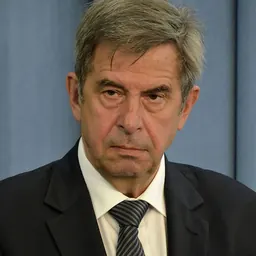
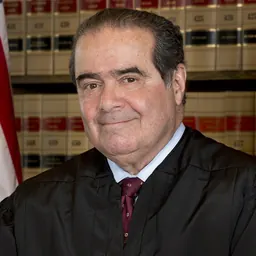

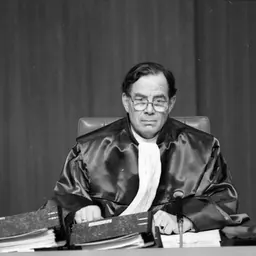
Contemporaries
People whose lives overlapped Thembile Skweyiya's




Frequently asked questions
Who was Thembile Skweyiya?
Justice of the Constitutional Court of South Africa
When was Thembile Skweyiya born?
Thembile Skweyiya was born on 17 June 1939 in Worcester.
When did Thembile Skweyiya die?
Thembile Skweyiya died on 1 September 2015.
What was Thembile Skweyiya's occupation?
Thembile Skweyiya was a judge, lawyer and member of the Constitutional Court of Austria.
What nationality was Thembile Skweyiya?
Thembile Skweyiya was South African.
Sources & further reading
· Wikipedia: Thembile Skweyiya
Cite this page
APA: Biography.guide. (2026). Thembile Skweyiya. https://biography.guide/thembile-skweyiya/
MLA: "Thembile Skweyiya." Biography.guide, https://biography.guide/thembile-skweyiya/.
Chicago: "Thembile Skweyiya." Biography.guide. https://biography.guide/thembile-skweyiya/.
Data last updated: 2026-09-20 · Spot an error? Report a correction.
Page generated 2026-09-27 04:59 UTC