
About Thanin Kraiwichian
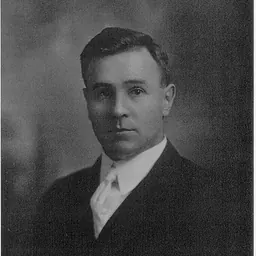
Lived 1927 – 2025 (aged 97). Thanin Kraiwichian was a Thai politician, university teacher, lawyer, judge, civil servant and jurist.
Thanin Kraivichien (first name also spelled Tanin, last name Kraivixien or Kraivichian; , , ; 5 April 1927 – 23 February 2025) was a Thai judge, politician and law professor. He was the prime minister of Thailand between 1976 and 1977. He was then appointed to the Privy Council and became its president in 2016. With the death of Prem Tinsulanonda in May 2019, he became the oldest living former Thai Prime Minister.
Early life and education Thanin was a son of Hae and Pa-ob Kraivichien. He was born in Bangkok. His father was a Chinese-born merchant and owner of one of the biggest pawnshops in Bangkok. Thanin studied law at Thammasat University, graduating in 1948. He then went to the London School of Economics to continue with his law studies. He graduated in 1953, and in 1958 was called to the Bar at Gray's Inn. In Great Britain, Thanin met Karen Andersen, a native of Denmark, whom he married. They had five children. As an avocation, he published books that warned of the dangers of communism. He had a TV show in which he attacked communism, the students' movement, and progressive politicians.
Prime Minister of Thailand (1976–1977) Prime Minister Thanin with US ambassador Charles S. Whitehouse in 1976 After the Thammasat University massacre of 6 October 1976, the democratically elected government of Seni Pramoj was toppled by a military coup led by Admiral Sangad Chaloryu. Under the military junta, named the National Administrative Reform Council (NARC), “martial law was declared, the Constitution abolished, and political parties disbanded.”
Two days after the coup, the NARC announced the appointment of Thanin as prime minister. His appointment had been decided beforehand in February 1976, when Sangad consulted King Bhumibol Adulyadej on his choice for prime minister in the event of a military coup. Furthermore, many of the junta’s early proclamations were likely written by Thanin, as they contained characteristic, inflammatory right-wing phrases such as “communist imperialism.”
Thanin’s appointment to the premiership was met with public surprise, as he was a relatively unknown figure in Thailand. In one of his first addresses to the nation, the new prime minister justified the coup d’etat, declaring:
According to our military analysis, it was clear that the country was in deep confusion, the causes of which came from all directions. As far as the students were concerned, we knew that the majority of them were good people. Only the minority of students were tools of the ideology unsuitable for Thailand… Secondly, it was due to the labor movement, which became violent and without reason… and the government was composed of so many factions. It was so difficult to agree on any important national issue… We could not see how those confusions [could] be resolved. We had to step in to correct the situation. To do so, the National Administrative Reform Assembly (NARA) was established as an advisory, quasi-parliamentary body with members appointed by the junta. A new constitution, one of the shortest in Thailand’s history, was hastily promulgated, with its defining feature being Section 21, which gave the prime minister “the power to order or do anything” in the name of national security, making Thanin a de facto dictator.
Thanin was seen as honest and intelligent, but also eminently ideological and politically extreme. Strict censorship was imposed upon the press, and Thanin’s administration closed multiple newspapers for publishing articles critical of the government, with Minister of the Interior Samak Sundaravej ordering the expulsion of foreign correspondent Norman Peagam and the closure of Kukrit Pramoj’s supposedly “untouchable” Siamrath Daily. Though 3,000 “suspected subversives” were likewise detained following the military coup, by 1977, there were only around 100 students who remained in custody, mostly under charges of “communist activism.”
Thanin's crackdown on trade unions, progressive students' organizations, and farmers' associations drove activists into the underground structures of the Communist Party of Thailand. Instead of weakening the communists, it fuelled their armed struggle against the government.
Downfall In March 1977, a group of younger army officers known as the "Young Turks", who had an interest in political matters, tried to topple Thanin. Their attempted coup failed. On 20 October 1977, however, Admiral Sangad again seized power and pressed Thanin to resign. The military justified their intervention because Thanin's government had divided the country and had virtually no public support, the economic situation had worsened, and people in general disagreed with such a long-term suspension of democracy.
Privy Councillor King Bhumibol Adulyadej immediately appointed Thanin to his Privy Council. During the vacancy of the throne after Bhumibol's death on 13 October 2016, the former President of the Privy Council, Prem Tinsulanonda, served as regent and interim head of state. Thanin temporarily assumed the office of President of the Privy Council during this period. After King Vajiralongkorn's accession to the throne on 1 December 2016, Prem returned to his earlier position, while Thanin was not reappointed to the Privy Council at all.
Death Thanin Kraivichien died on 23 February 2025, at the age of 97.
Don’t just read it —
keep it.
Full-length biographies made to live with: read them, listen on the way to work, watch them tonight.
- E-book
- Audio
- Video
Instant download · yours to keep · every purchase keeps this site free
Important facts
People in Thanin Kraiwichian's life
Named in this biography and alive at the same time


Related people
Same field, nearest in time





Contemporaries
People whose lives overlapped Thanin Kraiwichian's

Frequently asked questions
Who was Thanin Kraiwichian?
Thai lawyer and politician
When was Thanin Kraiwichian born?
Thanin Kraiwichian was born on 5 April 1927 in Bangkok.
When did Thanin Kraiwichian die?
Thanin Kraiwichian died on 23 February 2025 in Bangkok.
What was Thanin Kraiwichian's occupation?
Thanin Kraiwichian was a politician, university teacher, lawyer, judge, civil servant and jurist.
What nationality was Thanin Kraiwichian?
Thanin Kraiwichian was Thai.
Sources & further reading
· Wikipedia: Thanin Kraiwichian
Cite this page
APA: Biography.guide. (2026). Thanin Kraiwichian. https://biography.guide/thanin-kraiwichian/
MLA: "Thanin Kraiwichian." Biography.guide, https://biography.guide/thanin-kraiwichian/.
Chicago: "Thanin Kraiwichian." Biography.guide. https://biography.guide/thanin-kraiwichian/.
Data last updated: 2026-09-20 · Spot an error? Report a correction.
Page generated 2026-09-27 05:25 UTC