
About Thaddeus Hyatt
Lived 1816 – 1901 (aged 85). Thaddeus Hyatt was an American industrialist and lawyer.
Thaddeus Hyatt (July 21, 1816 – July 25, 1901) was an American abolitionist and inventor. In his opposition to slavery, Hyatt organized the efforts of abolitionists in Kansas to have the territory admitted to the Union as a free-state and campaigned for the federal government to aid Kansans afflicted by drought. Hyatt befriended John Brown and provided Brown with financial support; following the raid on Harpers Ferry, Hyatt was investigated by a committee of the United States Senate. When Hyatt refused to comply with a Congressional subpoena and cooperate with the Senate investigation, the Senate voted to jail the recalcitrant abolitionist. Hyatt also innovated and patented several designs for reinforced concrete floors.
Abolitionist In Kansas Born in Rahway, New Jersey, The National Kansas Committee purportedly collected around $100,000 to sponsor two thousand new settlers. Of this amount, around $10,000 was spent on weaponry. Although the organization was active from July 1856, onward, the entire committee formally convened only once, in January 1857, Among the items delivered to settlers were one hundred tons of seeds, the cost of which Hyatt underwrote. By mid-1857, the National Committee had dispersed its supplies and depleted its funds, and the activities of the organization wound down. For his part, Hyatt maintained that the claims were perpetrated by a "slanderer", and believed that the dispute was a subterfuge to "crush the National Committee". Despite this, Hyattville appears to have succeeded, at least temporarily. In the present day, the town no longer exists.
The National Kansas Committee came well short of its own expectations. Originally, the Committee intended for similar organizations to be set up at the state, county, and town level in each and every locality in the Union to direct efforts to fill Kansas with anti-slavery voters. The National Committee failed to unify even the patchwork of local Kansas Committees that were already operating, in part because of a lack of communication between the different groups and people. For example, Thaddeus Hyatt and William Barnes both embarked on simultaneous, but separate efforts to organize counties in New York State. The National Committee had met Brown early in 1857 and indirectly provided him with two hundred Sharps rifles, which Brown took to Harpers Ferry, but the Committee largely reneged on its promise of $5,000 to Brown, as the organization had run out of money. Three days later, Hyatt submitted a twenty-page document in which his lawyers contended that the Senate investigation of Hyatt constituted a judicial trial; therefore, the Senate had overstepped its powers under the Constitution, as the Senate only had judicial power in the cases of evaluating the qualifications of its members, expelling Senators, and conducting impeachment trials. The document argued that "to compel witnesses to attend before a committee to give information in regard to proposed legislation, is not a power given by the Constitution." The New York Times reported that the sheer length of the document, which was read aloud on the Senate floor, physically exhausted two Senate clerks and most of the Senators refused to stay during the reading. Unimpressed by his argument, the Senate voted to confine Thaddeus Hyatt to the District of Columbia jail until he agreed to testify. Hyatt declined to petition the Supreme Court for habeas corpus. After three months of unsuccessful attempts to interrogate key witnesses regarding Harpers Ferry, the Senate investigative committee was dissolved and Hyatt was released on June 15. Buchanan did little to help the state aside from a monetary donation—the President vetoed the Homestead Act of 1860, which would have delayed the foreclosures.
Thaddeus Hyatt was at Rose Hill, Falmouth, England when his wife gave birth to a son on 28 August 1869. He moved to London and rented a warehouse at 9 Farringdon Road next door to that of Christopher Dresser at number 7.
Don’t just read it —
keep it.
Full-length biographies made to live with: read them, listen on the way to work, watch them tonight.
- E-book
- Audio
- Video
Instant download · yours to keep · every purchase keeps this site free
Important facts
People in Thaddeus Hyatt's life
Named in this biography and alive at the same time



Related people
Same field, nearest in time

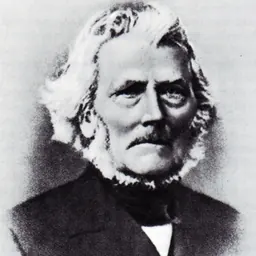

Contemporaries
People whose lives overlapped Thaddeus Hyatt's




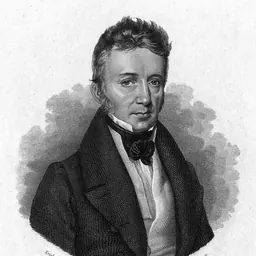
Frequently asked questions
Who was Thaddeus Hyatt?
abolitionist and inventor (1816–1901)
When was Thaddeus Hyatt born?
Thaddeus Hyatt was born on 21 July 1816 in Rahway.
When did Thaddeus Hyatt die?
Thaddeus Hyatt died on 25 July 1901 in Sandown.
What was Thaddeus Hyatt's occupation?
Thaddeus Hyatt was an industrialist and lawyer.
What nationality was Thaddeus Hyatt?
Thaddeus Hyatt was American.
Sources & further reading
Cite this page
APA: Biography.guide. (2026). Thaddeus Hyatt. https://biography.guide/thaddeus-hyatt/
MLA: "Thaddeus Hyatt." Biography.guide, https://biography.guide/thaddeus-hyatt/.
Chicago: "Thaddeus Hyatt." Biography.guide. https://biography.guide/thaddeus-hyatt/.
Data last updated: 2026-09-20 · Spot an error? Report a correction.
Page generated 2026-09-27 05:26 UTC